
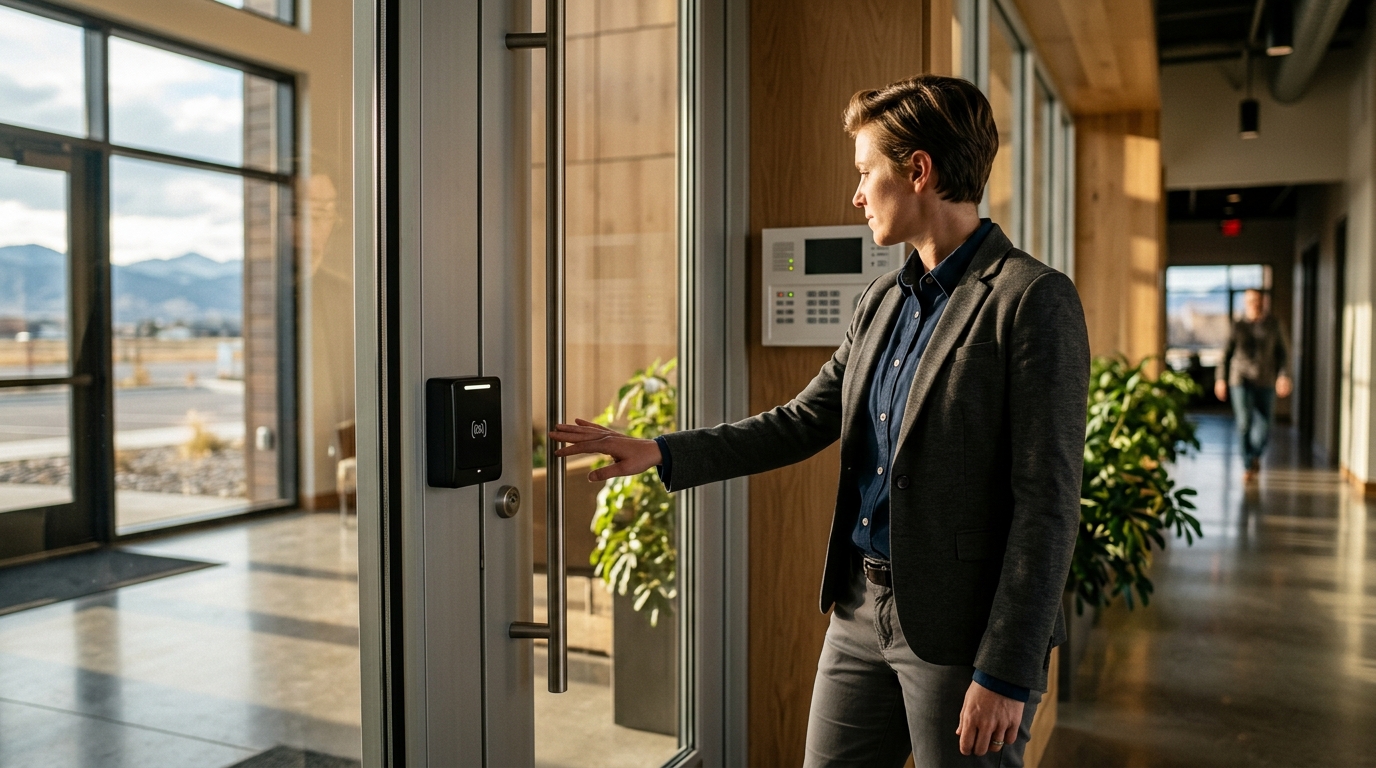
Commercial security is no longer a single-layer defense. According to recent industry data, businesses that implement integrated security ecosystems reduce unauthorized entry incidents by over 40% compared to those relying on legacy methods. This statistic highlights a critical shift in how organizations approach physical safety. The debate often centers on two primary pillars: access control and intrusion alarms. While both systems protect assets, they serve fundamentally different operational purposes. Understanding the distinction is vital for facility managers in Montana, Texas, and Colorado who need to allocate budgets effectively. This guide breaks down the mechanics, benefits, and ideal applications of each system to help you make an informed decision. (About Us 8902 Moore)
Core Differences in Function
To choose the right security infrastructure, you must first understand the fundamental operational difference between these two technologies. Access control is a preventive measure. It focuses on managing who enters a facility and when. Intrusion alarms are a reactive measure. They focus on detecting unauthorized presence after a breach has occurred or is in progress. (Business IT and Security)
Think of access control as the gatekeeper and intrusion alarms as the alarm bell. One stops the problem before it starts. The other alerts you when the problem has already begun. For commercial properties, relying on just one is often insufficient. A robust security strategy requires both layers working in tandem. Moore Technology specializes in designing these integrated systems for commercial and industrial environments across the Mountain West and beyond.
Access Control Systems Explained
Access control systems manage the physical entry points of your business. They replace traditional mechanical keys with digital credentials. This shift provides granular control over your premises. You can define exactly which employee enters which room and at what time.
Types of Access Control
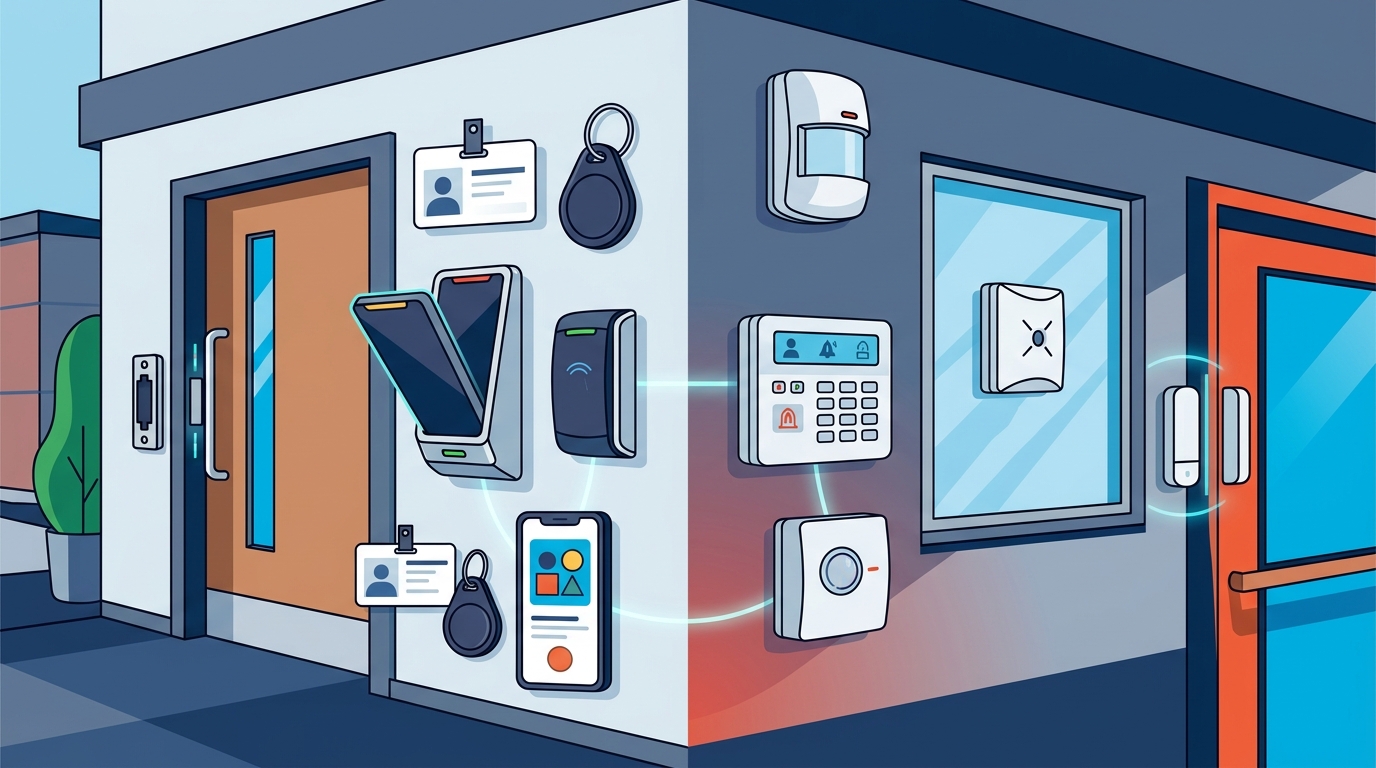
Modern access control is not limited to plastic cards. Moore Technology offers several advanced options tailored to your specific security needs.
Keycard Systems are the industry standard for many businesses. They are cost-effective and easy to manage. You can issue or cancel cards instantly. This is ideal for high-turnover environments like retail stores or warehouses. If an employee leaves, you revoke their access immediately without changing physical locks.
Biometric Systems offer the highest level of security. These systems use fingerprint or facial recognition technology. They eliminate the risk of lost or stolen credentials. A biometric scanner provides a touchless entry method, which is crucial for hygiene and security in sensitive areas like server rooms or executive offices.
Smartphone Access leverages mobile technology. Employees use their phones as digital keys. This removes the need for physical cards entirely. It works seamlessly with the devices your team already uses daily. This option is particularly popular for modern offices and tech-forward companies.
At Moore Technology, we design every system for maximum safety and ease of use. Our team ensures that your access control software integrates with your current IT infrastructure. This allows for real-time monitoring and instant alerts if someone attempts to enter without permission.
Intrusion Alarm Systems Explained
Intrusion alarms are designed to detect unauthorized entry or movement within a secured area. They act as a deterrent and a rapid response trigger. When a sensor is triggered, the system alerts security personnel or local law enforcement.
How Intrusion Alarms Work
These systems rely on a network of sensors placed throughout your property. Motion detectors, door/window contacts, and glass break sensors create a perimeter. If any of these sensors are breached, the alarm triggers.
Intrusion Detection is critical for after-hours protection. When your business is closed, access control systems are often set to "lockdown" mode. Intrusion alarms provide the next layer of defense. If someone bypasses the access control system, the intrusion alarm detects the breach and sounds the alert.
Moore Technology provides comprehensive intrusion alarm solutions for commercial buildings. Our systems are designed to be reliable and responsive. We offer after-hours and emergency repairs to ensure your security is never compromised. Our service coverage spans Montana, Texas, and Colorado, ensuring timely support for your business.
The Power of Integration
While access control and intrusion alarms serve different primary functions, their true power lies in integration. When these systems communicate, they create a unified security ecosystem. This integration enhances situational awareness and streamlines incident response.
For example, if an intrusion alarm is triggered at a side door, the integrated access control system can instantly lock down adjacent areas. This prevents the intruder from moving deeper into the facility. Simultaneously, security personnel receive a notification with the exact location of the breach. This allows for a faster and more targeted response.
Integration also simplifies management. Instead of maintaining two separate systems, you have one dashboard. This reduces administrative overhead and improves overall operational efficiency. Moore Technology specializes in these complex integrations. We ensure that your security systems work together seamlessly, providing peace of mind for business owners.
Feature Comparison Matrix
The following table summarizes the key differences between access control and intrusion alarms. This comparison helps you evaluate which system aligns with your immediate security priorities.
| Feature | Access Control Systems | Intrusion Alarm Systems |
|---|---|---|
| Primary Function | Prevent unauthorized entry | Detect unauthorized presence |
| Technology Type | Keycards, Biometrics, Mobile | Motion Sensors, Door Contacts |
| Response Time | Real-time access management | Immediate alarm triggering |
| Best For | Employee safety, Asset protection | After-hours security, Theft deterrence |
| Integration | Can trigger alarms on breach | Can lock doors on alert |
Key Takeaways
- Prevention vs. Detection: Access control prevents entry, while intrusion alarms detect breaches.
- Integrated Security: Combining both systems provides the highest level of protection for commercial properties.
- Moore Technology Expertise: We specialize in designing and installing comprehensive security systems for commercial and industrial environments.
- Service Coverage: Our service calls span Montana, Texas, and Colorado, with nationwide installation coverage available.
- Mobile Support: Our technicians are fully mobile, ensuring flexibility in service delivery and rapid response times.
- Core Values: We prioritize "Prompt Resolution" and "Quality of Work" in every project we undertake.
- Historical Reliability: Since incorporating in 2017, we have serviced thousands of locations for major national brands.
Frequently Asked Questions
Can access control systems replace intrusion alarms?
No. Access control manages entry, but it does not detect breaches that occur after entry or through unauthorized means. Intrusion alarms provide a necessary second layer of defense.
What types of access control does Moore Technology install?
We install keycard systems, biometric scanners, and smartphone-based access solutions. Each option is tailored to your specific security needs and budget.
Do you offer after-hours emergency repairs?
Yes. We offer after-hours and emergency repairs subject to a service-level agreement. This ensures your business is never left vulnerable to security threats.
How does integration improve security?
Integration allows access control and intrusion alarms to communicate. For example, an alarm trigger can automatically lock down specific areas, enhancing overall safety.
What is your service area?
Our primary service coverage includes Montana, Texas, and Colorado. We also provide nationwide installation coverage for larger commercial projects.
Is biometric access more secure than keycards?
Biometric access is generally considered more secure because it eliminates the risk of lost or stolen credentials. It provides a unique, touchless entry method.
How quickly can Moore Technology respond to service calls?
We prioritize prompt resolution. Our mobile technicians are equipped to respond quickly to service calls, ensuring minimal downtime for your business.
Secure Your Business Today
Choosing the right security system is a critical decision for your business. Whether you need advanced access control, reliable intrusion alarms, or a fully integrated solution, Moore Technology is here to help. Our team of experts works closely with you to understand your specific requirements and provide tailored solutions.
Don't wait for a security incident to highlight the need for better protection. Contact us today to schedule a consultation. Visit our Contact Us page to learn more about our services and how we can secure your commercial property.