

Modern commercial security has shifted dramatically from passive monitoring to active prevention. According to recent industry data, businesses that implement integrated access control systems reduce unauthorized entry incidents by over 60% compared to those relying solely on traditional locks. This statistic highlights a critical reality: physical security is no longer just about keeping doors locked; it is about managing digital identities in the physical world. For business owners, understanding how to secure a facility requires moving beyond simple hardware installation to embrace a holistic strategy of identity management, real-time monitoring, and seamless integration with existing IT infrastructure. (Contact Us 8902 Moore)
Why Access Control is Critical for Modern Business
Traditional mechanical locks are static. They offer no record of who entered, when they left, or if a key was copied. In contrast, access control is the systematic management of digital permissions that allow or deny entry to specific areas based on verified identity. This shift transforms security from a reactive measure into a proactive operational tool.
For commercial entities, the stakes are high. Unauthorized access can lead to theft, data breaches, and liability issues. By implementing a robust system, businesses gain granular visibility into their premises. You can restrict entry to sensitive areas like server rooms, executive offices, or inventory storage while allowing open access to public-facing zones. This level of precision is impossible with traditional keys.
Furthermore, modern access control systems are deeply integrated with broader security ecosystems. They do not operate in isolation. Instead, they communicate with intrusion alarms, video surveillance, and even building management systems. This interconnectedness ensures that a breach in one area triggers immediate responses across the entire network, providing a comprehensive safety net for your assets and employees.
Choosing the Right Access Control Technology
Selecting the appropriate technology depends on your security requirements, user volume, and budget. There is no one-size-fits-all solution, but three primary categories dominate the commercial landscape.
Keycard and Proximity Systems
Keycard systems remain the backbone of many commercial installations due to their reliability and cost-effectiveness. These systems use RFID (Radio-Frequency Identification) cards that employees swipe or tap against a reader. The primary advantage is simplicity. Employees do not need to remember passwords, and cards can be easily deactivated if lost or stolen. For businesses with high turnover rates, this flexibility is invaluable. You can issue new cards instantly without rekeying physical locks.
Biometric Entry Solutions
For facilities requiring the highest level of security, biometric systems offer unmatched verification. Biometric entry is the use of unique physical characteristics, such as fingerprints or facial recognition, to grant access. Because these traits are unique to each individual, the risk of credential sharing or forgery is virtually eliminated. Biometric scanners are also touchless in many modern designs, promoting hygiene and speed during peak entry times. This technology is particularly effective for high-security zones where accountability is paramount.
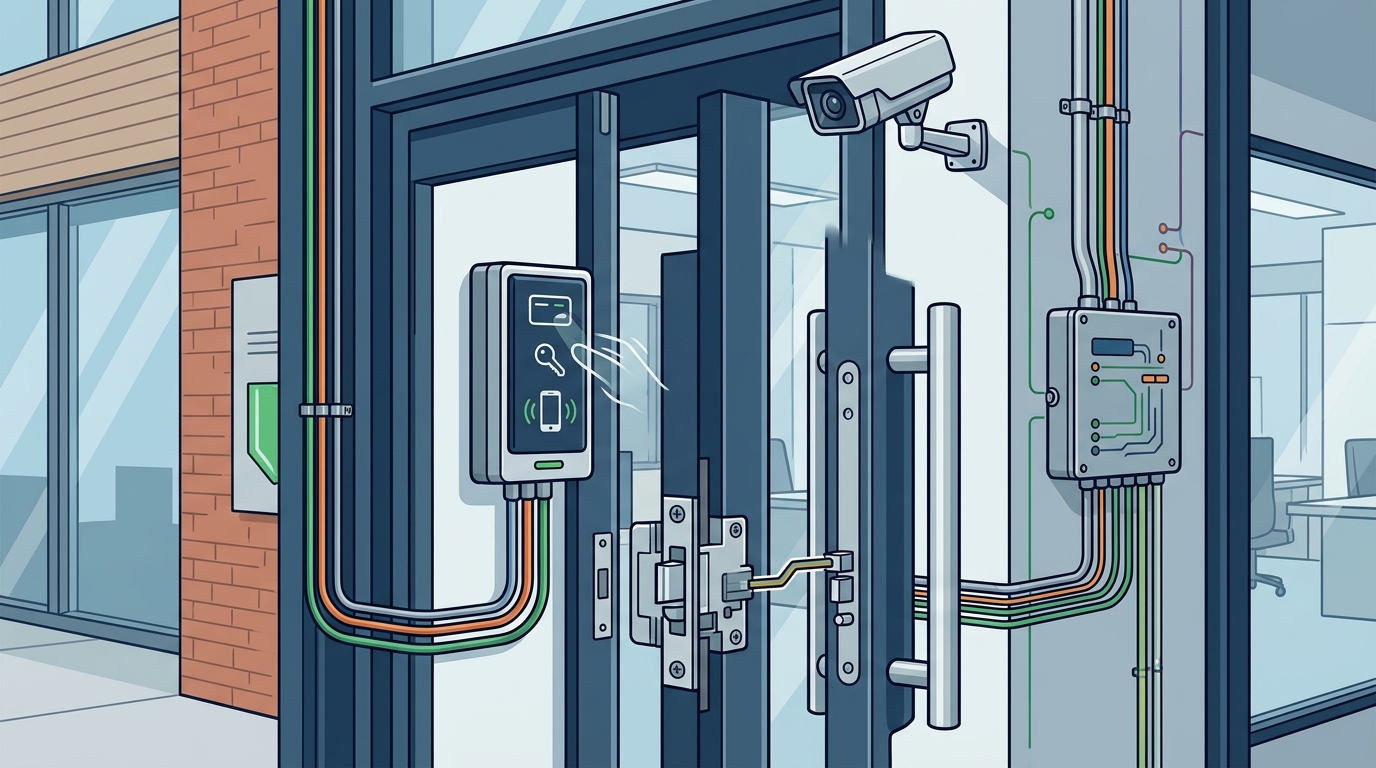
Smartphone-Based Access
The rise of mobile technology has introduced smartphone-based access as a powerful alternative. Using Bluetooth or NFC (Near Field Communication), employees can unlock doors using their personal devices. This method eliminates the need to carry physical cards and allows for remote guest access via temporary digital keys. It also integrates seamlessly with existing corporate communication tools, making it easier to manage visitor logs and emergency notifications. For tech-forward businesses, this is often the preferred method for its convenience and modern aesthetic.
Integrating Security with IT and Cyber Infrastructure
One of the most significant advantages of modern access control is its ability to integrate with your existing IT infrastructure. This is where managed IT services become crucial. A standalone security system is only as good as its connectivity. When access control is integrated with your network, you gain real-time monitoring capabilities and enhanced cybersecurity.
Integration allows for centralized management. Instead of logging into multiple disparate systems, administrators can view access logs, camera feeds, and alarm statuses from a single dashboard. This consolidation reduces administrative overhead and improves response times during security incidents. For example, if an intrusion alarm is triggered, the system can automatically lock down adjacent doors and route relevant camera footage to security personnel.
Moreover, integration supports advanced cybersecurity protocols. Modern systems often require multi-factor authentication (MFA) for administrative access, ensuring that only authorized IT personnel can modify security settings. This layer of protection is essential in an era where cyber threats frequently target physical security infrastructure. By treating access control as part of your broader IT strategy, you ensure that both digital and physical assets are protected by the same rigorous standards.
The Implementation Process: From Design to Deployment
Implementing an access control system is a complex project that requires careful planning and expert execution. A successful deployment follows a structured workflow designed to minimize disruption and maximize security.
Site Assessment and Design
The process begins with a comprehensive site assessment. Experts evaluate the physical layout, identify high-risk areas, and determine user access requirements. This phase is critical for designing a system that meets your specific needs. For instance, a multi-site retail chain will have different requirements than a single industrial warehouse. The design phase also considers cabling infrastructure, network connectivity, and power backup solutions to ensure reliability.
Professional Installation
Professional installation is non-negotiable for commercial systems. Improperly installed hardware can compromise security and lead to frequent maintenance issues. Certified technicians ensure that all components, from readers to controllers, are configured correctly and securely. This includes setting up the necessary structured cabling, such as Cat6 ethernet or fiber optic lines, to support data transmission and power delivery. Proper installation also involves testing each point of entry to verify functionality and security integrity.
Configuration and Training
Once hardware is installed, the software configuration phase begins. Administrators set up user profiles, define access rules, and integrate the system with other security tools. Training is a vital component of this stage. Staff members must understand how to use the new system, from swiping cards to using mobile apps. Clear training ensures adoption and reduces the likelihood of user error, which can create security vulnerabilities.
Ongoing Maintenance and Emergency Support
Security is not a one-time project; it is an ongoing commitment. Regular maintenance ensures that your access control system remains effective and secure over time. This includes firmware updates, hardware inspections, and database backups. Neglecting maintenance can lead to system failures, leaving your business vulnerable.
Emergency support is equally important. When a security system fails, the risk of unauthorized access increases immediately. Having a reliable support partner ensures that issues are resolved quickly, minimizing downtime. This is particularly crucial for businesses operating in remote locations or those with critical security needs. Rapid response times can mean the difference between a minor inconvenience and a major security breach.
Additionally, regular audits of access logs help identify potential security threats. Unusual patterns, such as repeated failed access attempts or entries at odd hours, can indicate unauthorized activity. By monitoring these logs, businesses can proactively address security concerns before they escalate. This proactive approach is a hallmark of effective security management.
Key Takeaways
- Integration is Key: Access control systems must be integrated with IT infrastructure for real-time monitoring and cybersecurity.
- Technology Options: Choose between keycard, biometric, or smartphone access based on your security level and user convenience needs.
- Professional Installation: Expert installation ensures proper cabling, configuration, and long-term reliability.
- Ongoing Maintenance: Regular audits and firmware updates are essential for maintaining system integrity.
- Emergency Support: Rapid response capabilities are critical for minimizing security risks during system failures.
- Granular Control: Modern systems allow for precise management of who enters specific areas and when.
- Scalability: Choose a system that can grow with your business, supporting additional users and sites.
Frequently Asked Questions
What is the difference between keycard and biometric access?
Keycard access uses physical cards with embedded chips to verify identity, while biometric access uses unique physical traits like fingerprints or facial features. Biometric systems offer higher security as they cannot be lost or shared, whereas keycards are more cost-effective and easier to manage for large groups.
Can access control systems be integrated with existing security cameras?
Yes, modern access control systems are designed to integrate seamlessly with video surveillance. This integration allows for automatic camera activation when a door is opened and provides a visual record of who accessed specific areas.
How does access control improve cybersecurity?
Access control improves cybersecurity by enforcing strict identity verification and limiting physical access to network hardware. It also supports multi-factor authentication for administrative access, reducing the risk of unauthorized system modifications.
What happens if the power goes out?
Professional access control systems include battery backup units to ensure continued operation during power outages. This ensures that security is not compromised during emergencies and that doors can still be locked or unlocked as programmed.
Is smartphone access secure?
Smartphone access is highly secure when implemented correctly. It uses encrypted communication protocols like Bluetooth Low Energy (BLE) or NFC to verify identity. Additionally, mobile devices often have their own security features, such as PINs or biometric locks, adding an extra layer of protection.
How long does installation take?
Installation time varies based on the size and complexity of the facility. A small office might be completed in a day, while a large multi-site deployment could take several weeks. Professional installers provide detailed timelines during the planning phase.
Can I manage access remotely?
Yes, most modern access control systems offer cloud-based management platforms. This allows administrators to grant or revoke access, view logs, and monitor system status from anywhere with an internet connection.
Secure Your Business Today
Protecting your business requires more than just installing hardware; it demands a strategic approach to security integration and ongoing support. Moore Technology offers comprehensive access control solutions tailored to your unique needs. From initial design to installation and maintenance, our team ensures your security infrastructure is robust, reliable, and secure. Contact us today to schedule a consultation and discover how we can help you secure your business.