
Modern commercial security in Montana requires more than just a sturdy lock on the door. According to recent industry data, businesses that implement integrated physical security systems see a significant reduction in unauthorized entry incidents, with many reporting a decrease in loss prevention costs by over 30% within the first year of deployment. This statistic highlights the critical need for robust, scalable access control solutions that protect both physical assets and digital infrastructure. As Montana's commercial landscape evolves, from Bozeman to Billings, the demand for seamless, reliable security integration has never been higher. This guide outlines the precise steps to implement an effective access control system tailored to your office building's unique operational needs. (About Us 8902 Moore)
Step 1: Assess Your Office Security Needs
Before selecting hardware, you must define the scope of your security requirements. Montana office buildings vary widely in layout, from historic downtown structures to modern industrial parks. The first step is to map out all entry points, including main entrances, server rooms, executive offices, and loading docks.
Access control is the systematic management of who can enter specific areas of a facility. Unlike traditional locks, these systems allow for granular permissions based on time, role, or credential type. For Montana businesses, considering the harsh winter conditions is vital. Exterior doors must have hardware rated for extreme cold to prevent mechanical failure. Additionally, you must evaluate the flow of employees, contractors, and visitors. High-traffic areas benefit from touchless entry methods to reduce wear and improve hygiene.
Identify your compliance requirements as well. Certain industries, such as healthcare or finance, may have strict regulations regarding audit trails and data retention for access logs. Understanding these legal frameworks ensures your system is not only secure but also compliant with state and federal standards.
Step 2: Choose the Right Access Control Technology
There are three primary technologies available for commercial office buildings. Each offers distinct advantages depending on your security posture and user experience goals.
Keycard Systems
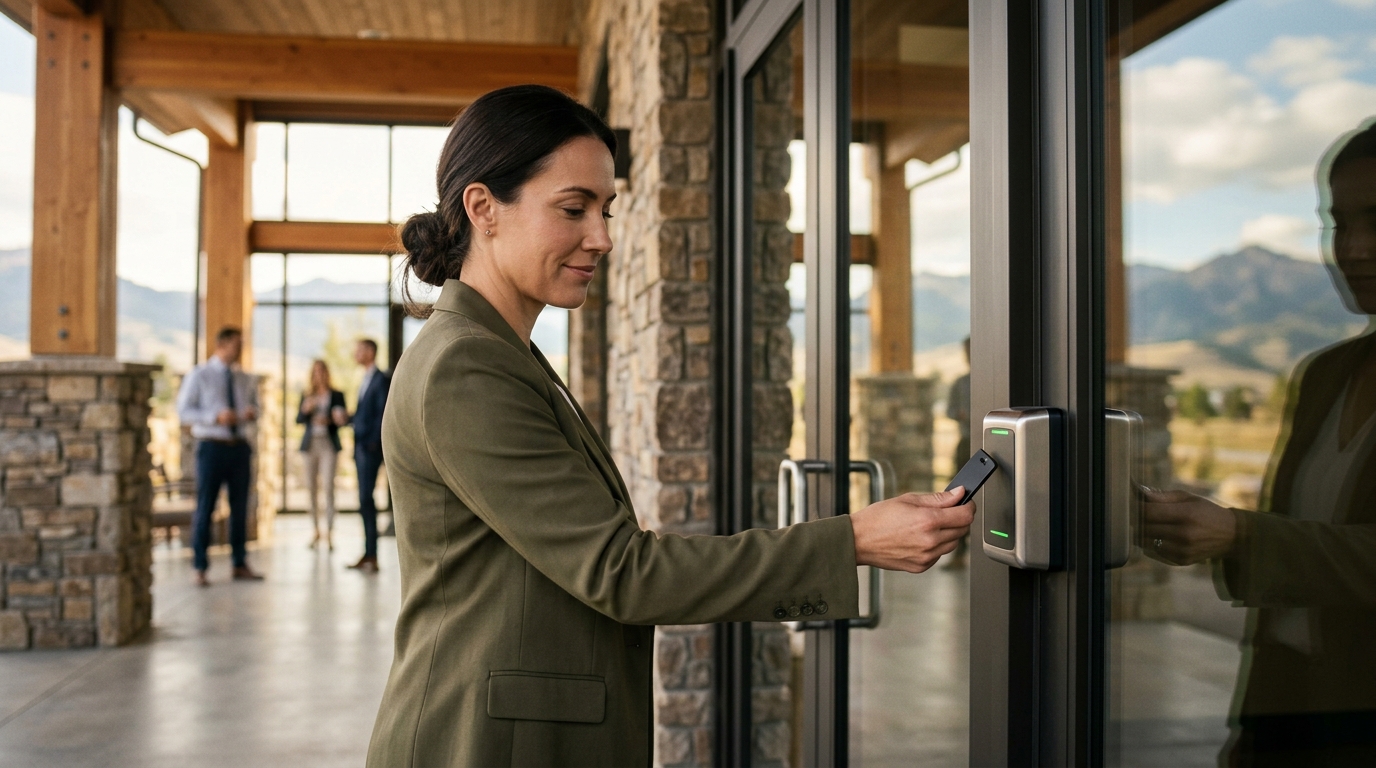
Keycard systems remain the most cost-effective and reliable option for many Montana businesses. These systems use proximity cards or fobs to grant entry. They are durable, easy to issue, and simple to revoke if a card is lost. For large offices with high employee turnover, keycards offer a low-friction way to manage access without complex biometric enrollment processes.
Biometric Systems
Biometric entry utilizes unique physical characteristics, such as fingerprints or facial recognition, to verify identity. This method provides the highest level of security because credentials cannot be lost, stolen, or shared. Biometric systems are ideal for high-security areas like server rooms or executive suites. However, they require more sophisticated hardware and can be slower during peak entry times.
Smartphone-Based Access
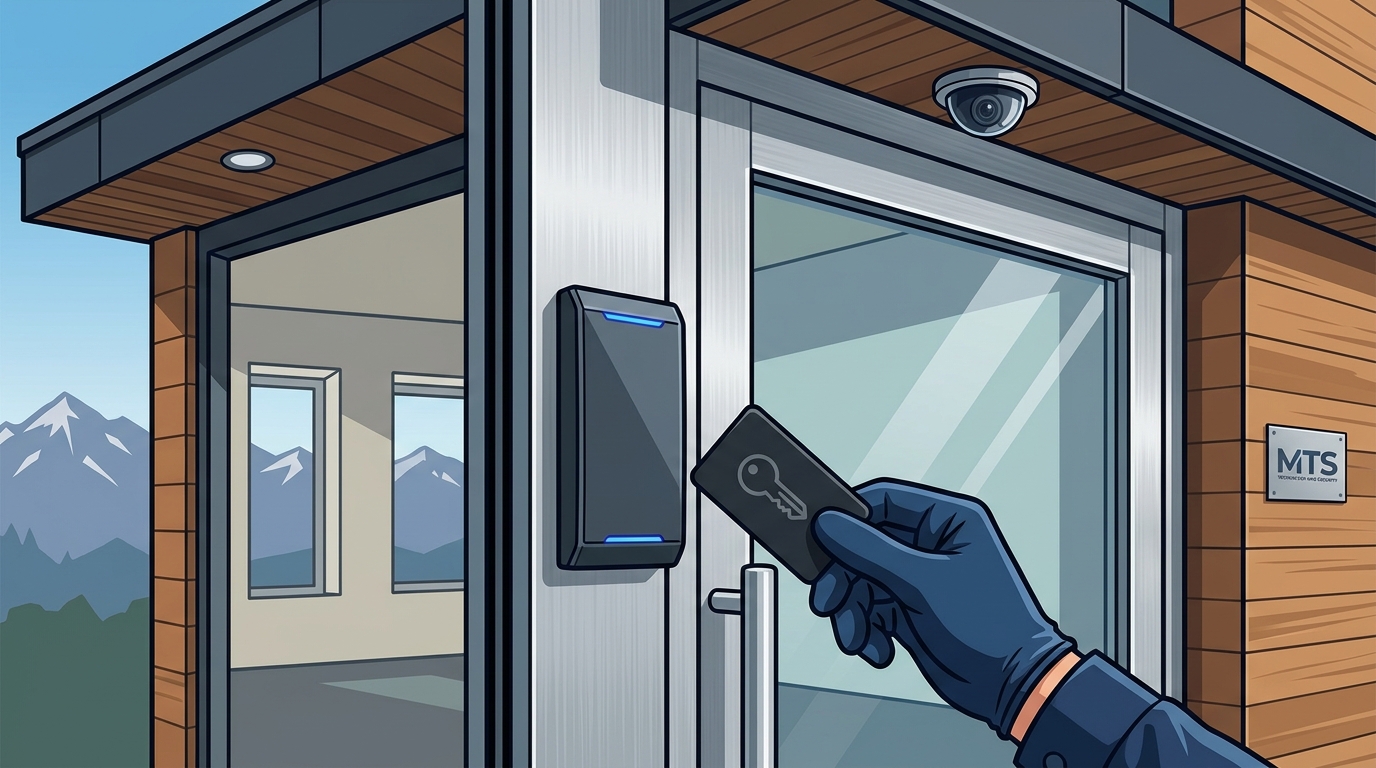
Smartphone-based access leverages mobile technology to turn employees' phones into digital keys. This method eliminates the need for physical cards entirely. It offers convenience and allows for real-time updates to permissions via a mobile app. For modern Montana offices, this option aligns well with remote work policies and flexible scheduling.
Step 3: Integrate with Existing IT Infrastructure
Modern access control systems are not isolated devices; they are part of your broader IT ecosystem. Integration ensures that physical security data can be correlated with digital security events. For example, if an unauthorized physical entry occurs, the system should automatically trigger network alerts or lock down specific digital resources.
Managed IT services play a crucial role in this phase. A trusted Technology Solution Provider (TSP) can ensure that your access control network is segmented from your general office Wi-Fi to prevent cyber threats. This separation protects the security system from being compromised by external hackers. Furthermore, integrating with your existing video surveillance systems allows for video verification of access events, providing a complete audit trail.
Consider the scalability of your network. As your Montana office grows, you may add new floors or wings. Your chosen system must support expansion without requiring a complete overhaul of the underlying network infrastructure. Cloud-based management platforms offer this flexibility, allowing administrators to monitor and control access from anywhere with an internet connection.
Step 4: Professional Installation and Cabling
Proper installation is the foundation of any reliable security system. Poor cabling or misconfigured hardware can lead to frequent failures, leaving your office vulnerable. In Montana, where temperature fluctuations can affect electronic components, professional installation ensures that all hardware is rated and positioned correctly.
Structured cabling is the backbone of your access control system. This involves running ethernet, fiber optic, or dedicated security wiring to each door controller. Professional installers ensure that cables are shielded from interference and routed safely through walls and ceilings. This process, known as structured cabling, ensures seamless communication between all devices in the network.
Moore Technology specializes in designing and installing comprehensive commercial communication and security systems. Our team handles everything from initial design to final testing, ensuring that your system meets the highest standards of reliability. We serve commercial and industrial businesses across Montana, Texas, and Colorado, providing tailored solutions that enhance security and operational efficiency.
Step 5: Configure Real-Time Monitoring and Alerts
Once installed, your system must be configured for real-time monitoring. This feature allows you to watch exactly who enters and leaves your building at any time. You can set rules to trigger alerts via text or email when unauthorized access attempts occur.
Real-time monitoring also enables dynamic access management. For instance, you can grant temporary access to contractors or delivery personnel without issuing physical keys. These permissions can be set to expire automatically, reducing the risk of lingering security gaps. Additionally, you can control entry based on job roles, ensuring that employees only access areas relevant to their work.
For Montana businesses, emergency protocols are critical. Your system should integrate with fire alarms and other emergency systems to automatically unlock doors during a crisis, ensuring safe evacuation while maintaining security during normal operations.
Step 6: Ongoing Maintenance and Support
Security systems require regular maintenance to function correctly. This includes software updates, hardware inspections, and battery replacements for backup power. In Montana, where power outages can occur due to severe weather, having a reliable backup power solution is essential.
Moore Technology prioritizes customer satisfaction by providing prompt and reliable support for every client. Our service call coverage spans Montana, Texas, and Colorado, allowing us to extend our services to surrounding states. We offer after-hours and emergency repairs, ensuring that your business is never left vulnerable. Our technicians are fully mobile, ensuring flexibility in service delivery and rapid response times.
Regular audits of your access logs can also help identify potential security issues before they become problems. By analyzing entry patterns, you can detect anomalies, such as frequent failed access attempts or unusual entry times, and take corrective action.
Comparison of Access Control Options
| Feature | Keycard Systems | Biometric Systems | Smartphone Access |
|---|---|---|---|
| Security Level | Medium | High | High |
| Cost | Low | High | Medium |
| Convenience | Medium | Low | High |
| Integration | Standard | Advanced | Cloud-Based |
| Best For | General Office Access | High-Security Areas | Modern/Flexible Workplaces |
Key Takeaways
- Assess Needs First: Map all entry points and evaluate compliance requirements before selecting hardware.
- Choose Technology Wisely: Balance security levels with user convenience when choosing between keycards, biometrics, or smartphone access.
- Integrate with IT: Ensure your access control system is segmented and integrated with your existing IT infrastructure for enhanced security.
- Professional Installation: Use structured cabling and professional installers to ensure reliability and durability in Montana's climate.
- Real-Time Monitoring: Configure alerts and dynamic permissions to maintain control over who enters your building.
- Ongoing Support: Partner with a provider like Moore Technology for prompt service calls and emergency repairs across Montana.
- Scalability: Choose cloud-based solutions that can grow with your business without requiring major infrastructure changes.
Frequently Asked Questions
What is the best access control system for a small Montana office?
For small offices, keycard systems or smartphone-based access are often the most cost-effective and user-friendly options. They provide sufficient security without the complexity of biometric enrollment.
How does access control integrate with video surveillance?
Access control systems can be linked to video cameras to record footage of every entry and exit event. This creates a comprehensive audit trail that is invaluable for security investigations.
Can access control systems be managed remotely?
Yes, modern cloud-based access control systems allow administrators to monitor and manage permissions from anywhere with an internet connection. This is particularly useful for multi-site businesses.
What happens during a power outage in Montana?
Professional access control installations include backup power solutions, such as uninterruptible power supplies (UPS) or battery backups, to ensure the system remains operational during outages.
How often should access control systems be maintained?
Regular maintenance should occur at least annually, including software updates, hardware inspections, and battery checks. More frequent checks may be needed in harsh environmental conditions.
Is biometric access more secure than keycards?
Biometric access is generally considered more secure because credentials cannot be lost or shared. However, it may be slower and more expensive to implement than keycard systems.
Does Moore Technology service offices outside of Montana?
Yes, Moore Technology provides service call coverage in Montana, Texas, and Colorado, and can extend services to surrounding states for qualified projects.
Ready to Secure Your Montana Office?
Implementing a robust access control system is a critical step in protecting your Montana office building. By following these steps and partnering with experienced professionals, you can ensure your business remains secure, compliant, and efficient. Moore Technology is ready to help you design, install, and maintain a system tailored to your needs. Contact us today to schedule a consultation and secure your future.