
How to Evaluate a Vendor for Multi-Site Cyber Security and Alarm Maintenance
Choosing the right vendor for ongoing cyber security and alarm system maintenance across multiple locations requires a rigorous assessment of their technical scope, response protocols, and integration capabilities. You must verify that the provider can manage both digital infrastructure and physical security systems under a single, cohesive strategy. This guide outlines the critical criteria for evaluating vendors, focusing on preventive maintenance procedures, multi-site scalability, and long-term support reliability. For additional details, review the mooretech biz.
Preventive Maintenance Procedures
Preventive maintenance is the systematic inspection, testing, and adjustment of security systems to prevent unexpected failures. It is the most critical factor in ensuring that both cyber and physical security systems remain operational over time. A reliable vendor must demonstrate a structured approach to these procedures rather than relying solely on reactive repairs. For additional details, review the Customer Experience.
Physical Security System Inspections
Cyber Security Health Checks
Cyber security maintenance is distinct from physical hardware checks. It involves continuous monitoring of network traffic, patch management, and vulnerability scanning. A competent vendor will perform regular audits of your network architecture to identify weak points. They should also manage firmware updates for all connected devices, including IoT sensors and security cameras. This proactive approach reduces the attack surface and ensures that your digital infrastructure remains resilient against emerging threats. For additional details, review the Frequently Asked Questions.
Documentation and Reporting
Effective preventive maintenance requires transparent reporting. The vendor should provide a centralized dashboard or regular reports that summarize the health of all systems across your locations. These reports should highlight any issues found, the actions taken, and any recommended future improvements. This level of transparency allows your internal team to make informed decisions about budget allocation and system upgrades. For additional details, review the About.
Multi-Site Scalability and Standardization
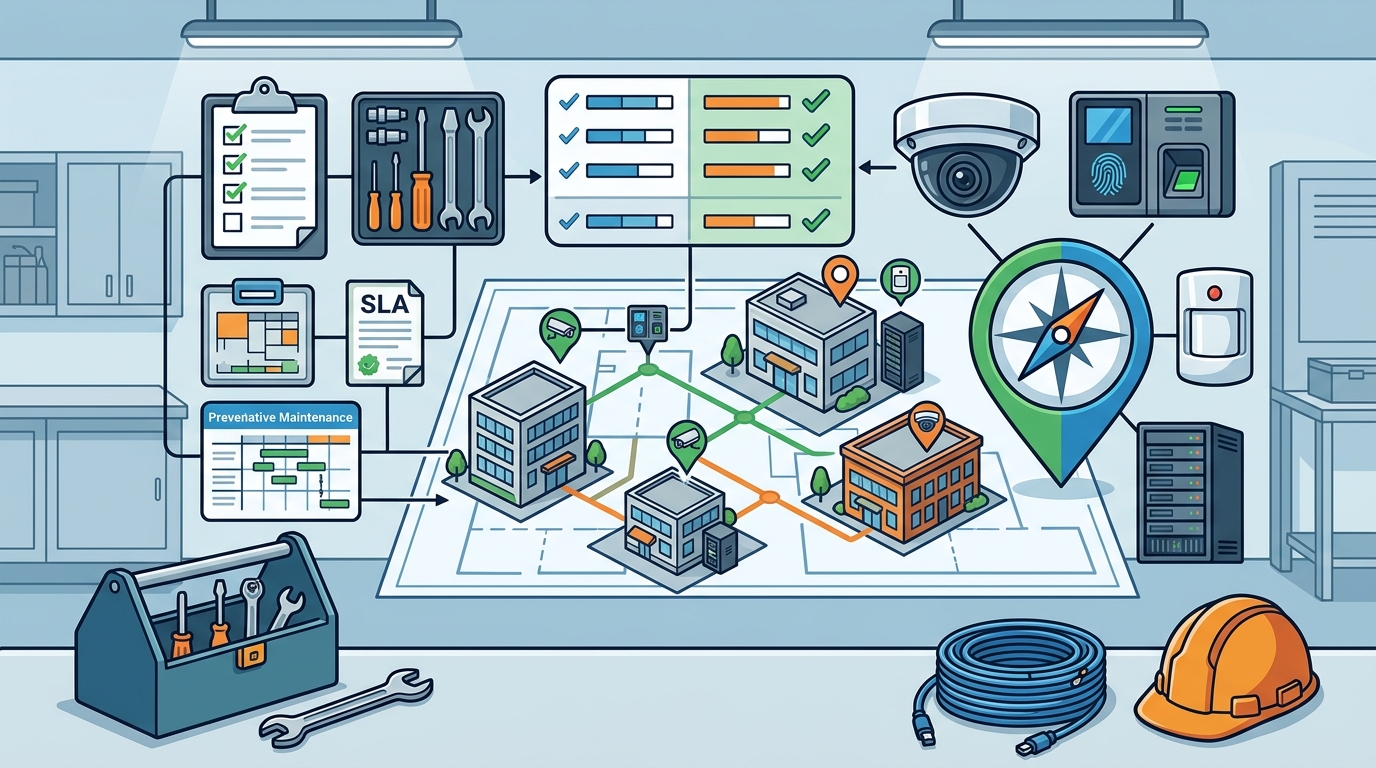
Managing security across multiple business locations introduces complexity that single-site vendors often struggle to handle. Scalability is the ability of a vendor to expand their services to additional sites without a significant increase in operational overhead. Standardization is the practice of using consistent configurations and protocols across all locations to simplify management.
Centralized Management Platforms
Consistent Configuration Standards
Geographic Coverage and Support
Integration of Cyber and Physical Security
Integration is the process of connecting cyber security systems with physical security systems to create a unified defense strategy. This is a critical capability for modern businesses, as the lines between digital and physical security have blurred. A vendor that can integrate these systems provides a more comprehensive view of your security posture.
Unified Monitoring and Alerting
Integrated systems allow for unified monitoring and alerting. For example, if a physical intrusion alarm is triggered, the system can automatically lock down network access to that area. Conversely, if a cyber threat is detected, the system can alert physical security personnel to monitor specific zones. This cross-functional alerting reduces response times and improves the overall effectiveness of your security operations. When evaluating a vendor, ask how they handle the integration of data from different system types. Look for vendors that use open standards and APIs to facilitate this integration.
Data Security for Physical Systems
Physical security systems, such as cameras and access control, generate significant amounts of data. This data must be protected from cyber threats. A vendor that understands integration will ensure that physical systems are properly segmented from the main network and that data is encrypted in transit and at rest. They should also implement strict access controls to ensure that only authorized personnel can view or manipulate this data. This approach prevents physical systems from becoming a vector for cyber attacks.
Vendor Ecosystem and Compatibility
Compatibility with existing hardware and software is a practical concern. The vendor should be able to work with the brands and models you already have, or provide a clear migration path if a change is necessary. They should have experience integrating a wide range of devices, from legacy systems to modern IoT devices. This flexibility ensures that you are not locked into a single vendor's ecosystem and can choose the best tools for each part of your security strategy.
Response Protocols and SLAs
Incident Response Plans
Service Level Agreements
Communication and Reporting
Effective communication is essential during an incident. The vendor should provide regular updates on the status of the issue and the actions being taken. They should also provide a post-incident report that details what happened, how it was resolved, and what steps will be taken to prevent recurrence. This transparency builds trust and allows you to learn from each incident. It also provides a record that can be used for insurance claims or regulatory reporting if necessary.
Vendor Comparison Framework
Comparing vendors requires a structured approach that evaluates their capabilities against your specific needs. The following table provides a framework for assessing key criteria when selecting a vendor for multi-site cyber and physical security maintenance.
| Criteria | What to Look For | Why It Matters |
|---|---|---|
| Preventive Maintenance | Structured inspection schedules, detailed reporting, automated health checks | Reduces unexpected failures and extends system lifespan |
| Multi-Site Scalability | Centralized management platforms, standardized configurations, geographic coverage | Simplifies management and ensures consistent security across all sites |
| Integration Capabilities | Unified monitoring, data security for physical systems, open APIs | Creates a cohesive security strategy and reduces response times |
| Response Protocols | Clear incident response plans, tiered SLAs, regular communication | Ensures rapid recovery and minimizes business impact |
Use this framework to score each vendor you are considering. Assign weights to each criteria based on your specific priorities. This quantitative approach helps you make an objective decision and identify the vendor that best fits your needs.
Key Takeaways
- Preventive maintenance is the foundation of reliable security systems and requires structured procedures and transparent reporting.
- Multi-site scalability depends on centralized management platforms and standardized configurations to simplify operations.
- Integration of cyber and physical security creates a unified defense strategy that reduces response times and improves overall effectiveness.
- Clear response protocols and SLAs are essential for ensuring rapid recovery during security incidents.
- Vendor stability and financial health are critical factors to consider when selecting a long-term partner.
- A structured comparison framework helps you make an objective decision based on your specific needs and priorities.
- Regular audits and reviews of your vendor relationship ensure that they continue to meet your evolving security requirements.
Frequently Asked Questions
What is the difference between reactive and preventive maintenance?
Reactive maintenance involves fixing systems after they fail, while preventive maintenance involves regular inspections and adjustments to prevent failures. Preventive maintenance is more cost-effective and reduces downtime.
How do I ensure my vendor can handle multiple locations?
Why is integration between cyber and physical security important?
Integration allows for a unified view of your security posture and enables cross-functional alerting. This reduces response times and improves the overall effectiveness of your security operations.
What should I look for in a vendor's SLA?
Look for tiered response times based on issue severity, clear communication protocols, and defined consequences for failing to meet standards. The SLA should align with your business needs.
How often should I review my vendor relationship?
Review your vendor relationship at least annually, or more frequently if your business needs change significantly. This ensures that the vendor continues to meet your requirements and that you are getting the best value.