
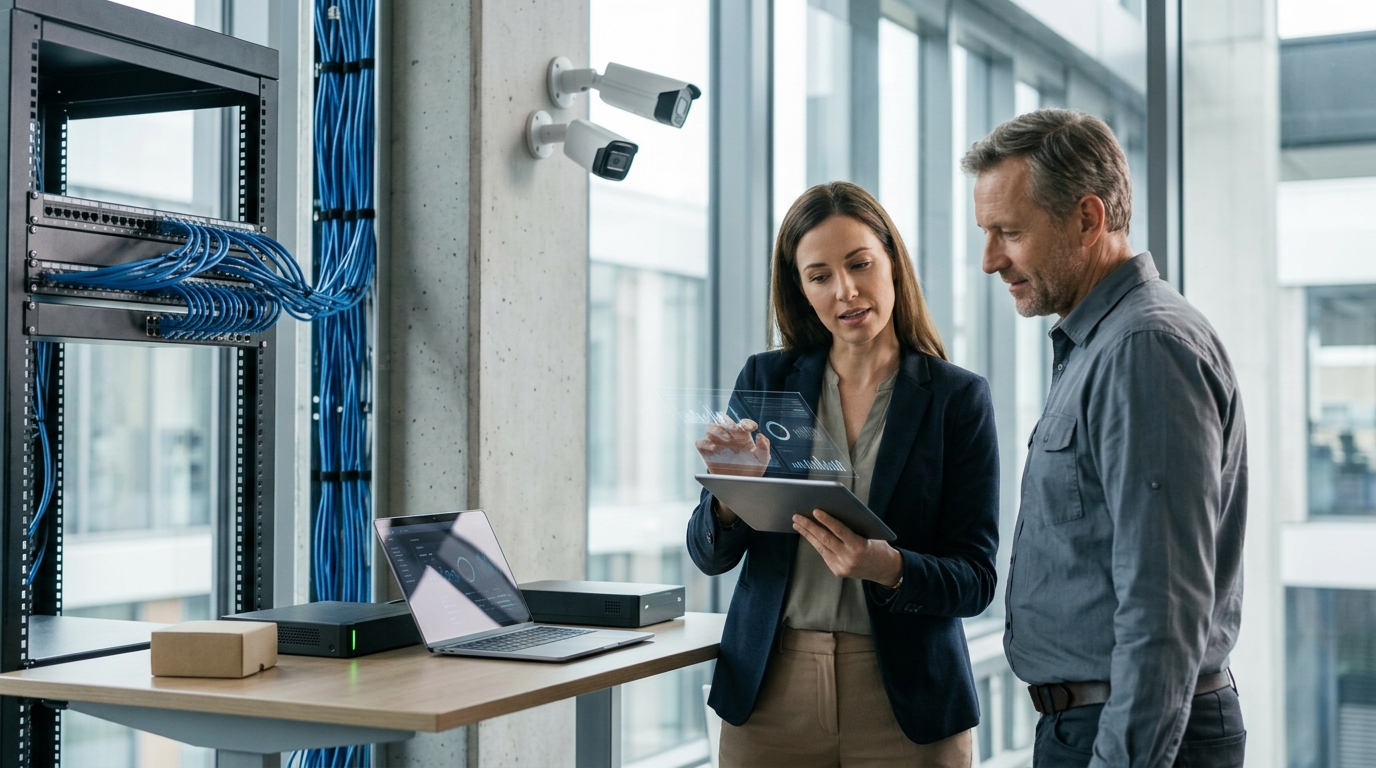
Modern businesses are rapidly shifting from legacy on-premise storage to cloud-based video management systems (VMS). According to recent industry data, over 60% of commercial security deployments now utilize hybrid or fully cloud architectures to reduce physical infrastructure costs. This transition is not merely a software update; it is a fundamental restructuring of how data flows through your building. Moore Technology specializes in bridging the gap between your current physical assets and modern cloud capabilities, ensuring your security posture remains robust during the migration.
Understanding Cloud-Based Surveillance Architecture
Cloud surveillance refers to the storage and management of video footage on remote servers rather than local hard drives. Cloud-based surveillance is a method of storing and managing security footage on remote servers accessed via the internet. This approach eliminates the need for expensive on-site server racks and reduces the risk of data loss due to physical theft or hardware failure.
For commercial entities, the shift to cloud solutions offers scalability. A traditional Network Video Recorder (NVR) has a fixed capacity. Once the drives are full, you must replace hardware or overwrite footage. Cloud storage allows for virtually unlimited retention periods, provided you maintain a subscription. This is particularly critical for retail and industrial sectors where loss prevention audits may require footage from months prior.
Moore Technology provides managed IT services that include the oversight of these hybrid systems. We ensure that your transition to cloud storage does not compromise the integrity of your existing network infrastructure. Our team evaluates your current setup to determine the most efficient path forward, whether that involves a full migration or a phased hybrid approach.
Auditing Existing Network Hardware for Compatibility
Before integrating cloud services, you must audit your current hardware. Not all cameras are created equal. Older analog cameras require video encoders to digitize the signal before it can be sent to the cloud. Modern IP cameras, however, can often stream directly to cloud VMS platforms.
Assessing Camera Specifications
Check the resolution and frame rate of your existing cameras. High-definition 4K streams require significantly more bandwidth than 1080p streams. If your current network switches or routers cannot handle the increased throughput, you will experience packet loss, resulting in choppy video or dropped connections. Moore Technology offers complete IT support to assess these bottlenecks before they become critical failures.
Evaluating Network Switches and Routers
Your network switches must support Power over Ethernet (PoE) if your cameras rely on it for power. Additionally, the uplink ports must have sufficient speed to handle the aggregate data load. If your existing hardware is outdated, we can recommend business networking and cabling upgrades that ensure seamless connectivity between your local devices and the cloud.
Integration Methodologies: ONVIF and RTSP
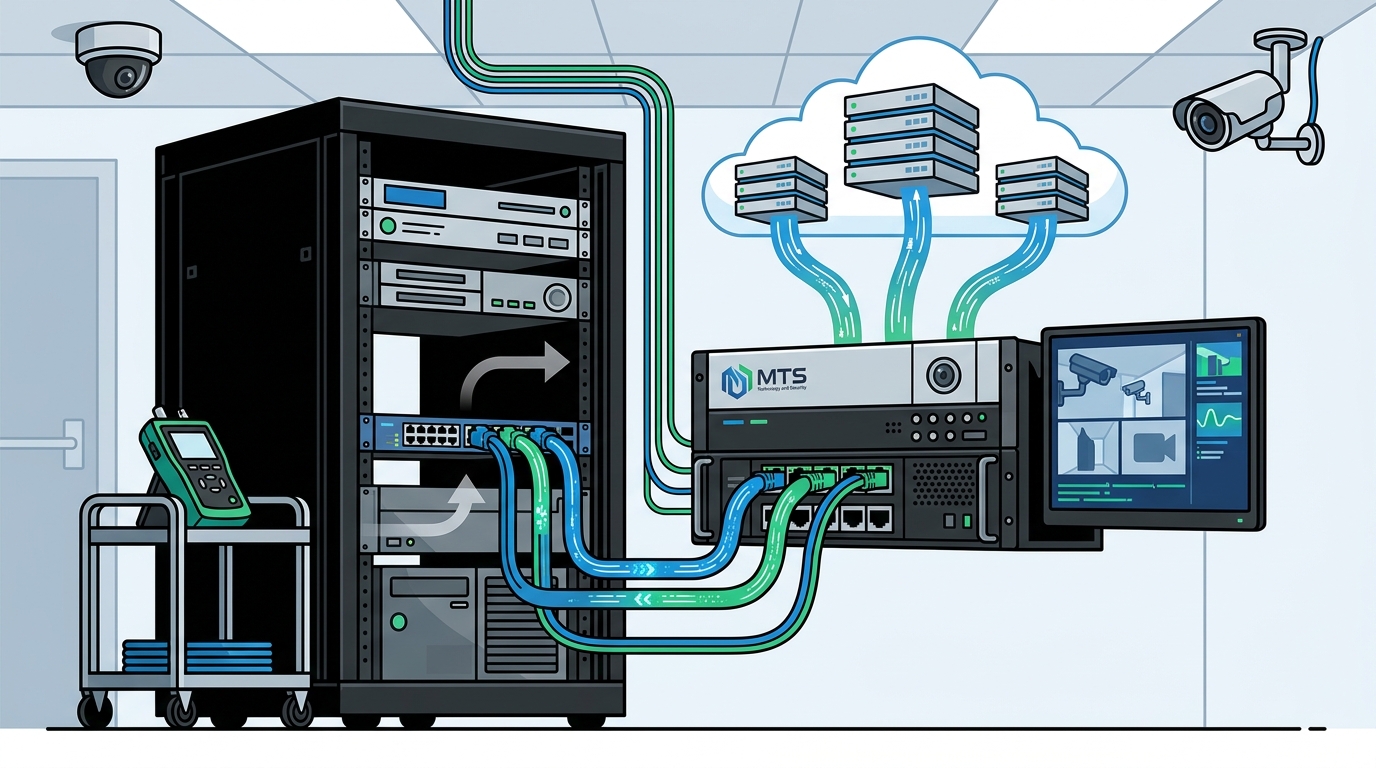
Integration relies on standardized protocols. Without these standards, your cameras would be locked into proprietary software, making cloud migration nearly impossible. Two primary protocols dominate this space: ONVIF and RTSP.
ONVIF (Open Network Video Interface Forum) is an open industry forum that ensures interoperability between different vendors. ONVIF is a standard that allows video devices from different manufacturers to communicate with each other. If your existing cameras support ONVIF Profile S or Profile T, you can integrate them with most major cloud VMS platforms without needing vendor-specific drivers.
RTSP (Real Time Streaming Protocol) is used for streaming video data. RTSP is a network control protocol designed for use in entertainment and communications systems to control streaming media servers. While RTSP is excellent for real-time viewing, it is not a storage protocol. You need a middleware or a gateway device to translate RTSP streams into a format that cloud storage can ingest efficiently.
Moore Technology specializes in structured cabling and network configuration to ensure these protocols are executed flawlessly. We configure your network switches to prioritize video traffic, ensuring that your surveillance data takes precedence over general office internet usage.
Managing Bandwidth and Latency Constraints
One of the biggest challenges in cloud integration is bandwidth. Streaming high-definition video 24/7 consumes a massive amount of data. If your business internet connection is saturated, your daily operations will suffer. Latency, or the delay in data transmission, can also impact the usability of live feeds.
Implementing Edge Computing
To mitigate bandwidth issues, consider edge computing. Edge computing processes data near the source of data generation rather than in a centralized cloud data center. By using edge devices, you can filter footage locally. For example, you can configure your system to only upload video when motion is detected. This reduces bandwidth usage by up to 80% while maintaining security coverage.
Quality of Service (QoS) Configuration
Configure Quality of Service (QoS) settings on your network. QoS is a networking feature that prioritizes certain types of traffic over others. By prioritizing video traffic, you ensure that your surveillance system remains stable even during peak internet usage times. Moore Technology’s managed IT services include detailed QoS configuration to protect your critical security infrastructure.
Security and Compliance in Hybrid Environments
Moving to the cloud introduces new security considerations. You must ensure that data is encrypted both in transit and at rest. Encryption in transit protects data as it moves from your camera to the cloud server. Encryption at rest protects the data while it is stored on the cloud provider’s servers.
Compliance is another critical factor. Industries such as healthcare and finance have strict regulations regarding data retention and access. HIPAA and GDPR compliance requires that you have full control over who accesses your video data. Moore Technology ensures that your commercial security camera systems meet these rigorous standards.
Access control is equally important. You must implement multi-factor authentication (MFA) for all users accessing the cloud platform. This prevents unauthorized access even if credentials are compromised. Our team also sets up access control systems that integrate with your video management system, allowing you to correlate physical entry events with video footage.
Key Takeaways
- Cloud Scalability: Cloud storage eliminates physical hardware limits, allowing for indefinite footage retention without on-site server maintenance.
- Hardware Audits: Always assess camera resolution and network switch capacity before migration to prevent bandwidth bottlenecks.
- Protocol Standards: ONVIF and RTSP are essential for interoperability between legacy hardware and modern cloud VMS platforms.
- Edge Computing: Utilizing edge devices to filter motion events can reduce bandwidth consumption by up to 80%.
- QoS Prioritization: Configuring Quality of Service ensures video traffic is not disrupted by general office internet usage.
- Security Compliance: Encryption in transit and at rest is mandatory for protecting sensitive commercial data in hybrid environments.
- Expert Integration: Professional integration by Moore Technology ensures seamless connectivity and ongoing managed support for your security infrastructure.
Frequently Asked Questions
Can I integrate my old analog cameras with a cloud system?
Yes, but you will need video encoders to convert the analog signal to a digital IP stream. These encoders allow your legacy cameras to communicate with modern cloud VMS platforms.
How much bandwidth does cloud surveillance require?
Bandwidth requirements depend on camera resolution and frame rate. A single 1080p camera may use 4-8 Mbps. Using edge computing to record only motion events can significantly reduce this load.
Is cloud surveillance more secure than on-premise NVRs?
Cloud surveillance offers redundancy against physical theft or fire. However, it requires robust encryption and strong access controls to prevent cyber threats. Moore Technology implements enterprise-grade security protocols for all our clients.
What is the difference between ONVIF and RTSP?
ONVIF is a standard for device interoperability and management. RTSP is a protocol for streaming the actual video data. Both are often used together to ensure seamless integration.
Does Moore Technology offer managed services for cloud systems?
Yes, we provide managed IT services that include monitoring, maintenance, and support for your cloud-based surveillance infrastructure.
How do I ensure compliance with data regulations?
You must choose a cloud provider that offers encryption at rest and in transit. Additionally, you need strict access controls and audit logs. Moore Technology helps you configure your system to meet HIPAA, GDPR, and other industry standards.
Contact Moore Technology
Integrating cloud-based surveillance with your existing network hardware requires precision, expertise, and a deep understanding of both physical and digital security. Moore Technology is your trusted partner in this transition. We specialize in business IT and security, providing tailored solutions that enhance your operational efficiency and protect your assets.
Do not let outdated hardware hold your security strategy back. Contact us today to schedule a comprehensive network audit and integration plan. Visit our contact page or call us at (406) 284-8324 to discuss your specific needs. Let Moore Technology help you build a secure, scalable, and future-proof security infrastructure.