
Common Pitfalls in Cloud Surveillance Integration and How to Prevent Them
Modern commercial security relies heavily on cloud infrastructure, yet the transition from traditional on-premise systems to cloud-based surveillance introduces complex technical hurdles. According to recent industry data, over 60% of failed security deployments stem from poor network integration rather than hardware defects. This statistic highlights a critical reality: the camera is only as good as the network that feeds it. For businesses in Montana and across the West, understanding these integration pitfalls is essential for maintaining continuous, reliable security coverage.
Network Bandwidth and Latency Issues
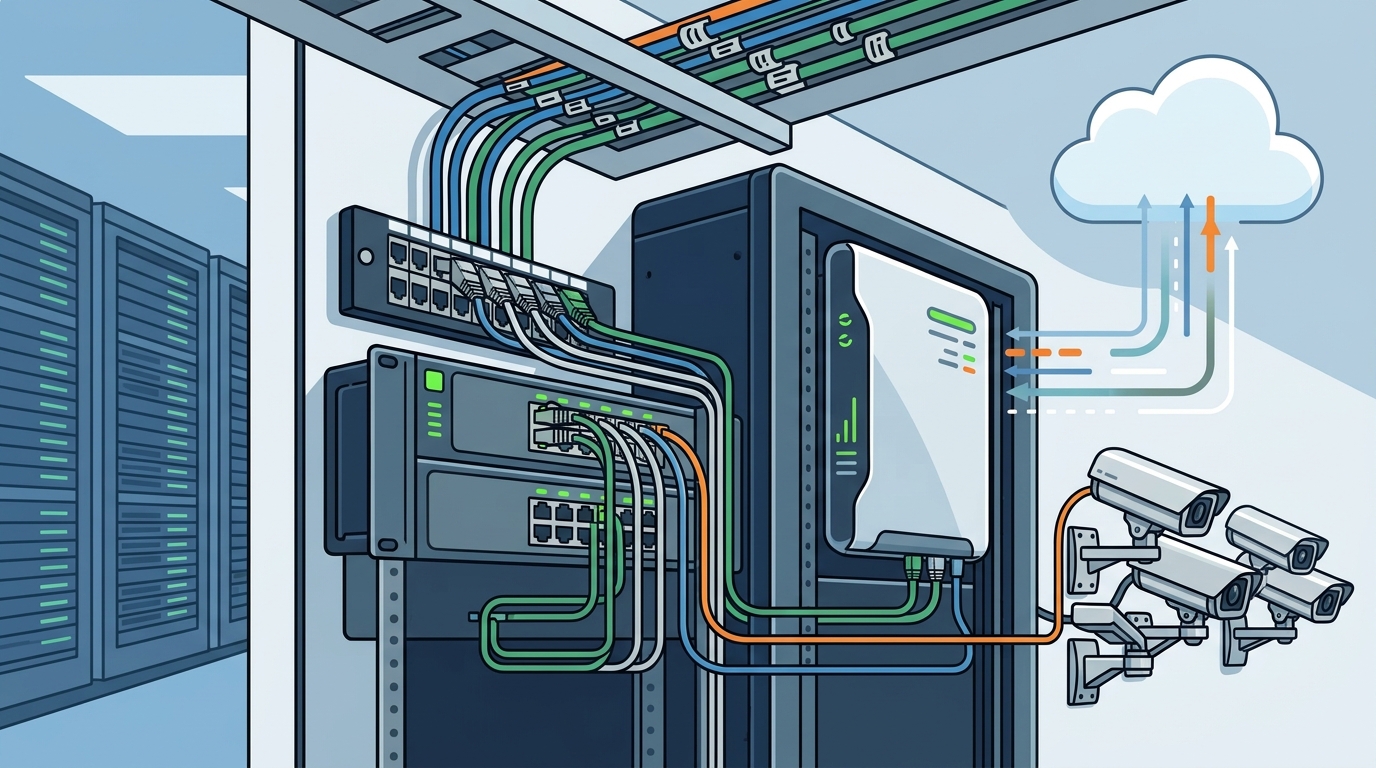
One of the most frequent errors in cloud surveillance deployment is underestimating the bandwidth requirements of high-definition video streams. Cloud-based systems require consistent, high-throughput internet connections to upload video data in real time. When bandwidth is insufficient, video quality degrades, frames drop, or the system fails to upload footage entirely.
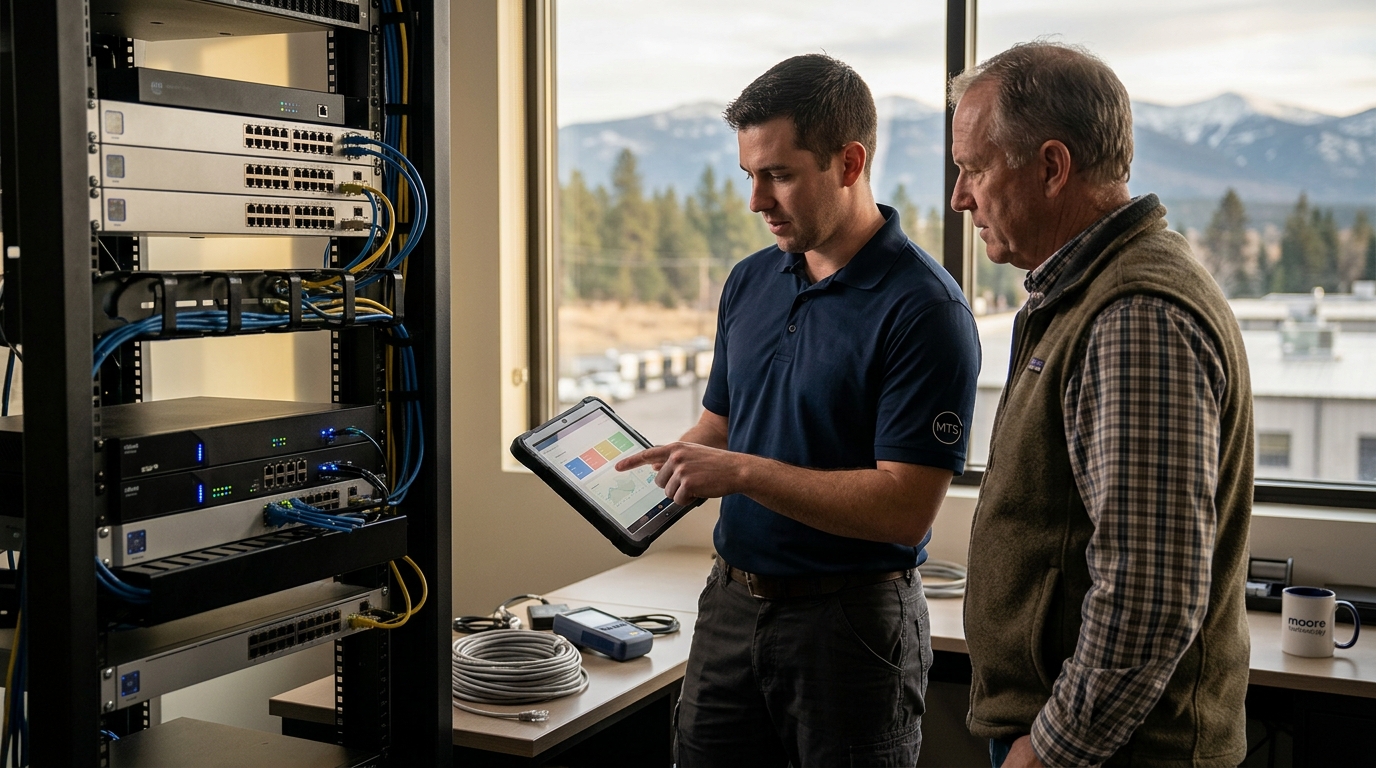
Latency is the silent killer of real-time monitoring. If your network has high latency, the time between an event occurring and the video appearing in the cloud dashboard increases. This delay can be critical during an active security breach. To prevent this, businesses must conduct a thorough network audit before installation. Moore Technology specializes in designing structured cabling and network infrastructure that supports the heavy data loads of modern surveillance systems. We ensure that your local area network (LAN) can handle the upstream traffic without compromising other business operations.
For commercial buildings in Montana, where internet infrastructure can vary significantly between urban centers like Bozeman and rural industrial sites, this planning phase is non-negotiable. We recommend dedicated internet access (DIA) lines for facilities with more than ten high-definition cameras. This ensures that your security traffic is prioritized and isolated from general web browsing or email traffic.
Connectivity Reliability and Downtime
Cloud surveillance is inherently dependent on internet connectivity. If your internet connection goes down, your cloud recording stops. This creates a dangerous blind spot in your security posture. Many businesses make the mistake of relying solely on a single internet service provider (ISP) without a backup plan.
Redundancy is the key to uninterrupted security. A robust cloud surveillance strategy includes failover mechanisms. This might involve a secondary ISP, a cellular backup connection, or a hybrid system that stores footage locally on a Network Video Recorder (NVR) when the internet is down and uploads it once connectivity is restored. Moore Technology designs systems with this resilience in mind. Our managed IT services include proactive monitoring of your network health, ensuring that connectivity issues are addressed before they impact your security infrastructure.
We also emphasize the importance of Quality of Service (QoS) settings on your network equipment. QoS allows you to prioritize video traffic over other data types. This ensures that even if your network is congested, your security cameras continue to function at full capacity. Without QoS, a large file download or a video conference could starve your cameras of bandwidth, leading to gaps in your surveillance coverage.
Data Security and Compliance Risks
Storing sensitive video footage in the cloud introduces significant data security challenges. If the cloud provider is not properly secured, or if your internal network is vulnerable, hackers can intercept video feeds or steal stored footage. This is particularly concerning for businesses in regulated industries such as healthcare, finance, or retail.
Data encryption is mandatory for cloud surveillance. Ensure that your cloud provider uses end-to-end encryption for data in transit and at rest. This means that even if the data is intercepted, it cannot be read without the decryption keys. Additionally, access controls must be strictly managed. Only authorized personnel should have access to the video feeds, and multi-factor authentication (MFA) should be required for all admin accounts.
Moore Technology prioritizes cyber security in every installation we perform. We work with trusted cloud partners who meet rigorous security standards, such as SOC 2 compliance. We also help clients configure their local networks to prevent unauthorized access to the cameras themselves. This includes changing default passwords, disabling unused ports, and segmenting the security network from the general business network. By isolating your surveillance system, you reduce the attack surface and protect your data from internal and external threats.
Integration Compatibility and Legacy Systems
Many businesses attempt to integrate new cloud surveillance systems with existing legacy infrastructure, such as older access control systems or intrusion alarms. This often leads to compatibility issues that prevent seamless operation. For example, an old analog camera system may not have the necessary protocols to communicate with a modern cloud platform.
Standardization is crucial for successful integration. When planning a cloud surveillance upgrade, it is essential to choose systems that support open standards like ONVIF (Open Network Video Interface Forum). ONVIF ensures that devices from different manufacturers can communicate with each other. This flexibility allows you to mix and match hardware from different vendors without being locked into a single ecosystem.
Moore Technology excels in access control integration and intrusion alarm systems. We ensure that your new cloud cameras can trigger alerts on your intrusion alarms or unlock doors via your access control system. This unified approach provides a comprehensive security solution that is easier to manage and more effective than disparate systems. We also handle the migration of legacy data, ensuring that you do not lose historical footage during the transition to the cloud.
Scalability and Future-Proofing
Businesses often plan for their current needs but fail to account for future growth. A cloud surveillance system that works for ten cameras today may struggle with fifty cameras tomorrow. This lack of scalability can lead to performance issues and the need for costly upgrades down the line.
Design for growth from day one. When selecting a cloud provider and hardware, consider the maximum number of cameras you might need in the next five to ten years. Ensure that your internet connection can handle the increased bandwidth. Also, look for cloud platforms that offer flexible pricing tiers based on storage and features. This allows you to start small and expand as your business grows without migrating to a new system.
Moore Technology takes a long-term view with every client. We design systems that are modular and scalable. This means that adding new cameras or features in the future is simple and cost-effective. We also stay abreast of emerging technologies, such as AI-powered analytics, and can integrate these capabilities into your system as they become available. This future-proofing ensures that your investment in cloud surveillance continues to deliver value for years to come.
Key Takeaways
- Bandwidth is Critical: Underestimating bandwidth needs is the #1 cause of cloud surveillance failure. Use dedicated lines and QoS.
- Redundancy Saves Time: Always implement a failover internet connection to prevent blind spots during outages.
- Security is Non-Negotiable: Use end-to-end encryption and MFA to protect your video data from cyber threats.
- Integration Matters: Choose ONVIF-compliant devices to ensure compatibility with access control and alarm systems.
- Plan for Scale: Design your network and cloud plan for future growth to avoid costly upgrades later.
- Local Expertise: Montana businesses benefit from local support that understands regional infrastructure challenges.
- Professional Installation: DIY cloud setups often fail due to complex network configurations. Professional integration ensures reliability.
Frequently Asked Questions
What is the minimum internet speed required for cloud surveillance?
While requirements vary by camera resolution and frame rate, a general rule of thumb is 4-8 Mbps per high-definition camera for smooth uploading. However, for commercial environments, we recommend a dedicated internet connection with significantly higher bandwidth to ensure stability and prioritize security traffic.
Can I use cloud surveillance with my existing access control system?
Yes, provided that both systems support open integration standards like ONVIF or have API access. Moore Technology specializes in integrating access control systems with cloud video to create a unified security platform.
What happens to my video footage if the internet goes down?
If you have a hybrid system with local storage (NVR), footage continues to be recorded locally and uploads when the internet is restored. If you have a pure cloud system without local storage, you will experience a gap in recording. We always recommend a hybrid approach for critical security.
How does Moore Technology ensure data security for cloud clients?
We partner with cloud providers that offer SOC 2 compliance and end-to-end encryption. We also configure your local network with strict firewalls and segmentation to prevent unauthorized access to the cameras themselves.
Is cloud surveillance more expensive than traditional DVR systems?
Cloud surveillance typically involves a monthly subscription fee, while DVR systems have a higher upfront hardware cost but lower ongoing costs. However, cloud systems offer remote accessibility, easier scalability, and reduced maintenance, which can lower the total cost of ownership over time.
Can I monitor my cloud surveillance system from my phone?
Yes, most modern cloud surveillance platforms offer mobile apps that allow you to view live feeds, receive alerts, and review recorded footage from anywhere with an internet connection.
How long does it take to install a cloud surveillance system?
Installation time depends on the size of the facility and the complexity of the network. A small office might take one day, while a large multi-site deployment could take several weeks. Moore Technology provides detailed project timelines during the planning phase.
Contact Moore Technology
Don't let integration pitfalls compromise your business security. Moore Technology provides expert IT support and security system installation tailored to the unique needs of Montana businesses. From structured cabling to cloud integration, we ensure your security infrastructure is robust, reliable, and secure.
Contact us today to schedule a consultation and learn how we can protect your commercial property with cutting-edge cloud surveillance solutions.