

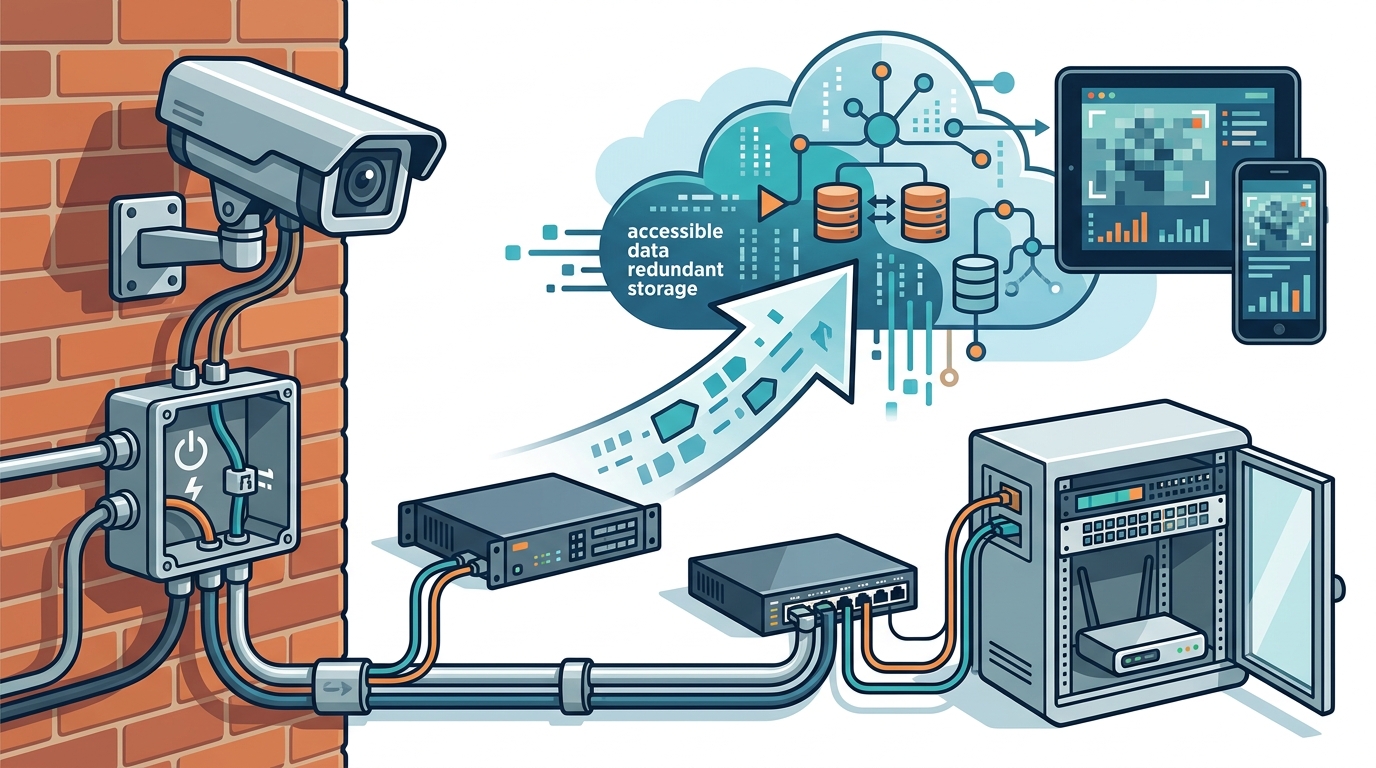
Modern businesses are rapidly shifting from legacy on-premise storage to cloud-based video management systems (VMS). This transition is not merely a trend but a structural necessity for scalable security. According to recent industry data, over 60% of new commercial security deployments now utilize cloud-hybrid architectures to ensure data redundancy and remote accessibility. This shift allows organizations to access critical footage from anywhere, reducing the risk of physical evidence loss during local hardware failures. (Contact Us 8902 Moore)
Understanding Cloud Surveillance Integration
Cloud surveillance integration refers to the process of connecting physical security cameras to remote servers for video storage, processing, and management. Unlike traditional Network Video Recorders (NVRs) that store data locally on hard drives, cloud integration offloads this burden to secure data centers. This approach eliminates the need for extensive on-site server rooms and reduces the risk of physical theft or damage to recording equipment. (About Us 8902 Moore)
For businesses with existing networks, the primary challenge is ensuring that current bandwidth and infrastructure can support continuous video uploads without degrading operational performance. Moore Technology specializes in evaluating these network capabilities to recommend the most efficient integration path. Our team ensures that your existing IT infrastructure is optimized to handle the increased data throughput required for reliable cloud connectivity. (Business IT and Security)
Method 1: VMS Integration
Video Management Software (VMS) integration involves using a centralized software platform that aggregates video feeds from various camera brands and protocols. This method is ideal for complex environments where multiple types of hardware are already in use. The VMS acts as the brain, processing the video streams and then pushing the relevant clips or continuous footage to the cloud. (Blog 8902 Moore Technology)
This approach offers significant flexibility. It allows businesses to mix and match camera hardware from different manufacturers, preventing vendor lock-in. The software can be configured to store only event-triggered footage in the cloud, which significantly reduces bandwidth consumption. For large enterprises, this method provides a unified dashboard for managing security across multiple locations, from our service areas in Montana to Texas and Colorado. (Jobs 8902 Moore Technology)
Method 2: Edge-to-Cloud Direct
Edge-to-cloud integration relies on intelligent cameras that process video data locally at the source. These "smart" cameras use onboard analytics to detect motion, faces, or specific events. Only the relevant clips are then uploaded to the cloud, while the raw video stream remains minimal.
This method is highly efficient for businesses with limited bandwidth. By filtering data at the edge, you reduce the load on your network and lower cloud storage costs. The cameras handle the heavy lifting of analytics, such as license plate recognition or perimeter intrusion detection, before any data leaves the building. This ensures that your network remains responsive for other critical business applications while maintaining robust security coverage.
Method 3: Hybrid NVR Solutions
Hybrid NVR solutions combine local storage with cloud backup capabilities. These systems record video to local hard drives for immediate access and low latency, while simultaneously maintaining a secondary copy in the cloud. This dual-layer approach provides the best of both worlds: instant playback for local security teams and off-site redundancy for disaster recovery.
Hybrid systems are particularly valuable for businesses in remote areas or those with intermittent internet connections. If the internet goes down, the local recording continues uninterrupted. Once connectivity is restored, the system syncs the missing data to the cloud. This ensures that no critical security events are lost due to temporary network outages, providing peace of mind for operations managers.
Comparing Integration Methods
Choosing the right integration method depends on your specific operational needs, budget, and existing infrastructure. The following table summarizes the key differences between the three primary methods.
| Feature | VMS Integration | Edge-to-Cloud Direct | Hybrid NVR |
|---|---|---|---|
| Bandwidth Usage | Medium to High | Low (Event-based) | Variable (Sync-based) |
| Local Storage | Optional | Minimal (Cache) | Primary (Hard Drives) |
| Scalability | High | Medium | Medium |
| Best For | Multi-site Enterprises | Bandwidth-Constrained Sites | Disaster Recovery Focus |
| Cost Profile | Subscription + License | Higher Hardware Cost | Hybrid Subscription |
When evaluating these options, consider the total cost of ownership. While edge-to-cloud cameras may have a higher upfront hardware cost, they can save significant money on bandwidth and cloud storage fees over time. Conversely, VMS integration may require more complex setup but offers greater long-term flexibility for expanding security networks.
Key Takeaways
- Cloud Redundancy: Cloud integration protects against physical theft or damage to on-site recording equipment.
- Bandwidth Management: Edge-to-cloud methods significantly reduce network load by uploading only event-triggered footage.
- Hybrid Flexibility: Hybrid NVRs provide local instant access while ensuring off-site data backup for disaster recovery.
- VMS Scalability: Video Management Software allows for unified control across diverse hardware brands and multiple locations.
- Network Optimization: Existing network infrastructure must be evaluated to ensure it can support continuous video uploads.
- Remote Access: Cloud solutions enable security teams to monitor sites from anywhere, improving response times.
- Moore Technology Expertise: Our team specializes in designing tailored integration strategies for commercial and industrial clients.
Frequently Asked Questions
What is cloud surveillance integration?
Cloud surveillance integration is the process of connecting physical security cameras to remote servers for video storage, processing, and management, eliminating the need for extensive on-site server rooms.
How does edge-to-cloud integration save bandwidth?
Edge-to-cloud integration saves bandwidth by processing video data locally at the camera. Only relevant clips, such as those triggered by motion or specific events, are uploaded to the cloud, rather than streaming continuous video.
What is a hybrid NVR system?
A hybrid NVR system combines local storage with cloud backup capabilities. It records video to local hard drives for immediate access while simultaneously maintaining a secondary copy in the cloud for disaster recovery.
Can I integrate cloud surveillance with existing cameras?
Yes, many modern cloud platforms support integration with existing IP cameras. However, compatibility depends on the camera's protocol and firmware. Moore Technology can assess your current hardware to determine the best integration path.
What are the security benefits of cloud storage?
Cloud storage provides off-site redundancy, protecting video evidence from physical theft, fire, or hardware failure. It also ensures that data is accessible remotely, allowing for rapid incident response regardless of location.
How does VMS integration work?
VMS integration uses a centralized software platform to aggregate video feeds from various camera brands. The software processes the streams and manages the upload to the cloud, providing a unified dashboard for security management.
What is the cost difference between methods?
Costs vary based on hardware and subscription models. Edge-to-cloud cameras often have higher upfront costs but lower ongoing bandwidth fees. VMS and hybrid systems typically involve subscription fees for software and cloud storage, balanced against lower hardware requirements.
Contact Moore Technology
Ready to secure your business with a robust cloud surveillance strategy? Moore Technology provides expert design, installation, and support for commercial security systems. Our team is ready to help you navigate the complexities of network integration and ensure your security infrastructure meets your operational needs. Contact us today to schedule a consultation and discover how we can enhance your business security.