
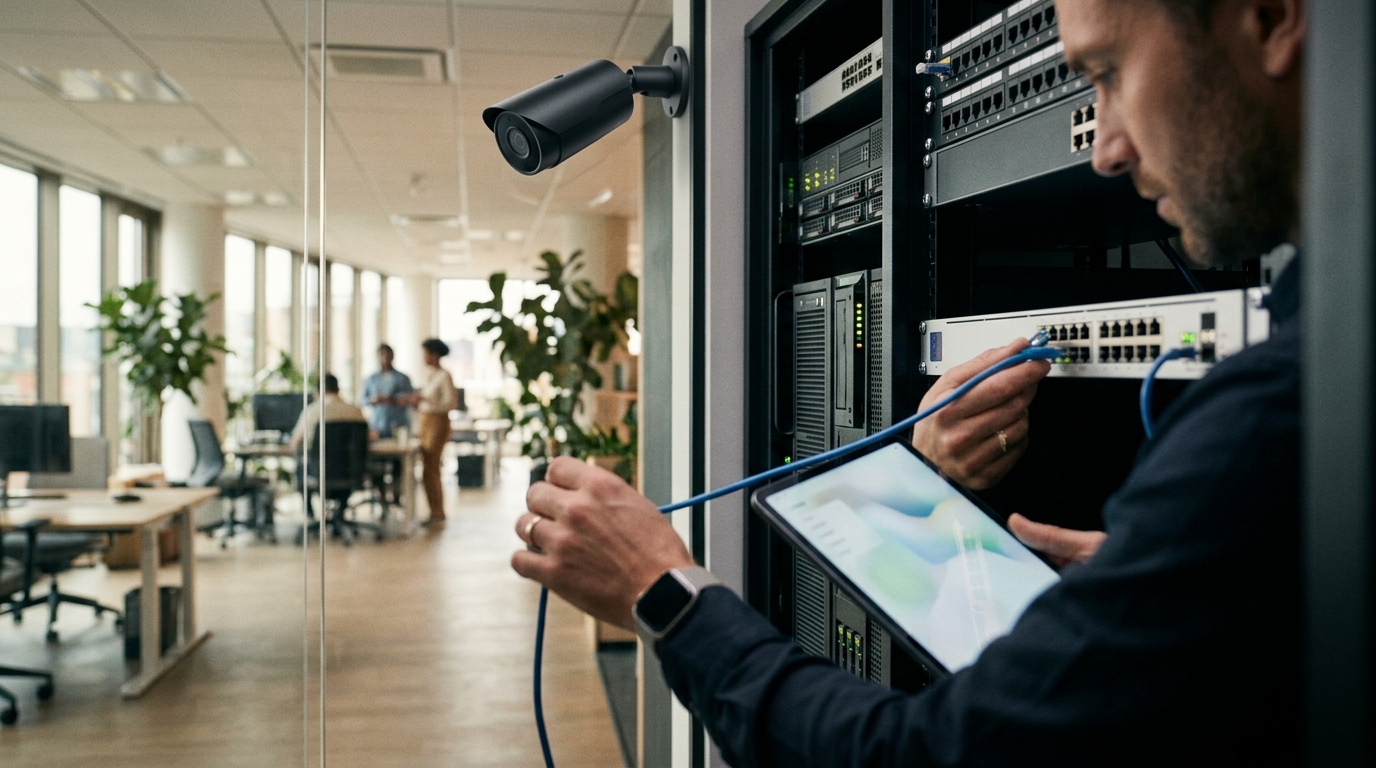
Modern businesses are rapidly shifting from legacy on-premise storage to cloud-based video management systems (VMS). This transition is driven by the need for scalable, remote-accessible security data. According to recent industry reports, over 60% of commercial enterprises are now prioritizing cloud integration for their physical security infrastructure to reduce hardware maintenance costs. This shift is not merely a trend but a fundamental change in how organizations protect their assets and monitor operations.
Understanding Cloud Surveillance Architecture
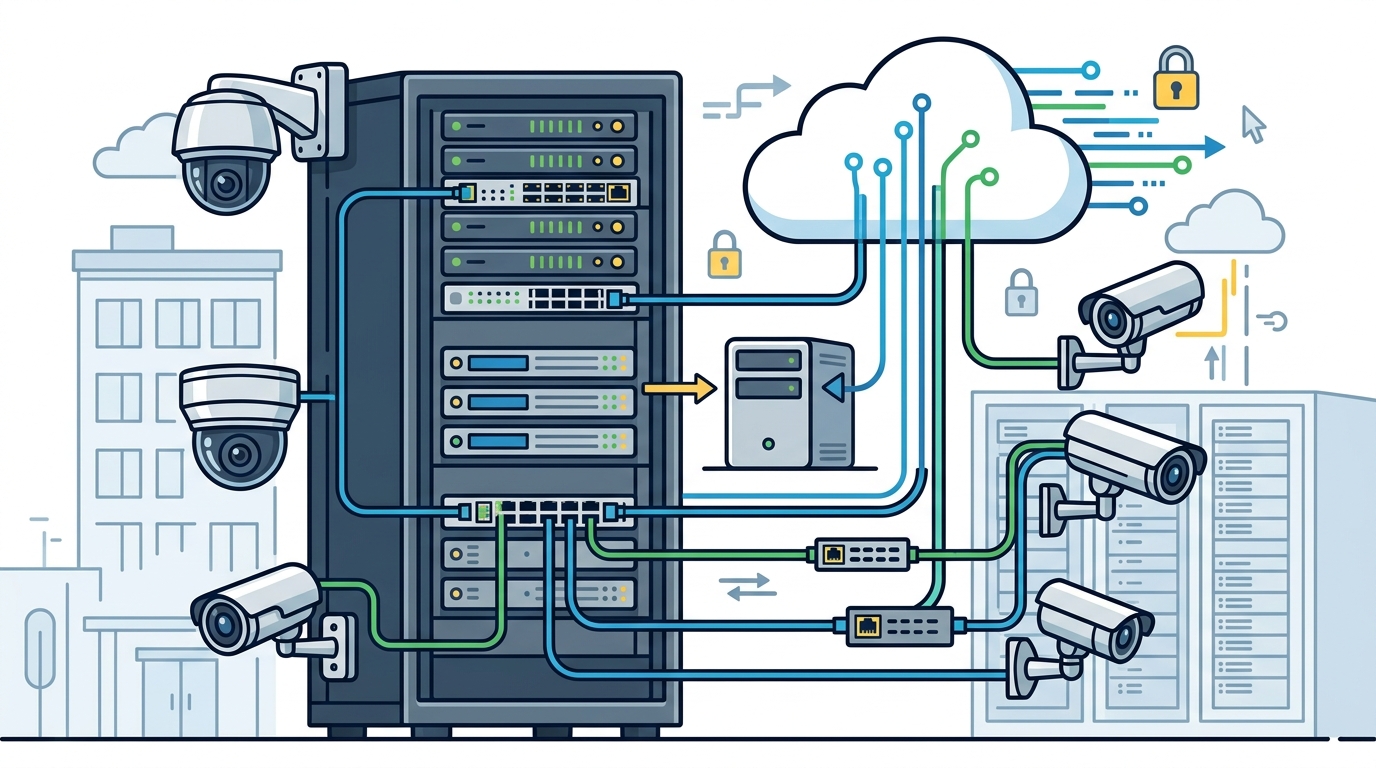
Cloud surveillance refers to the storage and management of video data on remote servers accessed via the internet. Unlike traditional Digital Video Recorders (DVRs) or Network Video Recorders (NVRs) that store footage locally, cloud systems offload this burden to data centers. This architecture allows for real-time monitoring from any device with an internet connection.
Cloud surveillance is a model where video data is transmitted from cameras to remote servers for storage and analysis. This approach eliminates the risk of physical theft or damage to local storage devices. For businesses operating across multiple locations, such as retail chains or industrial facilities, this centralization is critical for unified oversight.
The core benefit lies in scalability. As a business grows, adding more cameras does not require purchasing additional hard drives or upgrading local servers. Instead, storage capacity expands automatically with the subscription. This flexibility is particularly valuable for companies like Moore Technology, which services diverse clients from retail giants to industrial sites.
Evaluating Network Hardware Compatibility
Integrating cloud systems with existing hardware requires a thorough audit of your current network infrastructure. Not all cameras are created equal, and compatibility depends heavily on the protocols they support. The first step is identifying whether your existing cameras are Analog, HD-Over-Coax, or IP-based.
IP cameras are the most compatible with cloud solutions. They communicate over the network using standard protocols, making them easier to integrate into a cloud VMS. Analog cameras, on the other hand, require a Video Encoder to convert their signal into a digital format that can be transmitted over the internet. This adds a layer of complexity and potential points of failure.
Bandwidth is the most critical constraint in this integration. High-definition video streams consume significant bandwidth. If your existing network switches or routers are outdated, they may not handle the increased load. Moore Technology specializes in managed IT services that include network assessments to ensure your infrastructure can support the required data throughput without degrading performance for other business applications.
Integration Methodologies and Protocols
There are two primary methods for integrating cloud surveillance with existing hardware: direct cloud camera replacement and hybrid integration. Direct replacement involves swapping out old cameras for new IP cameras designed for cloud connectivity. Hybrid integration uses existing cameras with additional encoders or middleware to bridge the gap to the cloud.
ONVIF and RTSP Protocols
Open Network Video Interface Forum (ONVIF) is a global industry standard that ensures interoperability between different manufacturers' devices. If your existing cameras support ONVIF, they can often be integrated into third-party cloud VMS platforms without proprietary software. Real-Time Streaming Protocol (RTSP) is another key protocol that allows for the streaming of audio and video over IP networks.
Understanding these protocols is essential for a successful integration. Moore Technology leverages these standards to design customized security systems that work seamlessly with your existing investment. By utilizing ONVIF-compliant devices, we ensure that your system remains flexible and future-proof.
Edge Computing and Local Processing
Some modern cloud systems utilize edge computing. In this model, the camera itself processes the video, sending only relevant clips or metadata to the cloud. This reduces bandwidth usage and allows for faster response times. For example, motion detection algorithms can run on the camera, triggering uploads only when activity is detected.
This approach is particularly useful for businesses with limited internet connectivity. By reducing the volume of data transmitted, you can maintain high-quality surveillance without overwhelming your network. This strategy aligns with Moore Technology's commitment to prompt resolution and efficient service delivery.
Security and Compliance Considerations
Transferring video data to the cloud introduces new security challenges. Data must be encrypted both in transit and at rest to prevent unauthorized access. Encryption ensures that even if data is intercepted, it cannot be read without the proper decryption keys.
Compliance with regulations such as GDPR, HIPAA, or industry-specific standards is also crucial. Depending on your business sector, you may have strict requirements for data retention and access control. Cloud providers must offer robust access management features to ensure that only authorized personnel can view or download footage.
Moore Technology prioritizes intrusion detection and security best practices in every deployment. We ensure that your cloud surveillance system meets the highest standards of data protection. Our team stays updated on the latest security protocols to safeguard your business against evolving threats.
Deployment Strategies for Seamless Transition
A successful integration requires careful planning and execution. The first step is a comprehensive site survey to assess the current state of your network and cameras. This survey should identify potential bottlenecks, such as outdated switches or insufficient bandwidth.
Next, develop a phased rollout plan. Start with a pilot program in a single location or department to test the integration. This allows you to identify and resolve any issues before scaling up. Monitor performance metrics closely during this phase to ensure that the system meets your expectations.
Training is another critical component. Your staff needs to know how to access and manage the cloud system. Moore Technology provides white-glove managed IT services that include comprehensive training and ongoing support. We ensure that your team is confident in using the new system to enhance security and operational efficiency.
Key Takeaways
- Cloud surveillance offloads video storage to remote servers, reducing the need for local hardware maintenance.
- IP cameras are the most compatible with cloud systems, while analog cameras require additional encoders.
- Bandwidth capacity is the primary constraint; network upgrades may be necessary to support high-definition streams.
- ONVIF and RTSP protocols are essential for ensuring interoperability between different manufacturers' devices.
- Edge computing can reduce bandwidth usage by processing data locally and sending only relevant clips to the cloud.
- Data encryption and compliance with regulations like GDPR are critical for protecting sensitive video information.
- Moore Technology has serviced thousands of locations, including major retailers and industrial sites, ensuring reliable integration.
Frequently Asked Questions
Can I use my existing analog cameras with a cloud system?
Yes, but you will need video encoders to convert the analog signal to a digital format that can be transmitted over the internet. This adds complexity and cost to the integration.
How does cloud surveillance affect my internet bandwidth?
Cloud surveillance can significantly increase bandwidth usage, especially with high-definition video. It is essential to assess your current network capacity and potentially upgrade your internet service or implement edge computing to manage data flow.
Is cloud surveillance more secure than local storage?
Cloud surveillance can be more secure if properly configured, as it protects against physical theft or damage to local hardware. However, it requires robust encryption and access controls to prevent unauthorized online access.
What is the role of ONVIF in cloud integration?
ONVIF is a standard that ensures different manufacturers' cameras and video management systems can communicate. It simplifies integration by allowing you to mix and match devices from different vendors.
How long does it take to integrate cloud surveillance?
The timeline depends on the size of your operation and the complexity of your existing infrastructure. A small office might be integrated in a few days, while a large multi-site facility could take several weeks. Moore Technology provides prompt resolution and efficient project management to minimize downtime.
Do I need to replace my existing network switches?
Not necessarily, but you may need to upgrade to Gigabit or higher-speed switches to handle the increased data load. A network assessment by a professional can determine if your current hardware is sufficient.
What kind of support is available for cloud surveillance systems?
Most cloud providers offer 24/7 support, but for complex integrations, working with a managed service provider like Moore Technology ensures you have expert assistance with setup, troubleshooting, and ongoing maintenance.
Partner with Moore Technology
Integrating cloud-based surveillance with your existing network hardware is a strategic move that enhances security and operational efficiency. However, it requires careful planning and expert execution to ensure a seamless transition. Moore Technology is your trusted partner in this journey. With a decade of experience servicing thousands of locations, we provide the expertise needed to design and implement a system that meets your unique needs.
From managed IT services to access control systems, we offer comprehensive solutions tailored to your business. Our team of experts is ready to help you navigate the complexities of cloud integration. Contact us today to schedule a consultation and discover how we can secure your future.