

Essential Features and Standards for Modern Data Backup Infrastructure
Data loss is no longer a matter of if, but when. According to recent industry analyses, the average cost of a data breach has reached $4.45 million, marking a 15% increase over three years. This statistic underscores the critical need for robust, modern data backup infrastructure that goes beyond simple file copying. Businesses must adopt a strategic approach to data protection that integrates advanced security protocols, automated recovery mechanisms, and scalable storage solutions. Without a comprehensive framework, organizations face not only financial ruin but also irreparable reputational damage and regulatory penalties. This guide outlines the essential features and industry standards required to build a resilient data backup ecosystem.
Understanding Modern Backup Standards
The landscape of data protection has shifted dramatically from physical tape archives to cloud-native and hybrid architectures. To navigate this complexity, organizations must adhere to established standards that ensure interoperability and reliability. 3-2-1 Backup Rule is a foundational standard that dictates keeping three copies of data, on two different media types, with one copy offsite. This standard remains the gold standard for disaster recovery planning.
Another critical framework is the Recovery Time Objective (RTO) and Recovery Point Objective (RPO). RTO defines the maximum acceptable time to restore service after an outage, while RPO specifies the maximum acceptable amount of data loss measured in time. Modern backup infrastructure must be designed to meet these specific metrics, which vary by industry. For instance, financial institutions often require near-zero RPO, whereas retail environments might tolerate slightly longer recovery windows. Understanding these distinctions is vital for selecting the right technology stack.
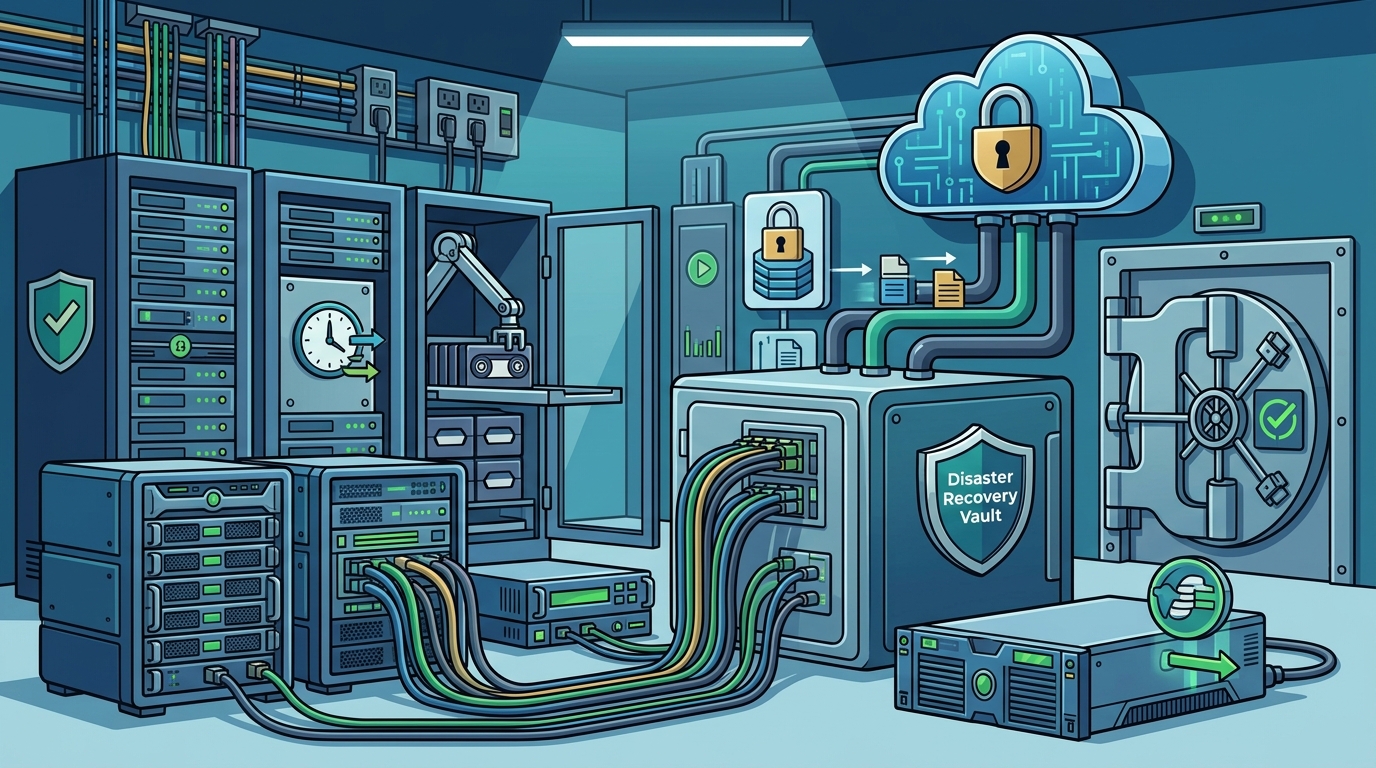
Furthermore, the integration of immutable storage has become a mandatory standard in the face of rising ransomware threats. Immutable backups are write-once, read-many (WORM) storage systems that cannot be altered or deleted for a predetermined period. This feature ensures that even if an attacker gains administrative access, they cannot encrypt or destroy the backup copies. Moore Technology emphasizes this level of security in our Managed IT services, ensuring that client data remains pristine and recoverable.
Core Infrastructure Features
A modern data backup infrastructure is not a single product but a layered ecosystem. The following features are non-negotiable for any enterprise-grade solution.
Automated Deduplication and Compression
Storage costs are a primary concern for growing businesses. Automated deduplication eliminates redundant data blocks, while compression reduces the overall footprint. This feature significantly lowers bandwidth usage during backups and reduces storage hardware requirements. By optimizing data efficiency, organizations can extend the lifespan of their storage investments and improve backup window performance.
Global Active Scale and Replication
For multi-site organizations, global active scale allows data to be replicated across geographically dispersed locations in real-time. This ensures that if one data center fails, another can take over instantly. This capability is crucial for businesses operating across regions, such as those we serve in Montana, Texas, and Colorado. Seamless replication minimizes downtime and ensures business continuity during regional disruptions.
Granular Recovery Capabilities
Restoring an entire server is often unnecessary and time-consuming. Modern infrastructure must support granular recovery, allowing IT teams to restore individual files, folders, or email items directly from the backup image. This precision reduces recovery time and minimizes disruption to other users. It also simplifies the process of retrieving accidentally deleted documents without involving complex restoration procedures.
Security and Compliance Requirements
Data backup is not just about availability; it is equally about security. The convergence of IT and security, often referred to as Cyber Security, requires backup systems to be hardened against external threats.
Encryption at Rest and in Transit
All data must be encrypted both while being transferred to the backup repository and while stored. Encryption at rest protects data from physical theft of storage media, while encryption in transit prevents interception during network transmission. Industry standards such as AES-256 are commonly used for this purpose. Moore Technology integrates these encryption protocols into our Complete IT Support and Cyber Security offerings to ensure end-to-end data protection.
Regulatory Compliance Alignment
Different industries have specific regulatory requirements for data retention and protection. For example, HIPAA governs healthcare data, while GDPR applies to European citizen data. Backup infrastructure must support features like data residency controls, audit logging, and automated retention policies. Failure to comply can result in severe fines and legal action. Our team stays updated on these regulatory changes to ensure your infrastructure remains compliant.
Access Control and Identity Management
Strict access controls are essential to prevent unauthorized modification of backup data. Implementing Role-Based Access Control (RBAC) ensures that only authorized personnel can manage backup policies or initiate restores. Multi-factor authentication (MFA) adds an additional layer of security, preventing credential-based attacks from compromising the backup infrastructure.
Implementation Strategies for IT Teams
Deploying a modern backup infrastructure requires careful planning and execution. The following strategies can help IT teams navigate this process effectively.
Assessment and Discovery
Before selecting a solution, conduct a thorough assessment of your current data landscape. Identify critical applications, data volumes, and growth projections. This discovery phase helps in determining the appropriate backup frequency and storage capacity. It also highlights any legacy systems that may require special handling or integration.
Phased Deployment
Instead of a big-bang approach, consider a phased deployment strategy. Start with critical workloads and gradually expand to less essential systems. This approach allows for testing and refinement of the backup processes without overwhelming the IT team or disrupting business operations. It also provides early wins that demonstrate the value of the new infrastructure.
Regular Testing and Validation
A backup is only as good as its ability to be restored. Regular testing is essential to validate the integrity of backup data and the effectiveness of recovery procedures. Automated testing tools can simulate recovery scenarios and report on any issues. Moore Technology recommends regular service calls and audits to ensure your backup infrastructure remains robust and reliable.
The Role of Managed IT Services
Managing a complex data backup infrastructure in-house can be resource-intensive and prone to human error. Managed IT services provide expert oversight, ensuring that backup policies are consistently applied and updated.
Managed service providers (MSPs) bring specialized knowledge in disaster recovery planning and execution. They monitor backup jobs 24/7, alerting IT teams to failures immediately. This proactive approach minimizes the risk of data loss due to unnoticed backup failures. Additionally, MSPs often provide access to advanced tools and technologies that might be cost-prohibitive for individual organizations.
For businesses in the Mountain West region, partnering with a local MSP like Moore Technology offers the benefit of rapid on-site support when needed. Our team understands the unique challenges of regional infrastructure and can tailor backup solutions to meet specific local needs. We specialize in managed IT services that include comprehensive backup and disaster recovery planning.
Key Takeaways
- Adhere to the 3-2-1 Rule: Maintain three copies of data on two different media types with one offsite.
- Implement Immutable Storage: Use WORM storage to protect backups from ransomware encryption.
- Define RTO and RPO: Establish clear recovery objectives based on business criticality.
- Encrypt Everything: Ensure data is encrypted at rest and in transit using AES-256 standards.
- Test Regularly: Validate backup integrity through automated and manual recovery tests.
- Leverage Managed Services: Utilize MSP expertise for 24/7 monitoring and rapid response.
- Focus on Compliance: Align backup strategies with industry-specific regulatory requirements.
Frequently Asked Questions
What is the difference between backup and disaster recovery?
Backup refers to the process of copying data to a separate location for safekeeping. Disaster recovery is the broader strategy and set of policies used to restore IT infrastructure and data after a catastrophic event. Backup is a component of disaster recovery.
How often should I perform data backups?
The frequency depends on your Recovery Point Objective (RPO). Critical systems may require continuous data protection or hourly backups, while less critical data might only need daily or weekly backups. Assess your business needs to determine the optimal frequency.
Is cloud backup better than on-premises backup?
Neither is universally better. Cloud backup offers scalability and offsite protection, while on-premises backup provides faster local recovery speeds and greater control. A hybrid approach often provides the best balance of security, performance, and cost.
What is immutable storage and why is it important?
Immutable storage is a type of storage that cannot be modified or deleted for a set period. It is crucial for protecting against ransomware, as attackers cannot encrypt or delete the backup copies even if they gain access to the network.
How can Moore Technology help with data backup?
Moore Technology provides comprehensive Managed IT services that include backup strategy design, implementation, and monitoring. We ensure your data is protected with industry-standard security and recovery protocols.
What are the costs associated with modern data backup infrastructure?
Costs vary based on data volume, retention requirements, and chosen technology. While initial setup costs exist, the long-term benefits of reduced downtime and avoided data loss often outweigh the investment. We offer tailored solutions to fit various budget constraints.
Does Moore Technology serve clients outside of Montana?
Yes, while we are based in Bozeman, we provide nationwide installation coverage and remote support services to clients in Texas, Colorado, and beyond.
Secure Your Business Data Today
Data is the lifeblood of your business, and its protection requires expert attention. Don't wait for a disaster to test your backup infrastructure. Contact Moore Technology to discuss your data protection needs and discover how our Managed IT services can safeguard your operations. Visit our Contact Us page to schedule a consultation with our team of experts.