
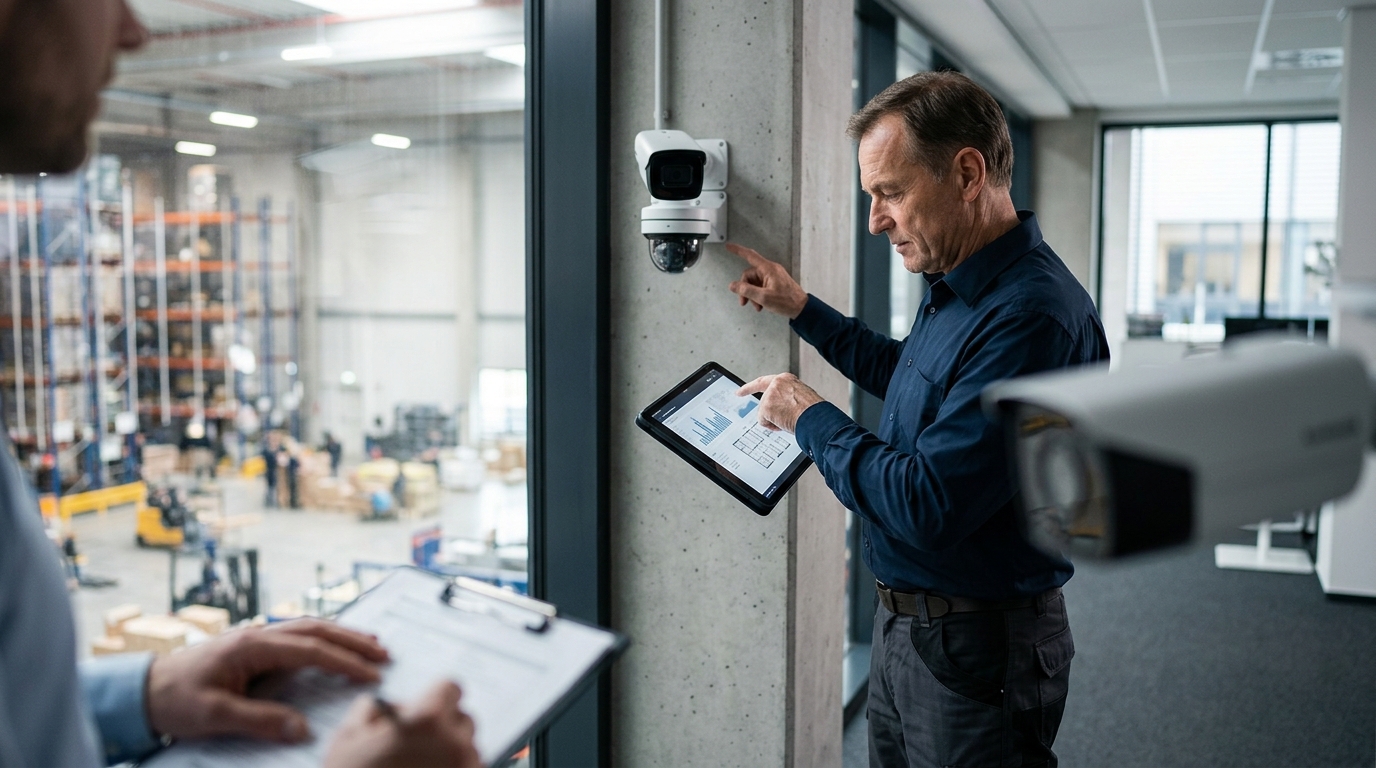
Essential Features and Standards for Commercial Security Camera Systems
Modern commercial security is no longer just about recording footage; it is about proactive threat mitigation and operational intelligence. According to recent industry data, businesses that implement advanced video surveillance systems see a significant reduction in shrinkage and liability claims, with some reports indicating up to a 30% decrease in internal theft. This shift highlights why understanding the technical standards behind these systems is critical for any facility manager or business owner. At Moore Technology, we have spent over a decade ensuring that every camera installed meets rigorous performance benchmarks, from the initial cable pull to the final cloud integration. (About Us 8902 Moore)
Resolution and Image Clarity Standards
The foundation of any effective security system is the ability to identify individuals and events clearly. In the past, standard definition (SD) cameras were sufficient for general monitoring. However, modern standards demand high-definition (HD) and ultra-high-definition (4K) resolutions to ensure forensic value. Resolution is the measure of detail in an image, typically expressed in pixels. When a camera captures 4K resolution, it provides four times the detail of 1080p HD, which is crucial for reading license plates or identifying faces in crowded retail environments. (Business IT and Security)
Moore Technology specializes in designing systems that balance resolution with practical bandwidth limitations. We utilize advanced compression technologies like H.265+ to maintain high image quality without overwhelming your network. This ensures that every frame captured is usable evidence, not just a blurry image. Our team evaluates each site to determine the optimal camera placement and resolution mix, ensuring that high-risk areas receive 4K clarity while lower-risk zones utilize efficient 1080p streams.
Low-Light and Night Vision Capabilities
Security threats do not adhere to business hours. Therefore, a camera system must perform equally well in daylight and total darkness. Traditional infrared (IR) night vision can sometimes wash out details or create glare when reflecting off surfaces. Modern standards now prioritize Starlight or ColorVu technologies that capture color images in near-zero light conditions.
Starlight technology is a sensor advancement that allows cameras to capture color video in extremely low-light environments. This capability is vital for commercial properties with large parking lots, loading docks, or perimeter fences. By maintaining color fidelity at night, investigators can identify suspect clothing or vehicle colors with greater accuracy. Moore Technology integrates these advanced sensors into our commercial installations, ensuring that your security coverage is uninterrupted regardless of the time of day.
Network Infrastructure and Bandwidth
A security camera is only as good as the network it resides on. Poor network design can lead to lag, dropped frames, or system failures during critical moments. Structured cabling is the backbone of any reliable commercial security system. We recommend using Cat6a or fiber optic cabling for long-distance runs to prevent signal degradation and electromagnetic interference.
Power over Ethernet (PoE) has become the industry standard for powering IP cameras. This method delivers both data and power through a single cable, simplifying installation and reducing the need for separate power supplies. At Moore Technology, we design our network infrastructure to handle the peak bandwidth demands of multiple high-resolution streams. This includes configuring Quality of Service (QoS) policies to prioritize security traffic over general office internet usage, ensuring that your surveillance system remains responsive even during high network load periods.
Storage Solutions and Data Retention
Deciding how long to keep footage is a critical compliance and operational decision. Different industries have different regulatory requirements for data retention. For example, retail businesses may need to retain footage for 30 days to handle chargeback disputes, while financial institutions might require 90 days or more for audit purposes.
Data retention is the policy governing how long digital information is stored before being archived or deleted. Moore Technology offers flexible storage options, including on-site Network Video Recorders (NVRs) for local control and cloud-based solutions for off-site redundancy. Hybrid approaches are often best, allowing you to keep recent footage locally for quick access while archiving older data securely in the cloud. This dual-layer strategy protects your data against physical theft, fire, or hardware failure.
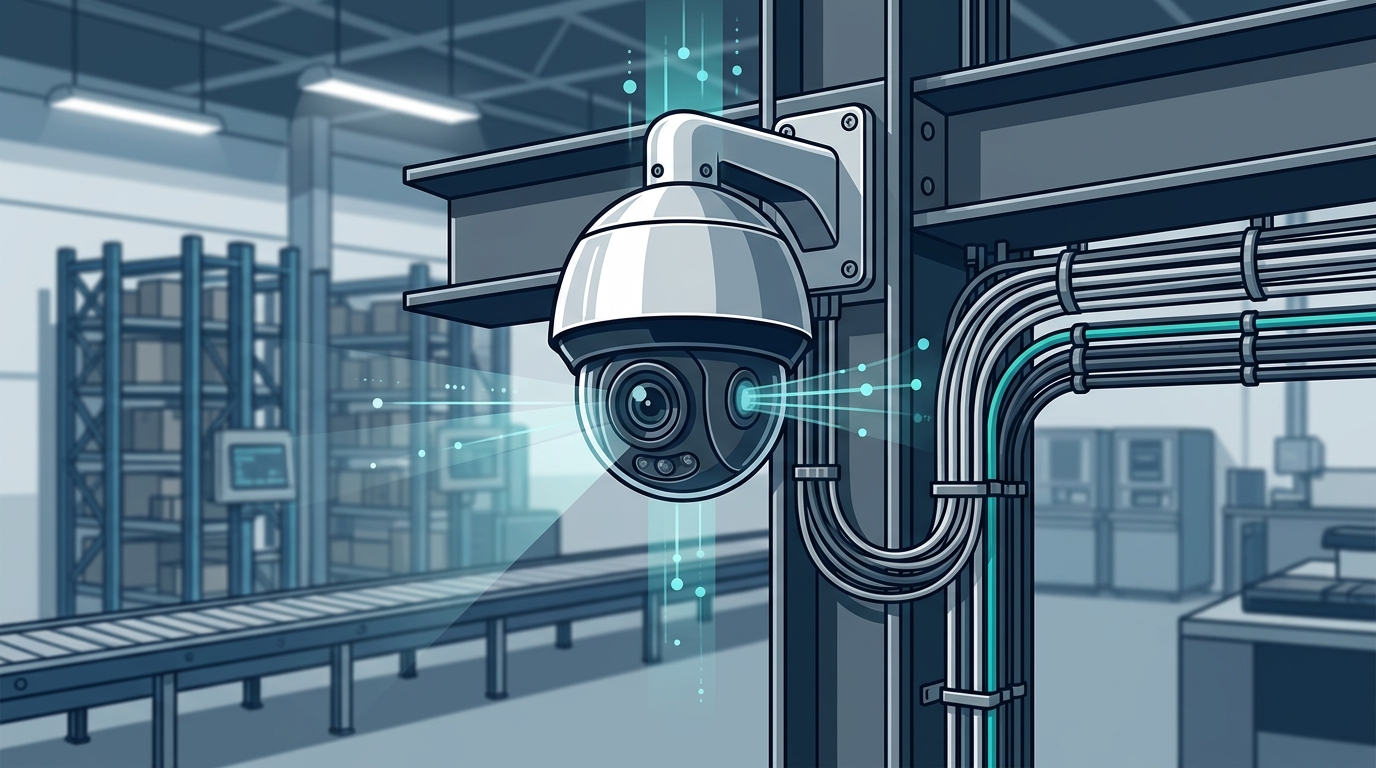
Integration with Access Control
Isolated security systems are less effective than integrated ecosystems. Modern commercial security requires seamless communication between video surveillance and access control systems. When a door is forced open or an unauthorized badge is swiped, the camera system should automatically trigger a recording and alert security personnel.
We specialize in integrating commercial access control systems with our video surveillance platforms. This integration allows for event-driven recording, where cameras only record high-priority events, saving storage space and making review faster. Furthermore, it enables two-way communication, allowing security teams to speak with individuals at entry points via the camera's built-in microphone and speaker. This level of integration transforms passive cameras into active security tools.
Key Takeaways
- Resolution Matters: 4K cameras provide forensic detail essential for identification, while 1080p remains cost-effective for general monitoring.
- Low-Light Performance: Starlight sensors are the new standard for capturing color video in near-darkness, improving night-time identification.
- Network Integrity: Structured cabling and PoE are critical for reliable power and data transmission, preventing system failures.
- Storage Strategy: Hybrid storage (local NVR + cloud) offers the best balance of quick access and disaster recovery.
- Integration is Key: Linking cameras with intrusion alarm systems creates a responsive security environment that reacts to threats in real-time.
- Professional Design: Custom network design by experts like Moore Technology ensures your system scales with your business needs.
- Compliance: Adhering to industry-specific data retention laws protects your business from legal liabilities.
Frequently Asked Questions
What is the difference between analog and IP cameras?
Analog cameras transmit video signals over coaxial cables to a DVR, while IP cameras send digital data over a network to an NVR. IP cameras offer higher resolution, better scalability, and advanced features like analytics, making them the preferred choice for modern commercial installations.
How long can security camera footage be stored?
Storage duration depends on the number of cameras, resolution, and retention policy. Typically, businesses store footage for 30 to 90 days. Moore Technology helps you calculate the exact storage requirements based on your specific compliance needs and budget.
Can security cameras be accessed remotely?
Yes, most modern IP camera systems allow secure remote access via mobile apps or web browsers. This feature enables business owners to monitor their premises from anywhere in the world, provided they have an internet connection.
Do you offer after-hours emergency support?
Absolutely. Moore Technology provides after-hours and emergency repair services to ensure your security system remains operational. We understand that security breaches can happen at any time, and our team is ready to respond promptly to minimize risk.
What is the role of structured cabling in security?
Structured cabling provides the physical foundation for your network. High-quality cabling ensures stable data transmission, reduces interference, and supports Power over Ethernet (PoE), which simplifies camera installation and improves system reliability.
How do I choose the right camera for my business?
The right camera depends on your specific environment. Outdoor cameras need weatherproofing and wide dynamic range (WDR) for varying light conditions. Indoor cameras may require pan-tilt-zoom (PTZ) capabilities for large areas. Moore Technology conducts a thorough site survey to recommend the optimal mix of camera types.
Is cloud storage safer than local storage?
Cloud storage offers protection against physical theft or damage to on-site hardware. However, local storage provides faster access and lower ongoing costs. A hybrid approach, combining both, is often the most robust solution for commercial businesses.
Secure Your Business Today
Don't leave your business security to chance. With over a decade of experience serving major retail and industrial clients, Moore Technology brings enterprise-grade expertise to every project. Whether you need a complete system overhaul or a targeted upgrade, our team is ready to design a solution that fits your operational needs and budget.
Contact us today to schedule a consultation. Visit our contact page or call (406) 284-8324 to speak with a specialist. Let us help you build a safer, more secure future for your business.