

Essential Features and Standards for Montana Commercial IT Systems
Montana’s commercial sector is undergoing a rapid digital transformation, driven by the need for robust infrastructure in a state characterized by vast distances and extreme weather conditions. According to recent industry analyses, businesses in the Mountain West region are prioritizing resilient network architectures to mitigate downtime risks associated with remote locations. This shift is not merely about connectivity; it is about establishing a secure, scalable, and reliable technological foundation that supports both local operations and national integrations. For business owners in Bozeman, Missoula, and beyond, understanding these critical standards is the first step toward operational excellence.
Reliability and Physical Infrastructure Standards
In Montana, the physical environment dictates the design of commercial IT systems. Unlike urban centers with redundant power grids and fiber-optic backbones, Montana businesses often face challenges related to power stability and internet latency. Therefore, the primary standard for commercial IT infrastructure is redundancy. This means having backup power solutions, such as uninterruptible power supplies (UPS) and generators, integrated directly into the server room design.
Another critical component is the network topology. A star topology is often recommended for commercial buildings to ensure that a failure in one segment does not cascade across the entire network. This structure allows for easier troubleshooting and maintenance, which is vital for businesses that cannot afford extended downtime. Furthermore, the integration of cloud services must be balanced with local caching mechanisms to ensure that essential operations continue even if the primary internet connection fails.
Moore Technology specializes in designing these resilient systems for commercial and industrial environments. Our approach ensures that every cable pulled and every server rack installed meets the highest standards of durability and performance. We understand that in Montana, your technology must work as hard as you do, regardless of the weather outside.
Cybersecurity Frameworks and Compliance
As cyber threats become more sophisticated, the standards for commercial IT security have evolved significantly. The National Institute of Standards and Technology (NIST) Cybersecurity Framework is widely regarded as the gold standard for managing cyber risk. This framework provides a policy continuum of cybersecurity activities that establishes a common and consistent understanding among leadership, staff, IT, and third-party partners.
For Montana businesses, implementing this framework involves five core functions: Identify, Protect, Detect, Respond, and Recover. The Identify function involves understanding the business context and the assets that need protection. The Protect function focuses on implementing safeguards to ensure delivery of services. Detect involves the development of activities to identify the occurrence of a cybersecurity event. Respond covers the development of activities to take action regarding a detected cybersecurity incident. Finally, Recover focuses on plans for maintaining operations while recovering from the incident.
Compliance with these standards is not just a best practice; it is often a legal requirement, especially for businesses handling sensitive customer data. Moore Technology offers comprehensive managed IT services that include continuous monitoring and threat detection, ensuring that your business remains compliant and secure against evolving threats.
Access Control and Physical Security Integration
Modern commercial IT systems are no longer siloed from physical security. The convergence of IT and physical security is a critical trend, where access control systems are integrated with network infrastructure to provide a unified view of security operations. This integration allows for real-time monitoring and response to security events, enhancing the overall safety of the facility.
Key features of modern access control systems include biometric authentication, keycard systems, and smartphone-based access. Biometric systems offer the highest level of security by using unique physical characteristics, such as fingerprints or facial recognition, to verify identity. Keycard systems provide a cost-effective and reliable solution for managing entry to specific areas. Smartphone-based access offers convenience and flexibility, allowing employees to use their mobile devices to enter the building.
Moore Technology provides advanced access control solutions tailored to the unique needs of commercial buildings. Our systems are designed for seamless integration with existing IT infrastructure, providing real-time monitoring and alerts to ensure that only authorized individuals have access to sensitive areas.
The Role of Managed IT Services
For many Montana businesses, managing IT infrastructure in-house is a significant challenge. The complexity of modern technology, combined with the need for 24/7 support, makes it difficult for small to medium-sized enterprises to maintain a competitive edge. This is where managed IT services come into play. These services provide businesses with access to a team of experts who can manage, monitor, and maintain their IT systems on their behalf.
Managed IT services typically include network management, cybersecurity, data backup and recovery, and helpdesk support. By outsourcing these functions to a trusted provider, businesses can focus on their core operations while ensuring that their technology infrastructure is reliable and secure. Moore Technology acts as a trusted Technology Solution Provider (TSP), offering all-inclusive, white-glove managed IT services tailored to businesses.
Our managed IT services are designed to provide proactive support, identifying and resolving issues before they impact business operations. We offer remote and on-site support, ensuring that your business receives timely assistance whenever it is necessary.
Network Cabling and Connectivity Specs
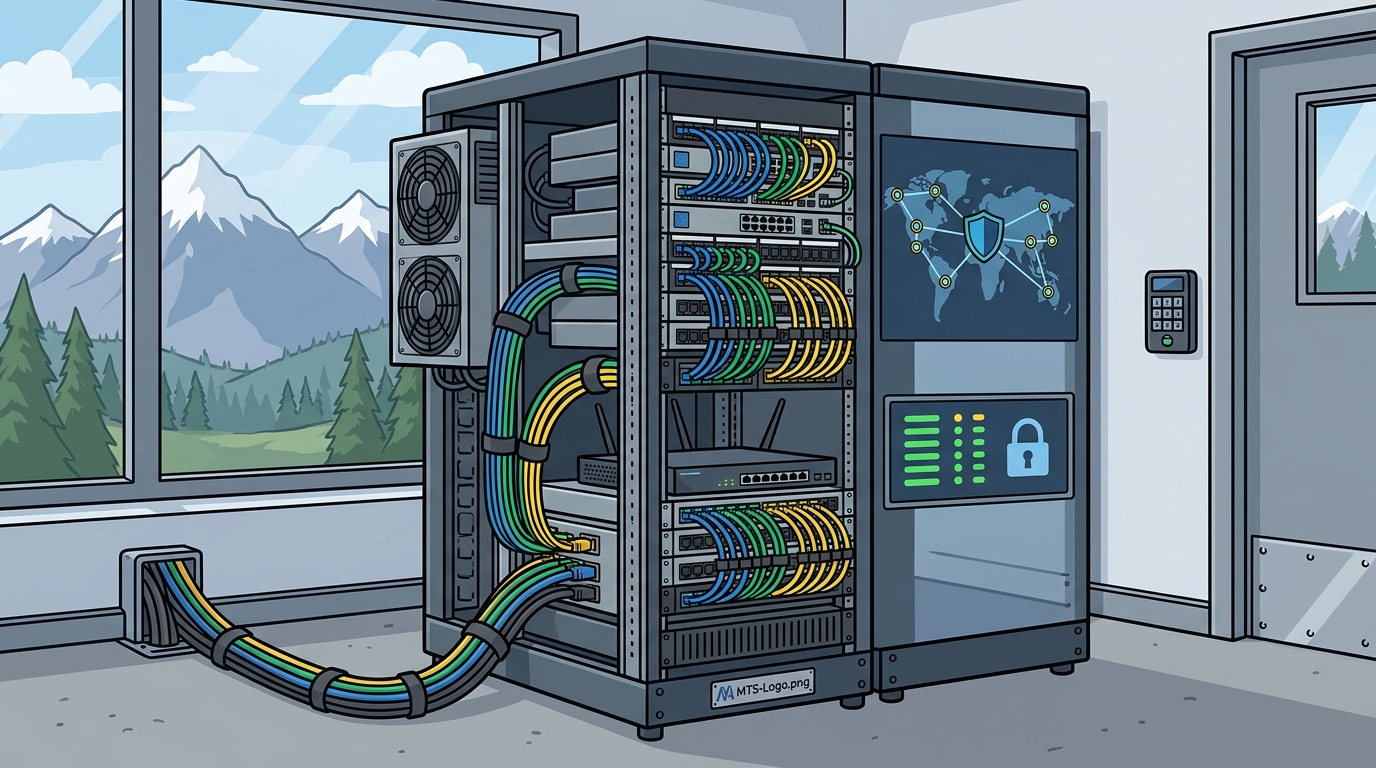
The physical layer of any commercial IT system is the network cabling. The choice of cabling infrastructure is critical for ensuring high-speed data transmission and network reliability. For commercial buildings, structured cabling systems are the standard. These systems include a variety of components, such as cables, connectors, and patch panels, that are designed to support current and future networking needs.
Cat6 and Cat6a cabling are commonly used for Ethernet connections, offering speeds up to 10 Gbps. Fiber optic cabling is used for longer distances and higher bandwidth requirements, providing immunity to electromagnetic interference. Moore Technology specializes in the design and installation of structured cabling solutions, ensuring that your business has a robust and scalable network infrastructure.
Our team of experts works closely with you to understand your specific requirements and provide solutions that deliver the best possible protection and performance. We ensure that every installation meets industry standards and is built to last.
Key Takeaways
- Redundancy is Critical: Montana businesses must implement backup power and network redundancy to mitigate downtime risks.
- NIST Framework Adoption: Following the NIST Cybersecurity Framework is essential for managing cyber risk and ensuring compliance.
- Integrated Security: Modern access control systems should be integrated with IT infrastructure for real-time monitoring and response.
- Managed IT Benefits: Outsourcing IT management allows businesses to focus on core operations while ensuring reliable technology support.
- Structured Cabling Standards: Using Cat6/Cat6a and fiber optic cabling ensures high-speed, reliable network connectivity.
- Local Expertise: Partnering with a local provider like Moore Technology ensures responsive and knowledgeable support.
- Proactive Maintenance: Regular maintenance and monitoring are key to preventing security breaches and system failures.
Frequently Asked Questions
What is the NIST Cybersecurity Framework?
The NIST Cybersecurity Framework is a set of guidelines for managing cyber risk, consisting of five core functions: Identify, Protect, Detect, Respond, and Recover.
Why is structured cabling important for commercial buildings?
Structured cabling provides a standardized and scalable infrastructure for network connectivity, ensuring high-speed data transmission and reliability.
How does Moore Technology support Montana businesses?
Moore Technology provides comprehensive IT support, cybersecurity, and security system installation services tailored to the unique needs of Montana businesses.
What are the benefits of managed IT services?
Managed IT services offer proactive support, cost savings, and access to expert knowledge, allowing businesses to focus on their core operations.
What types of access control systems does Moore Technology offer?
Moore Technology offers keycard systems, biometric entry, and smartphone-based access control solutions for commercial buildings.
Is remote IT support available for Montana businesses?
Yes, Moore Technology provides remote IT support from our office systems, allowing us to assist customers anywhere with an internet connection.
What is the role of redundancy in commercial IT systems?
Redundancy ensures that critical systems remain operational during failures or disruptions, minimizing downtime and data loss.
Contact Moore Technology
Ready to elevate your commercial IT infrastructure? Moore Technology is your trusted partner in technology success. With decades of experience serving Montana and beyond, we provide the expertise and support you need to thrive in a digital world. Contact us today to schedule a consultation and learn how we can help your business achieve its technology goals.
Contact Moore Technology to get started.