
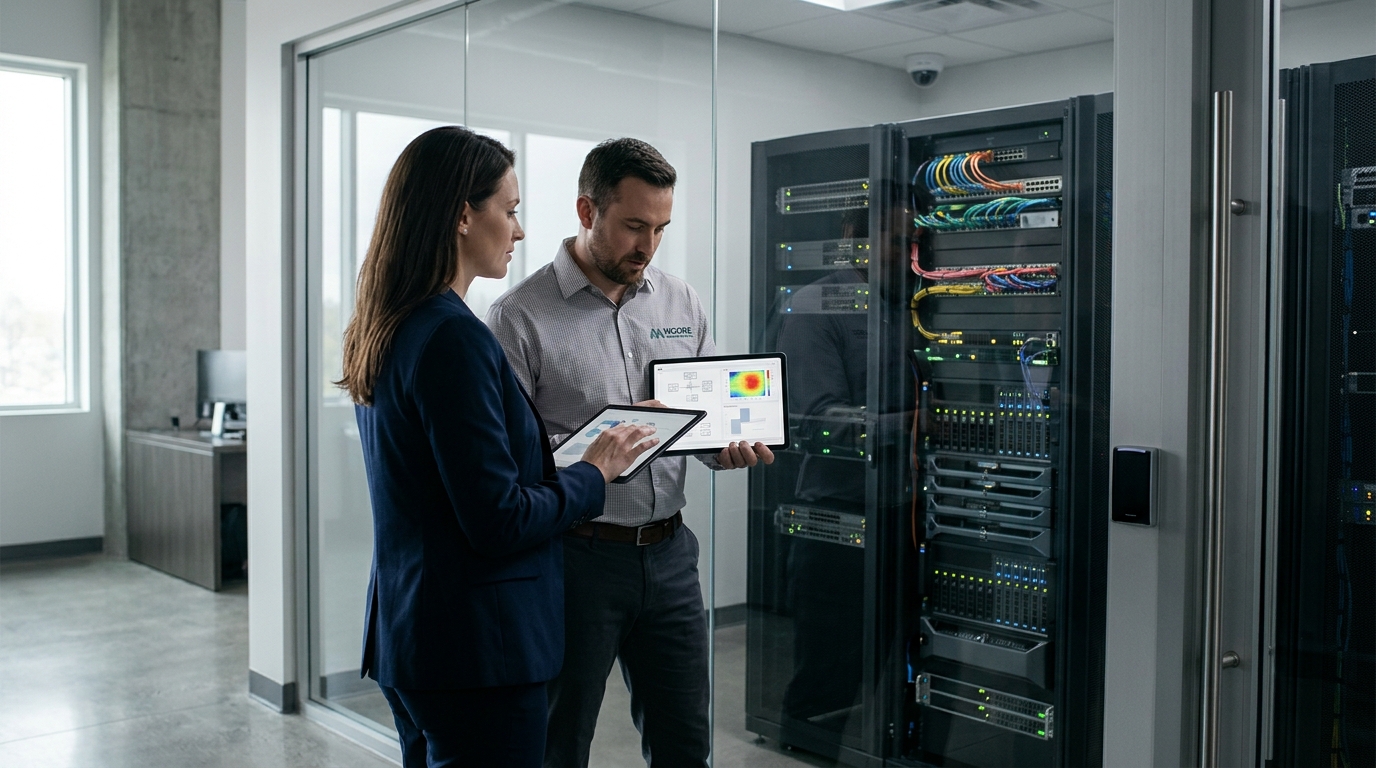
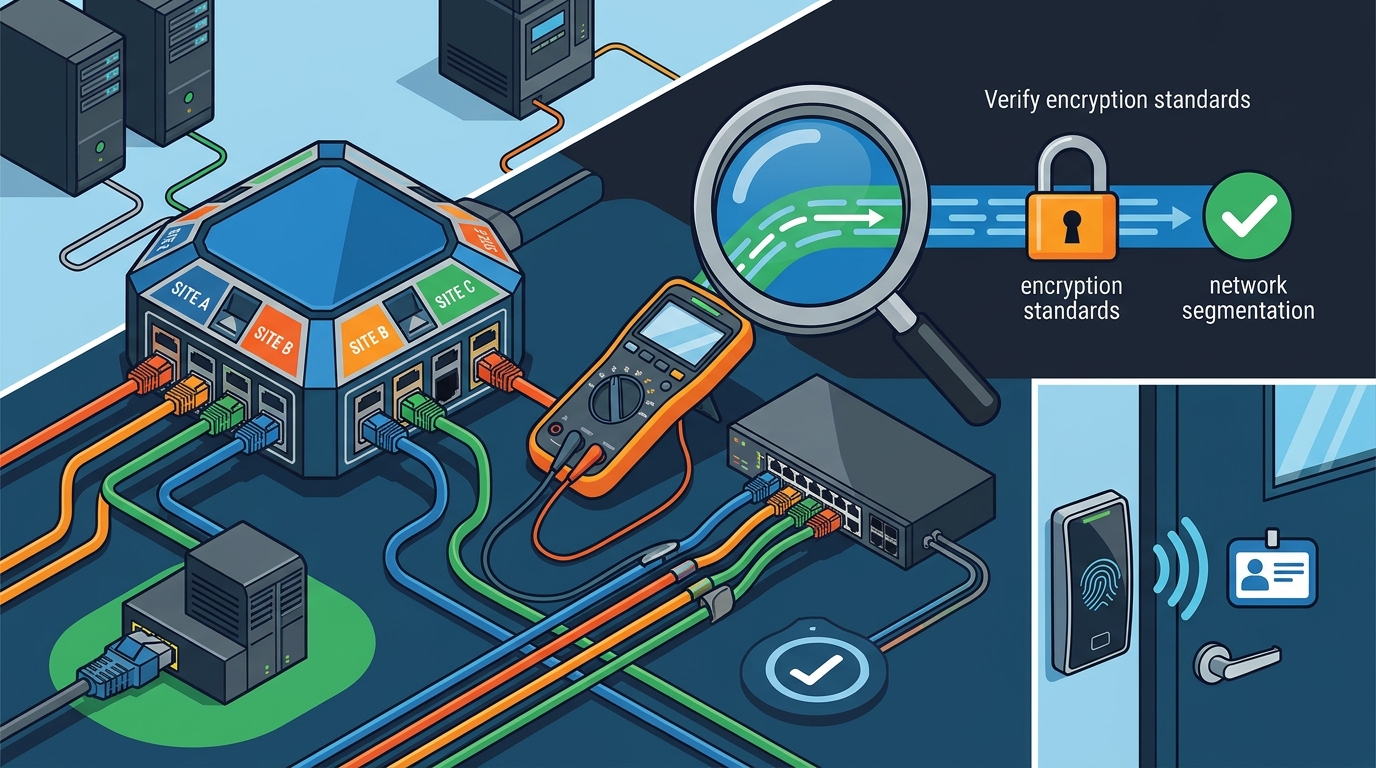
Verify encryption standards, network segmentation, and access control protocols before signing a multi-location contract. These technical controls determine how well a vendor protects your data across different sites. Moore Technology and Security emphasizes that robust technical infrastructure is the foundation of any effective security strategy. Without these specific controls, your business remains vulnerable to lateral movement and data breaches. For additional details, review the mooretech biz.
Encryption Standards and Data Protection
Encryption is the primary defense against data interception. A reliable vendor must use strong encryption protocols for data in transit and at rest. You should verify that they employ industry-standard algorithms such as AES-256 for stored data. This ensures that even if a device is physically stolen, the data remains unreadable to unauthorized parties. Moore Technology and Security prioritizes these standards to protect client information across all managed endpoints. For additional details, review the .
Transport Layer Security
Transport Layer Security (TLS) is a cryptographic protocol designed to provide secure communication over a computer network. It is the successor to Secure Sockets Layer (SSL) and is widely used to secure web traffic. When evaluating a vendor, ask for documentation on their TLS versions. Older versions like TLS 1.0 and 1.1 are considered insecure and should be deprecated. Modern systems should support TLS 1.2 or higher to ensure robust protection against man-in-the-middle attacks. For additional details, review the Customer Experience.
Network Segmentation and Isolation
Zero Trust Architecture
Zero Trust is a security model that assumes no user or device is trusted by default. It requires strict verification for every person and device trying to access resources on a private network. This model is particularly effective for distributed teams and multi-site operations. Verify that the vendor implements continuous authentication and least-privilege access controls. This ensures that users only have access to the specific resources they need for their role, and no more. For additional details, review the Frequently Asked Questions.
Access Control and Identity Management
Access control is a security mechanism that regulates who or what can view or use resources in a computing environment. Strong access control systems use multi-factor authentication (MFA) to verify user identities. You should verify that the vendor enforces MFA for all administrative and remote access points. Single-factor authentication, such as passwords alone, is insufficient for protecting sensitive business data. Additionally, check for role-based access control (RBAC) policies that limit permissions based on job functions. according to Cloud computing security For additional details, review the About.
Privileged Access Management
Monitoring, Logging, and Incident Response
Incident Response Planning
Vendor Compliance and Audit Practices
Compliance with industry standards is a strong indicator of a vendor's security maturity. Verify that the vendor undergoes regular third-party security audits. These audits assess their adherence to frameworks such as ISO 27001 or NIST Cybersecurity Framework. You should request recent audit reports or certificates of compliance. This provides independent verification of their security controls. Moore Technology and Security values transparency and is willing to discuss their compliance posture with prospective clients.
Data Residency and Sovereignty
Data residency refers to the physical location where data is stored and processed. For multi-location vendors, it is important to know where your data resides. Verify that the vendor stores data in jurisdictions that align with your regulatory requirements. This is particularly important for industries with strict data privacy laws. Understanding data residency helps you manage legal and compliance risks associated with cross-border data transfers.
Key Takeaways
- Ensure network segmentation is implemented to isolate different sites and critical systems.
- Check for multi-factor authentication and role-based access control policies.
- Confirm the presence of continuous monitoring and a tested incident response plan.
- Request recent third-party audit reports to verify compliance with security frameworks.
- Understand data residency requirements to manage legal and regulatory risks.
Frequently Asked Questions
What is the most important technical control to verify?
How often should a vendor update their security controls?
Security controls should be reviewed and updated regularly, at least annually. More frequent updates may be necessary if there are significant changes in the threat landscape or business operations. Continuous monitoring helps identify when updates are needed. according to When should organisations
What is the difference between IDS and IPS?
Intrusion Detection Systems (IDS) monitor network traffic for suspicious activity and alert administrators. Intrusion Prevention Systems (IPS) actively block detected threats. Many modern systems combine both capabilities for comprehensive protection.
Why is network segmentation important for multi-location businesses?
Segmentation prevents an attack at one location from spreading to others. It contains threats and reduces the overall risk to the organization. This is especially important for businesses with distributed operations.
How can I verify a vendor's compliance with security standards?
Request recent third-party audit reports or certificates of compliance. You can also ask for a summary of their security controls and how they map to specific frameworks. This provides independent verification of their security posture.
What is zero trust and why is it relevant?
Zero trust is a security model that assumes no user or device is trusted by default. It requires strict verification for every access request. This model is relevant for multi-location businesses because it reduces the risk of lateral movement and unauthorized access.
How does Moore Technology and Security approach vendor evaluation?
Moore Technology and Security focuses on verifying technical controls such as encryption, segmentation, and access management. They provide customized security solutions that meet the unique needs of each business. Their team of experts ensures that the controls are appropriate for the specific environment.
Conclusion
Choosing a multi-location vendor requires careful verification of technical security controls. Focus on encryption, network segmentation, access management, and monitoring capabilities. These controls form the backbone of a secure and resilient IT infrastructure. Moore Technology and Security is committed to helping you evaluate and implement the right controls for your business. To discuss your specific security needs, . Learn more: mooretech biz.