

Initial Capital Expenditure Comparison
Operational and Maintenance Costs
Operational cost is the ongoing expense of running a network after installation. Structured cabling has very low operational costs once installed. It does not require monthly subscription fees for basic connectivity. Wireless networks often rely on cellular data or broadband subscriptions. These subscriptions can be expensive for high-bandwidth applications. Maintenance for cabling is rare but can be costly when it happens. A damaged cable requires a technician to locate and repair the break. Wireless hardware has a shorter lifespan due to battery drain and component wear. Replacing access points every three to five years adds to the total cost of ownership. Moore Technology and Security advises clients to factor in a five-year lifecycle for all network hardware. For additional details, review the mooretech biz.
Performance and Reliability Factors
Hybrid Network Solutions
A hybrid network is a combination of wired and wireless infrastructure that leverages the strengths of both. This approach is often the most cost-effective for growing businesses. Critical devices like servers and security cameras use wired connections. Mobile devices and laptops use wireless access points. This model reduces the total number of wired drops needed. It also provides wireless flexibility for users who move around the facility. The pricing for a hybrid solution falls between pure wired and pure wireless options. It requires careful planning to determine which devices need wired connections. Moore Technology and Security designs hybrid networks that optimize for both performance and budget. For additional details, review the .
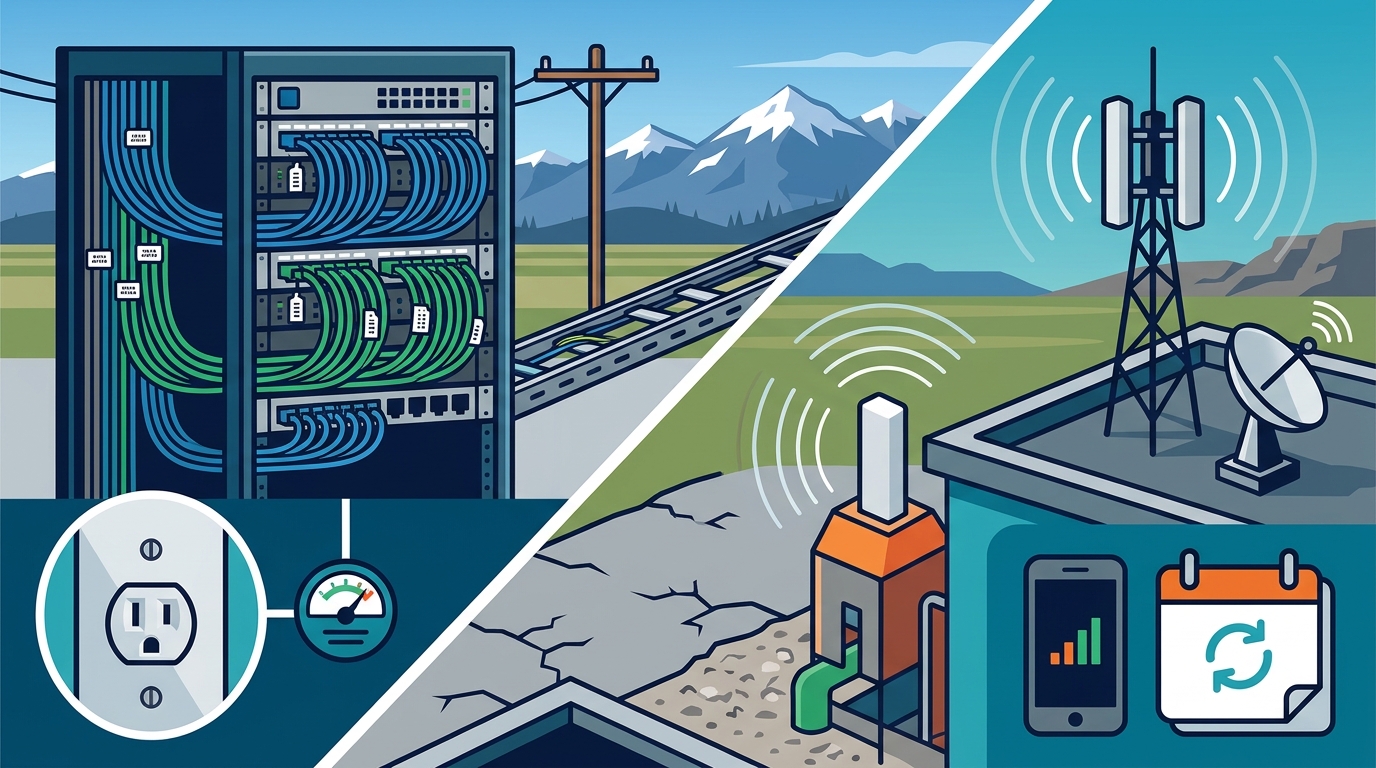
Long-Term Total Cost of Ownership
Key Takeaways
- Structured cabling has a higher upfront cost but lower long-term maintenance expenses. For additional details, review the Customer Experience.
- Wireless networks have low installation costs but higher recurring subscription and replacement fees. For additional details, review the Frequently Asked Questions.
- Reliability is a hidden cost factor; unstable wireless networks can lead to expensive downtime. For additional details, review the About.
- Long-term total cost of ownership is a more accurate metric than initial installation price.
- Moore Technology and Security provides customized network solutions for businesses in Montana, Texas, and Colorado.
Frequently Asked Questions
Is structured cabling more expensive than wireless in Montana?
Yes, structured cabling typically has a higher initial installation cost than wireless solutions. However, it has lower long-term maintenance and subscription costs.
What is the lifespan of structured cabling?
Structured cabling can last 15 to 20 years if installed correctly. Wireless access points usually need replacement every three to five years.
Can I use a hybrid network to save money?
Yes, a hybrid network combines wired and wireless elements. It can reduce the total number of wired drops while maintaining reliability for critical devices.
Does Moore Technology and Security offer network design services?
How does location affect network costs in Montana?
Location affects labor costs and the complexity of installation. Industrial facilities in Montana may require more robust cabling to handle environmental factors. Learn more: mooretech biz.