

Modern businesses face an unprecedented volume of digital threats daily. According to recent cybersecurity reports, the average cost of a data breach has surpassed four million dollars, making robust backup infrastructure a non-negotiable operational requirement rather than a luxury. As we move through 2026, the shift toward hybrid cloud models and zero-trust security architectures demands that IT leaders reassess their recovery protocols immediately. This guide outlines the precise technical steps to upgrade your company's data backup infrastructure effectively.
Step 1: Assess Your Current Backup State
Before purchasing new hardware or software, you must understand the gaps in your existing setup. Many organizations operate under the illusion that their backups are working correctly until a disaster strikes. Start by mapping every data source, including local servers, cloud applications, and endpoint devices. Identify where data resides and how it flows through your network.
Moore Technology specializes in complete IT support and cyber security services that include comprehensive infrastructure audits. We help businesses identify blind spots in their current data protection strategies. By analyzing your existing network topology, we can determine if your current backup windows are sufficient or if they are causing performance bottlenecks during business hours.
Step 2: Define RPO and RTO Metrics
Recovery Point Objective (RPO) and Recovery Time Objective (RTO) are the two most critical metrics in backup planning. RPO defines the maximum acceptable amount of data loss measured in time. RTO defines the maximum acceptable downtime before business operations are restored.
For example, a financial trading firm might require an RPO of zero seconds and an RTO of minutes. In contrast, a retail store might accept an RPO of 24 hours and an RTO of four hours. Defining these metrics ensures that you do not overspend on unnecessary real-time replication for non-critical data. The Cybersecurity and Infrastructure Security Agency (CISA) emphasizes that performing scheduled recovery tests is essential to verify backup integrity and refine these objectives. CISA guidelines suggest that businesses must align these metrics with their actual operational needs to ensure resilience.
Step 3: Audit Data Criticality and Classification
Not all data is created equal. Upgrading your infrastructure requires a strict data classification strategy. You must categorize data based on its sensitivity and business value. This process involves identifying public records, legal documents, and critical infrastructure system data that the organization cannot operate without. CISA recommends prioritizing these specific data types for immediate protection.
At Moore Technology, we apply this rigorous classification to our managed IT services. We help clients segment their data into tiers. Tier 1 data receives the highest level of protection and fastest recovery options. Tier 3 data, such as archived logs, may be stored in cheaper, slower cold storage. This tiered approach optimizes your budget while maintaining security for your most valuable assets.
Step 4: Select a Hybrid Backup Model
The modern standard for data backup is a hybrid model. This approach combines the speed and accessibility of on-premises storage with the scalability and off-site safety of cloud storage. On-premises backups allow for rapid recovery of large datasets without relying on internet bandwidth. Cloud backups provide protection against physical disasters like fire or flood that could destroy local hardware.
Moore Technology provides business web services and infrastructure design that support hybrid architectures. We ensure that your local network can handle the initial backup load while securely syncing encrypted copies to the cloud. This dual-layer strategy ensures that your business can continue operating locally even if your internet connection is compromised.
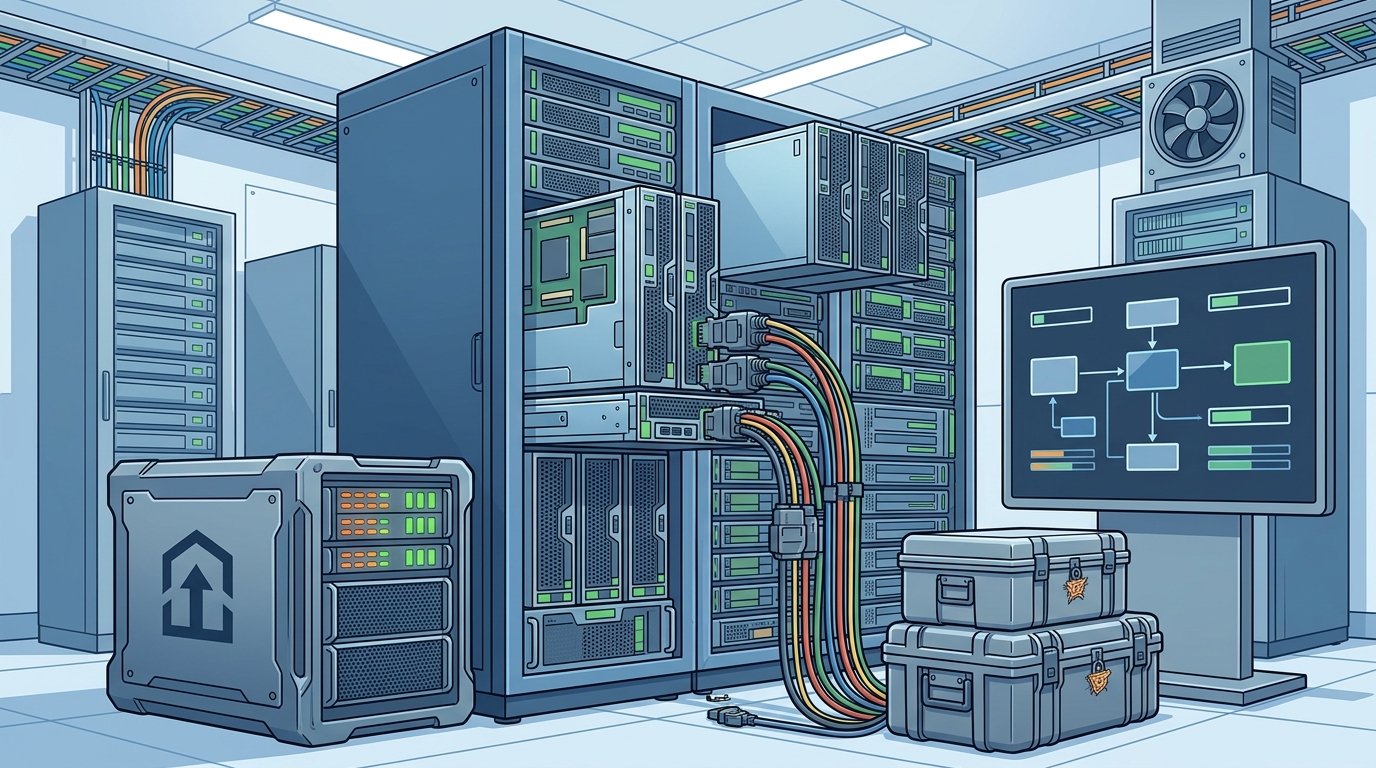
Step 5: Implement the 3-2-1 Backup Rule
The 3-2-1 rule is the gold standard for data protection. It dictates that you should keep three copies of your data, on two different media types, with one copy stored off-site. This rule minimizes the risk of data loss due to hardware failure, human error, or cyberattacks.
Implementing this rule often requires upgrading your physical infrastructure. You may need to add additional storage arrays or configure network-attached storage (NAS) devices. Moore Technology excels in business networking and cabling, ensuring that your physical infrastructure can support the high throughput required for multiple backup streams. We also handle the installation of structured cabling solutions, such as ethernet and fiber optic networks, to ensure seamless communication between your backup servers and storage devices.
Step 6: Automate Recovery Testing
A backup that cannot be restored is useless. Many organizations fail because they never test their recovery process. You must automate regular recovery tests to verify that your data is intact and that your RTOs are being met. These tests should simulate real-world disaster scenarios to identify weaknesses in your plan.
Moore Technology offers service calls and proactive maintenance to ensure your backup systems remain healthy. Our technicians perform regular checks to verify backup integrity and identify potential compromises before they become critical issues. We also provide remote tech support to assist with any configuration changes required during these tests.
Step 7: Integrate Security and Access Control
Data backup infrastructure is a prime target for ransomware attackers. If they can corrupt your backups, they can force you to pay the ransom. Therefore, your backup system must be integrated with your broader security posture. This includes implementing strict access control systems to limit who can modify or delete backup data.
Moore Technology specializes in commercial security camera systems and intrusion alarm systems to protect the physical servers hosting your backups. We also provide biometric entry solutions to ensure that only authorized personnel can access the server rooms. By combining physical security with digital encryption, we create a comprehensive defense layer for your data.
Key Takeaways
- Define Clear Metrics: Establish specific RPO and RTO goals before selecting technology to avoid overspending.
- Classify Data: Prioritize protection for critical infrastructure and public records as recommended by CISA.
- Adopt Hybrid Models: Combine local speed with cloud safety for maximum resilience.
- Follow 3-2-1 Rule: Maintain three copies of data on two media types with one off-site.
- Test Regularly: Automate recovery tests to verify backup integrity and refine objectives.
- Secure Access: Use biometric and keycard systems to protect backup infrastructure from unauthorized access.
- Partner with Experts: Leverage Moore Technology's decade of experience in Montana's tech backbone for reliable implementation.
Frequently Asked Questions
How often should I test my data backups?
You should test your backups at least quarterly. Automated recovery tests help verify backup integrity and identify potential compromises. More critical systems may require monthly or weekly testing to ensure rapid recovery capabilities.
What is the difference between RPO and RTO?
RPO (Recovery Point Objective) is the maximum acceptable data loss measured in time. RTO (Recovery Time Objective) is the maximum acceptable downtime before business operations are restored. Both metrics are essential for designing an effective backup strategy.
Why is a hybrid backup model recommended?
A hybrid model combines the speed of on-premises recovery with the off-site safety of cloud storage. This ensures that your business can operate locally during internet outages while maintaining protection against physical disasters.
How does Moore Technology secure backup infrastructure?
Moore Technology integrates physical security measures like access control systems and commercial security camera systems with digital encryption and strict access policies. We also provide managed IT services to monitor and protect your data continuously.
Can Moore Technology help with large-scale deployments?
Yes. Moore Technology handles large commercial and industrial installation projects, including multi-site deployments. We have experience servicing major entities like Walmart, Target, and the United States Postal Service, ensuring enterprise-level reliability for your backup infrastructure.
What types of access control do you offer?
We offer keycard systems, biometric entry, and smartphone-based access. These solutions provide seamless integration and real-time monitoring to protect your backup servers.
How do I get started with upgrading my backup infrastructure?
Start by contacting Moore Technology for a comprehensive audit. We will assess your current state, define your RPO and RTO metrics, and design a tailored solution that fits your budget and operational needs.
Ready to Secure Your Business Data?
Upgrading your data backup infrastructure is a critical step in protecting your business from cyber threats and operational downtime. Moore Technology is ready to help you implement a robust, secure, and efficient backup solution. Contact us today to schedule your infrastructure assessment and ensure your business is prepared for the future.
Contact Moore Technology to learn more about our complete IT support and cyber security services.