
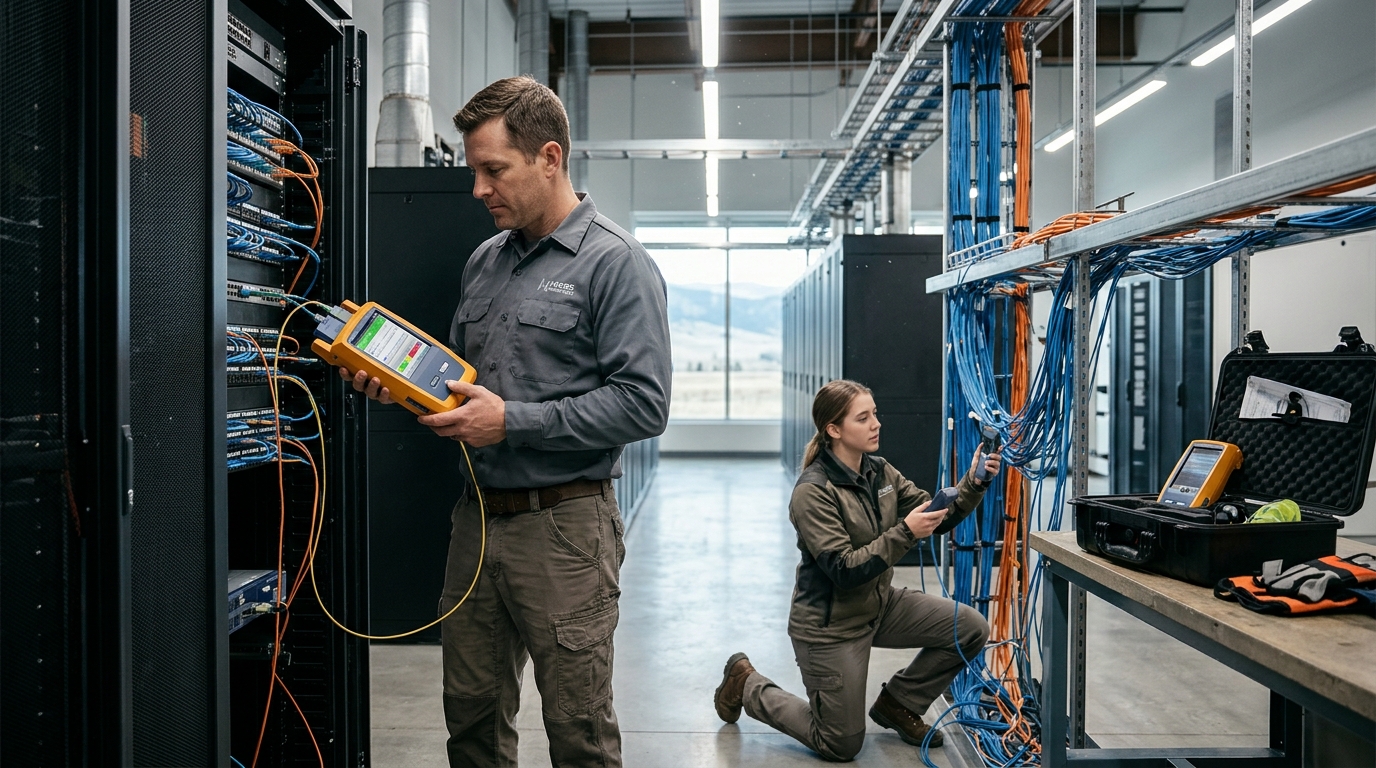
Understanding Cabling Certification Standards
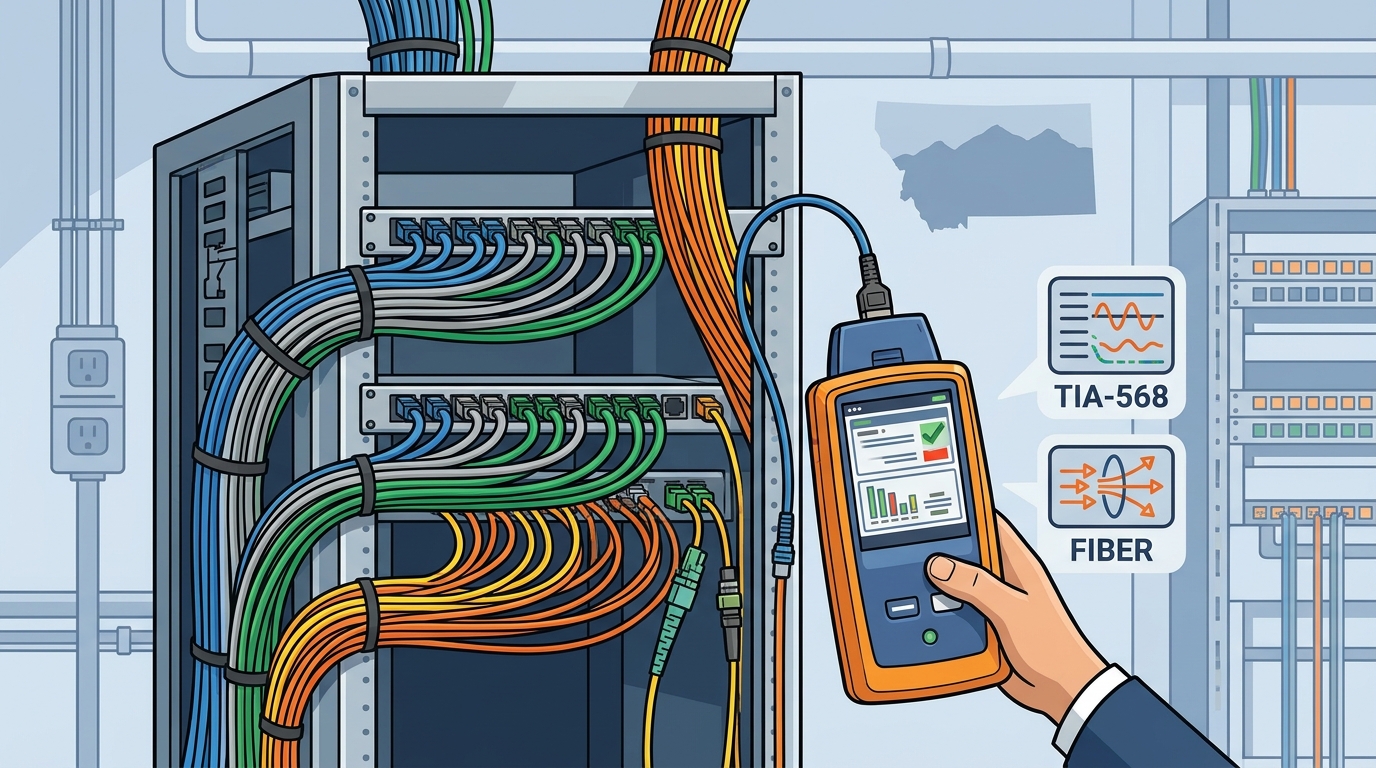
Cabling certification is the process of testing and documenting that a network cable installation meets specific performance standards. In Montana, most commercial projects adhere to TIA-568 standards for copper and TIA-568.3 for fiber. These standards define the maximum allowable signal loss, crosstalk, and latency for different cable categories. For example, a Category 6A installation must pass tests for next-neighbor and far-end alien crosstalk to ensure high-speed data transmission. For additional details, review the .
Factors Influencing Testing Costs in Montana
Several variables impact the final cost of cabling testing and certification in Montana. The primary factor is the type of cable being tested. Copper cables, such as Category 5e, 6, and 6A, are generally less expensive to test than fiber optic cables. Fiber testing requires optical time domain reflectometers (OTDRs) and light sources, which are more expensive to operate and maintain. Additionally, the complexity of the installation plays a role. A simple office layout with short cable runs will cost less to test than a large industrial facility with long backbone runs. For additional details, review the Customer Experience.
Location within Montana also affects pricing. Urban areas like Billings and Missoula may have different labor rates compared to rural areas. Travel time and logistics can add to the overall cost for remote sites. Moore Technology and Security considers these factors when providing quotes, ensuring that the budget reflects the actual scope of work. For instance, a project in a remote mining operation in western Montana may incur higher travel and setup costs than a project in a downtown office building. For additional details, review the Frequently Asked Questions.
Copper vs. Fiber Certification Costs
Documentation and Reporting Requirements
Key Takeaways
- Certification verifies that your network meets TIA-568 standards for performance and reliability. For additional details, review the About.
- Documentation is critical for future troubleshooting and compliance with building codes.
- Location and project complexity can influence the final cost of testing and certification.
- Moore Technology and Security provides detailed reports for every certified installation.
Frequently Asked Questions
What is the difference between testing and certification?
How long does cabling certification take?
The time required depends on the number of points and the type of cable. A standard office with 100 copper points might take a few hours, while a large fiber project could take several days.
Do I need certification for a small office?
Yes, even small offices benefit from certification. It ensures that your network is reliable and provides documentation for future troubleshooting. It is a best practice for any commercial installation.
What happens if a cable fails certification?
If a cable fails, it must be repaired or replaced. The technician will identify the issue, such as a bad connector or excessive length, and fix it. The cable is then retested until it passes.
Can I use the certification reports for insurance purposes?
Yes, certification reports can be used to demonstrate that your network infrastructure is properly installed and maintained. This can be helpful for insurance claims related to network downtime or data loss.
Conclusion
Budgeting for cabling testing and certification is a critical step in any Montana network project. By understanding the costs and benefits, you can ensure that your network is reliable and compliant with industry standards. Moore Technology and Security is committed to providing high-quality certification services that meet your specific needs. We work with you to develop a budget that reflects the scope of your project and ensures a successful outcome. For more information on our cabling and certification services, visit Moore Technology and Security. Learn more: mooretech biz.