
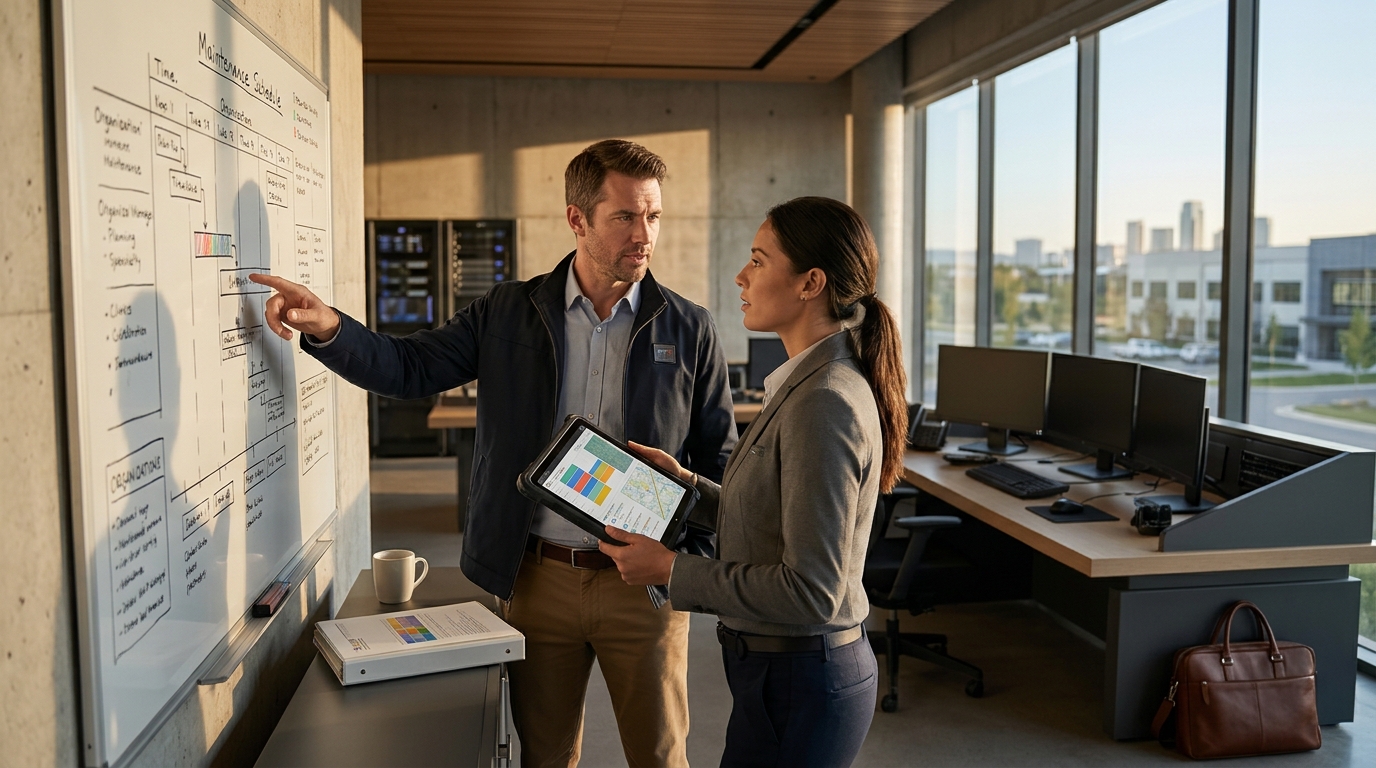
Moore Technology and Security recommends a tiered preventive maintenance schedule that aligns inspection frequency with asset criticality and environmental exposure. For commercial and industrial properties across Montana, Texas, and Colorado, this approach ensures that physical security hardware and digital infrastructure remain operational without causing unnecessary downtime. By standardizing these checks, organizations can identify degradation early and maintain consistent protection levels across all locations. For additional details, review the mooretech biz.
Defining the Maintenance Framework
Preventive maintenance is a proactive strategy that involves scheduled inspections and servicing to prevent equipment failure before it occurs. This differs from reactive maintenance, which only addresses issues after a breakdown. For multi-site operations, a standardized framework is essential to ensure that every location receives the same level of attention. The framework should categorize assets into tiers based on their role in the overall security posture. according to FFIEC IT Examination For additional details, review the .
Asset Tiering Strategy
Not all components require the same frequency of service. Critical assets, such as primary access control readers or network core switches, should be inspected more frequently than peripheral devices. Moore Technology and Security advises clients to map their assets into three tiers: critical, standard, and low-priority. This tiering allows technicians to allocate time efficiently while ensuring that high-impact systems receive the most rigorous attention. For additional details, review the Customer Experience.
Physical Security Hardware Inspections
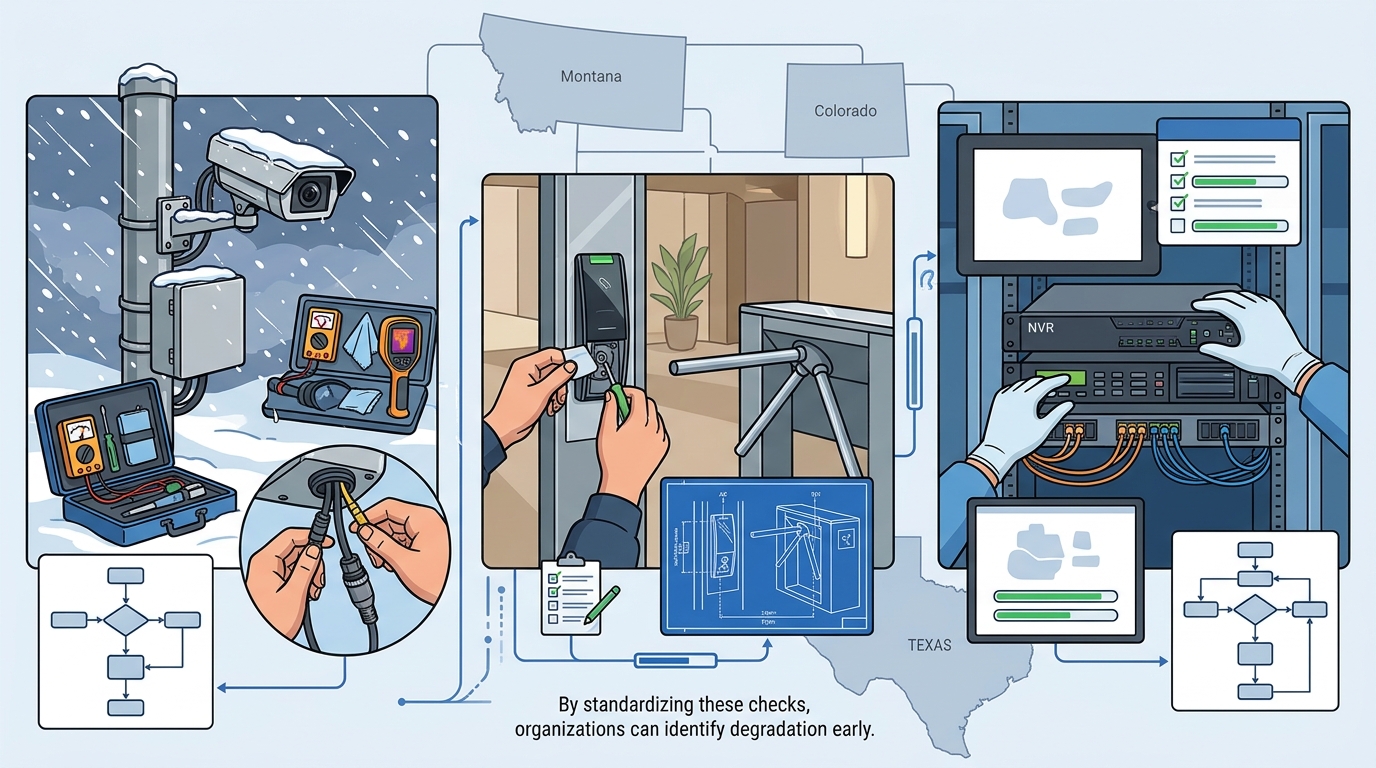
Physical security systems, including intrusion alarms and access control devices, are subject to environmental wear and tear. In regions with extreme temperature fluctuations, such as Montana and Colorado, hardware can degrade faster than in milder climates. Regular physical inspections help identify loose connections, battery degradation, and physical damage to enclosures. For additional details, review the Frequently Asked Questions.
Camera and Sensor Checks
Security cameras and motion sensors require specific attention to lens cleanliness and mounting stability. A camera with a dirty lens or a loose mount may still appear online but fail to capture usable footage. Technicians should verify that all lenses are clean, mounts are secure, and sensors are detecting motion within their designated zones. This ensures that the system provides reliable evidence in the event of an incident. For additional details, review the About.
Digital Infrastructure and Network Health
Firmware and Software Updates
Environmental and Site-Specific Factors
Each location presents unique environmental challenges that affect maintenance frequency. Industrial sites in Texas may face higher humidity levels, while commercial buildings in Colorado may experience significant temperature swings. These factors influence the lifespan of batteries, circuit boards, and physical enclosures. A one-size-fits-all schedule may not be optimal for every site.
Adjusting for Local Conditions
Moore Technology and Security recommends adjusting maintenance intervals based on site-specific conditions. For example, sites with high humidity may require more frequent battery replacements and corrosion checks. By documenting environmental factors for each location, technicians can tailor their inspections to address the most likely failure points. This approach reduces the risk of unexpected outages and extends the life of the equipment. according to Building and Defending
Documentation and Reporting
Generating Maintenance Reports
Key Takeaways
- Preventive maintenance is a proactive strategy that prevents equipment failure before it occurs.
- Asset tiering helps allocate maintenance resources efficiently across multiple locations.
- Physical inspections should account for environmental factors like temperature and humidity.
- Digital infrastructure requires regular firmware updates and configuration backups.
- Site-specific adjustments ensure that maintenance schedules address local conditions.
Frequently Asked Questions
How often should security cameras be inspected?
Security cameras should be inspected at least quarterly to ensure lens cleanliness, mount stability, and proper motion detection. More frequent checks may be necessary in harsh environments.
What is the difference between preventive and reactive maintenance?
Preventive maintenance involves scheduled inspections to prevent failures, while reactive maintenance addresses issues only after they occur. Preventive maintenance is more cost-effective in the long run.
How do environmental factors affect maintenance schedules?
Environmental factors like temperature and humidity can accelerate hardware degradation. Maintenance schedules should be adjusted to account for these local conditions.
Why is documentation important in preventive maintenance?
Can one maintenance schedule work for all locations?
A standardized framework can be used, but intervals should be adjusted for site-specific conditions. This ensures that each location receives appropriate attention.
How does Moore Technology and Security approach multi-site maintenance?
Conclusion
Implementing a structured preventive maintenance schedule is essential for maintaining the reliability of security systems across multiple locations. By focusing on asset tiering, environmental adjustments, and thorough documentation, organizations can reduce the risk of unexpected failures. Moore Technology and Security is committed to helping businesses in Montana, Texas, and Colorado develop and execute effective maintenance plans. To discuss your specific needs, . Learn more: mooretech biz.