
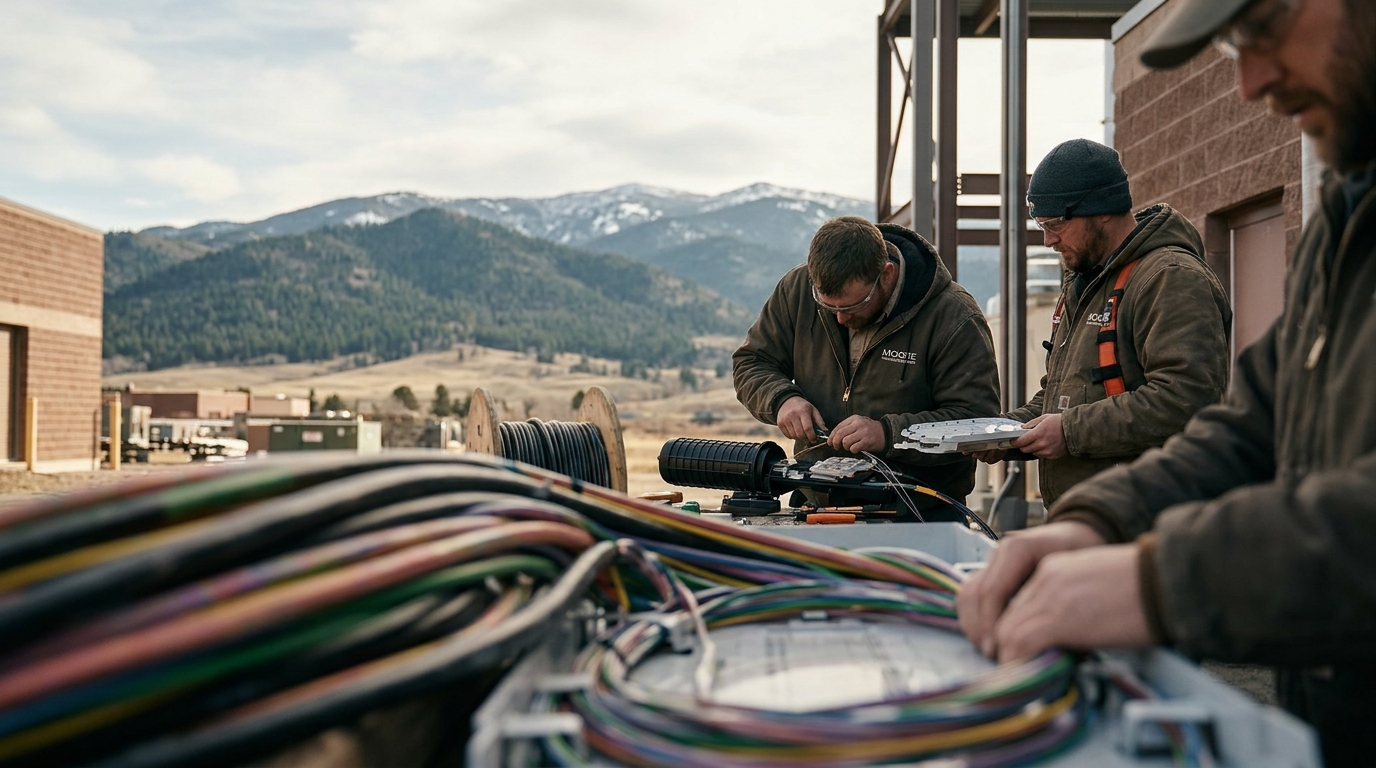
Primary Cost Drivers for Fiber Backbone Projects
Understanding what drives the price is among the first step to accurate budgeting. The most significant factor is among the total linear footage of cable required. Fiber optic backbone installation is the process of laying the primary high-speed data cables that connect different floors, buildings, or major network closets within a facility. Unlike copper cabling, fiber requires specialized handling and testing, which influences labor rates. For additional details, review the Customer Experience.
Linear Footage and Cable Type
Facility Complexity and Access
Complexity adds to the base rate. If your Montana facility has active production lines, high ceilings, or limited access points, installation time increases. Working in occupied spaces often requires after-hours labor, which can increase costs by 20% to 50%. Moore Technology and Security evaluates these site-specific conditions during the initial assessment to provide a realistic timeline and budget. For additional details, review the Frequently Asked Questions.
Breaking Down Labor and Material Expenses
Material costs are relatively transparent, but labor is where estimates often diverge. Fusion splicing is a critical part of the installation process. This is the technique used to join two fiber optic cables together by melting them with an electric arc. Each splice point requires precision and time, adding to the total labor hours. A standard splice can take 15 to 30 minutes, depending on the technician's experience and the cable type. For additional details, review the About.
Equipment and Testing
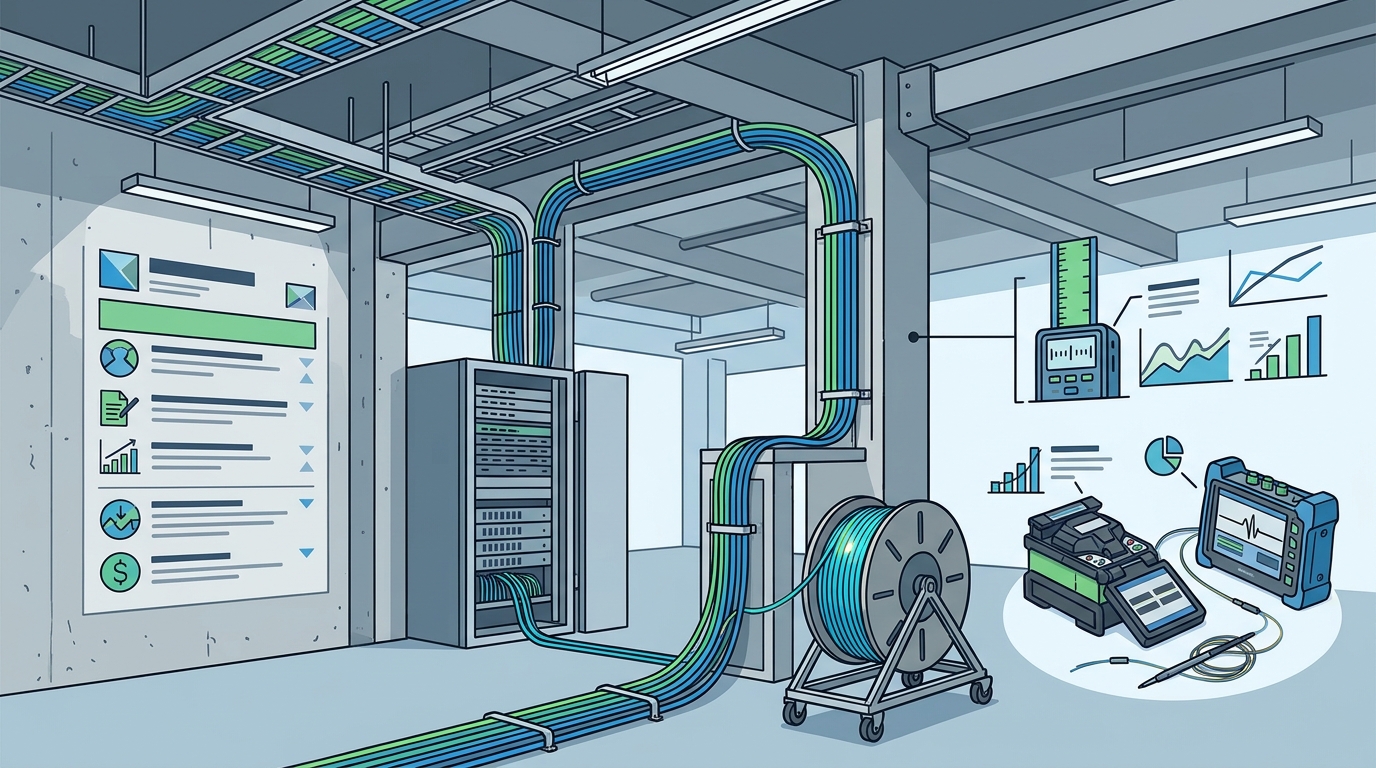
Proper installation requires specialized testing equipment. An Optical Time Domain Reflectometer (OTDR) is the industry standard for verifying the integrity of the fiber link. This is a device that sends light pulses down the fiber to detect breaks, bends, or poor connections. The cost of renting or using this equipment is typically included in the professional service fee. Skipping this testing phase is a common mistake that leads to future network failures.
Conduit and Pathing
The path the cable takes matters. If new conduit needs to be installed, the cost rises significantly. Pulling fiber through existing empty conduit is cheaper, but if the conduit is blocked or damaged, it must be replaced. In older Montana industrial buildings, finding clear paths can be challenging. Planning the route carefully before breaking ground saves both time and money.
Montana Specific Considerations
Geography and climate play a role in infrastructure costs in the state. Montana's vast distances and extreme temperature variations require durable materials. Outdoor or exposed runs must use armored or gel-filled cables to protect against moisture and physical damage. This is a requirement for any backbone that traverses exterior walls or unheated spaces. The additional material cost for weatherized cable is a necessary investment for long-term reliability.
Local Labor Availability
Labor costs in Montana can vary by region. Urban areas like Billings or Missoula may have a higher concentration of skilled technicians, while rural areas might require travel time to be factored into the quote. Travel time is a legitimate cost component that should be included in your budget. Moore Technology and Security operates across Montana, allowing for efficient scheduling and reduced travel overhead for clients in various locations.
Regulatory and Code Compliance
Building codes and fire safety regulations influence how cables are routed. Fire-rated plenums and shafts require specific types of cable jackets. Using the wrong cable type can lead to failed inspections and costly rework. Ensuring that the selected materials meet local building codes is a critical part of the planning phase. This is a responsibility that professional installers handle to ensure your project passes inspection smoothly.
Strategies for Accurate Budgeting
Effective budgeting requires more than just a per-foot estimate. You need to account for contingencies and future growth. A common best practice is to add a 15% to 20% contingency to your initial estimate. This buffer covers unexpected issues such as hidden obstructions or changes in scope. It is better to have unused budget than to face a project halt due to funding shortfalls.
Future-Proofing Your Investment
Consider your future bandwidth needs when selecting cable capacity. Installing more fiber strands than you currently need is often cheaper than pulling new cable in the future. For example, installing a 24-strand cable instead of a 12-strand cable might only increase the material cost by 20%, but it doubles your available capacity. This is a smart long-term strategy for growing businesses. Moore Technology and Security advises clients on optimal strand counts based on their projected growth.
Phased Implementation
For large facilities, a phased approach can manage cash flow. You can install the main backbone first and add drops later as needed. This allows you to spread the cost over multiple budget cycles. It also allows you to prioritize critical areas first. This is a flexible approach that many Montana businesses use to manage their IT infrastructure upgrades without straining their finances.
Key Takeaways
- Labor costs are driven by complexity, access difficulty, and the need for specialized fusion splicing.
- Weatherized and armored cables are required for outdoor or unheated spaces in Montana's climate.
- Future-proofing by installing extra fiber strands is a cost-effective long-term strategy.
- Professional testing with an OTDR is essential to verify link integrity and prevent future failures.
- Local building codes and fire safety regulations dictate cable jacket types and routing paths.
Frequently Asked Questions
What is the average cost per foot for fiber optic cable in Montana?
How long does a typical fiber backbone installation take?
A typical installation for a medium-sized facility takes 3 to 7 days. The duration depends on the total linear footage, the number of splice points, and the complexity of the routing. Larger or more complex projects may take longer.
Do I need to replace my existing copper cabling?
No, you do not need to replace existing copper cabling. Fiber optic backbone is typically used for high-speed connections between buildings or floors, while copper is used for end-user drops. The two systems work together in a structured cabling environment.
What is the difference between single-mode and multi-mode fiber?
How do I ensure my fiber installation is future-proof?
To future-proof your installation, install more fiber strands than you currently need. For example, installing a 24-strand cable instead of a 12-strand cable provides extra capacity for future upgrades. This is a cost-effective way to avoid pulling new cable later.
Does Moore Technology and Security provide testing for fiber installations?
Can I install fiber optic cable myself?
While it is possible to install fiber optic cable yourself, it is not recommended for commercial facilities. Professional installation ensures proper splicing, testing, and compliance with building codes. DIY installations often result in poor performance and failed inspections.
Conclusion
Budgeting for a fiber optic backbone installation in Montana requires a detailed understanding of your facility's specific needs. By accounting for linear footage, labor complexity, and local climate factors, you can create a realistic budget. Moore Technology and Security provides expert guidance and accurate estimates for businesses across Montana, Texas, and Colorado. To get a detailed quote for your facility, contact Moore Technology and Security today. Learn more: mooretech biz.