

Enterprise-grade wireless networks are no longer a luxury but a critical infrastructure component for modern commerce. According to recent industry data, businesses that implement robust managed Wi-Fi solutions report a 40% increase in employee productivity due to reduced downtime and faster connection speeds. For commercial entities, the complexity of securing these networks against cyber threats while maintaining seamless connectivity requires professional intervention. This guide outlines the strategic process for deploying a managed Wi-Fi solution tailored to your operational needs.
Understanding Managed Wi-Fi Solutions
Before diving into the technical setup, it is essential to define what a managed Wi-Fi solution entails. Managed Wi-Fi is a comprehensive service model where a third-party provider handles the design, deployment, monitoring, and maintenance of your wireless network infrastructure. Unlike traditional DIY setups, this approach ensures that your network remains secure, updated, and optimized without burdening your internal IT staff.
For businesses ranging from retail environments to large industrial campuses, the distinction between a simple internet connection and a managed network is profound. A managed solution integrates seamlessly with other security systems, such as access control systems and intrusion alarms, creating a unified security ecosystem. This integration allows for real-time monitoring of both physical and digital perimeters, ensuring that unauthorized access is detected and mitigated immediately.
Phase 1: Site Survey and Planning
The foundation of any successful Wi-Fi deployment lies in meticulous planning. A professional site survey is the first critical step in this process. This involves a physical assessment of your facility to identify potential sources of interference, such as thick concrete walls, metal shelving, or heavy machinery.
Identifying Dead Zones
During the survey, technicians map out "dead zones" where signal strength is naturally weak. These areas require additional access points or specialized repeaters to ensure complete coverage. For example, in large retail spaces like those managed by Albertsons and Safeway, coverage must be uniform across multiple floors and aisles to support point-of-sale systems and inventory management tools.
Bandwidth Requirements Analysis
Next, you must analyze the bandwidth requirements of your specific business operations. A corporate office may require high-speed, low-latency connections for video conferencing and cloud computing. In contrast, a warehouse might prioritize reliable connectivity for handheld scanners and automated guided vehicles. Understanding these distinct needs ensures that the network architecture is built to support your peak operational loads.
Phase 2: Hardware and Infrastructure Selection
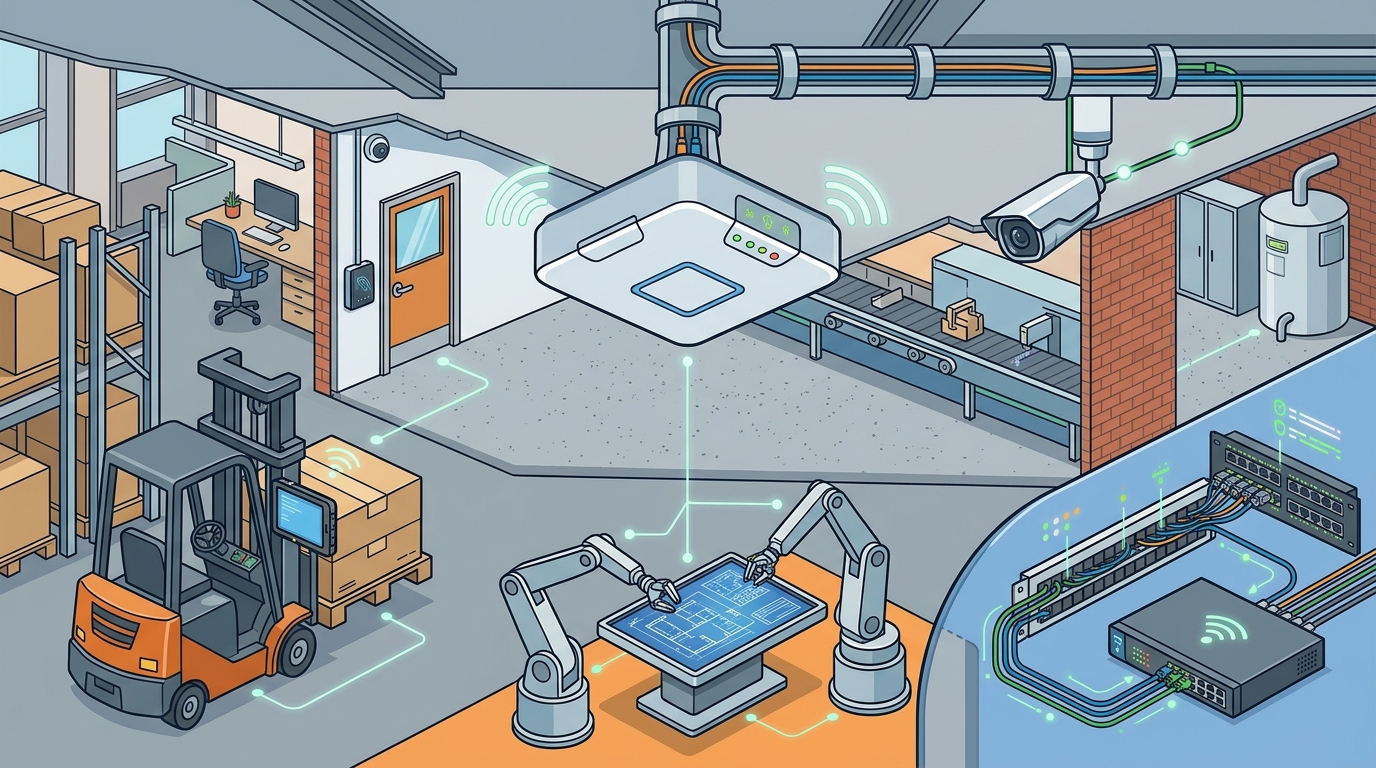
Once the survey is complete, the selection of appropriate hardware begins. This phase involves choosing the right mix of access points, switches, and cabling infrastructure.
Structured Cabling Infrastructure
Wireless networks rely heavily on the underlying wired infrastructure. Structured cabling is the organized system of cables and hardware that connects your network devices to the central server or internet gateway. High-quality Cat6 or fiber optic cabling is essential for supporting high-speed data transmission and reducing latency. Moore Technology specializes in designing and installing comprehensive structured cabling solutions, ensuring that your wireless network has a robust backbone.
Access Point Placement
The placement of access points is determined by the site survey data. Technicians will strategically position these devices to maximize signal overlap and minimize interference. In multi-story buildings, access points are often installed in ceilings or high on walls to provide even distribution. For outdoor areas, weather-resistant access points are required to maintain connectivity in all conditions.
Phase 3: Installation and Configuration
With the hardware selected and the plan finalized, the installation phase begins. This process requires precision and expertise to ensure that all components work together seamlessly.
Network Segmentation
One of the most critical aspects of configuration is network segmentation. This involves creating separate virtual networks for different user groups, such as employees, guests, and IoT devices. Segmentation enhances security by isolating sensitive data from public-facing networks. For instance, guest Wi-Fi should never have access to your internal financial or customer databases.
Quality of Service (QoS) Settings
QoS settings prioritize certain types of traffic over others. For example, voice and video traffic may be prioritized to ensure clear communication during calls. This is particularly important for businesses that rely heavily on VoIP phones and video conferencing tools. Proper QoS configuration ensures that critical applications remain responsive even during peak usage times.
Phase 4: Security Integration and Access Control
Security is paramount in any managed Wi-Fi solution. Without proper safeguards, your network is vulnerable to cyberattacks, data breaches, and unauthorized access.
Encryption and Authentication
All data transmitted over your Wi-Fi network must be encrypted. WPA3 is the current standard for wireless security, providing robust protection against eavesdropping and brute-force attacks. Additionally, implementing strong authentication protocols, such as 802.1X, ensures that only authorized devices can connect to your network. This is often integrated with keycard systems or biometric scanners for seamless and secure entry.
Firewall and Intrusion Detection
A managed Wi-Fi solution includes advanced firewall protection and intrusion detection systems. These tools monitor network traffic for suspicious activity and block potential threats in real-time. For example, if a device attempts to access a known malicious website, the firewall will immediately block the connection and alert the network administrator. This proactive approach is essential for protecting your business from evolving cyber threats.
Phase 5: Ongoing Monitoring and Maintenance
Deployment is not the end of the process. Ongoing monitoring and maintenance are crucial for ensuring that your Wi-Fi network continues to perform optimally.
Proactive Monitoring
Managed service providers use advanced monitoring tools to track network performance 24/7. These tools detect issues before they impact your business, such as declining signal strength or increased latency. By addressing these issues proactively, you can prevent downtime and maintain high levels of productivity.
Regular Updates and Patches
Software updates and security patches are released regularly to address vulnerabilities and improve performance. A managed Wi-Fi solution ensures that all network devices are kept up-to-date automatically. This reduces the risk of security breaches caused by outdated software and ensures that your network benefits from the latest features and improvements.
Key Takeaways
- Professional Planning is Essential: A thorough site survey identifies dead zones and determines optimal hardware placement, ensuring complete coverage.
- Infrastructure Quality Matters: High-quality structured cabling, such as Cat6 or fiber optic, provides the necessary backbone for high-speed wireless connectivity.
- Security Integration is Critical: Managed Wi-Fi should integrate with access control and intrusion detection systems for comprehensive protection.
- Network Segmentation Enhances Safety: Separating guest, employee, and IoT networks prevents unauthorized access to sensitive data.
- Ongoing Maintenance Prevents Downtime: Proactive monitoring and regular updates ensure that your network remains secure and performant over time.
- Moore Technology Offers Nationwide Support: With service coverage spanning Montana, Texas, and Colorado, Moore Technology provides reliable support for commercial and industrial clients.
- Expertise in Large-Scale Deployments: Moore Technology has experience managing complex installations for major retailers and national infrastructure clients.
Frequently Asked Questions
What is the difference between managed Wi-Fi and standard Wi-Fi?
Standard Wi-Fi typically involves purchasing hardware and managing it internally, which can be time-consuming and complex. Managed Wi-Fi includes professional design, installation, and ongoing maintenance by a third-party provider, ensuring optimal performance and security without internal resource drain.
How long does it take to install a managed Wi-Fi solution?
The timeline varies based on the size and complexity of your facility. A small office might be completed in a few days, while a large industrial campus could take several weeks. Moore Technology provides detailed project timelines during the initial consultation.
Can managed Wi-Fi integrate with my existing security systems?
Yes, managed Wi-Fi solutions are designed to integrate seamlessly with existing security infrastructure, including access control systems, intrusion alarms, and managed IT services. This integration creates a unified security ecosystem.
What kind of support do you provide after installation?
Moore Technology offers comprehensive support, including 24/7 remote monitoring, on-site service calls, and emergency repairs. Our mobile technicians are available to address issues promptly, ensuring minimal downtime for your business.
Is managed Wi-Fi suitable for small businesses?
Absolutely. Managed Wi-Fi solutions are scalable and can be tailored to the needs of small businesses. By outsourcing network management, small businesses can access enterprise-grade security and performance without the cost of a full-time IT staff.
How does Moore Technology ensure network security?
We implement robust security measures, including WPA3 encryption, network segmentation, and advanced firewall protection. Our team also conducts regular security audits and updates to protect against emerging threats.
What regions do you serve?
While we are headquartered in Bozeman, Montana, we provide service coverage across Montana, Texas, and Colorado, as well as nationwide installation support for large-scale projects.
Contact Us
Ready to upgrade your business infrastructure with a reliable, secure, and managed Wi-Fi solution? Moore Technology is here to help. Our team of experts is ready to design and deploy a custom solution that meets your unique needs. Contact us today to schedule a consultation and learn more about our services.
Click here to contact Moore Technology and take the first step toward a more connected and secure future.