

Ransomware protection improves your data backup strategy by ensuring backups remain isolated, immutable, and restorable even when primary systems are encrypted. Moore Technology and Security helps businesses in Montana, Texas, and Colorado design backup architectures that resist ransomware propagation. By combining network segmentation with offline storage, you reduce the risk of losing critical data during a cyber incident. For additional details, review the mooretech biz.
The Threat Landscape for Small and Mid-Sized Businesses
Ransomware is a type of malicious software that encrypts files on a victim's computer and demands payment for the decryption key. Small and mid-sized businesses are frequent targets because they often lack the dedicated security teams of larger enterprises. According to the Federal Bureau of Investigation, ransomware incidents have increased significantly in recent years, with many victims reporting data exfiltration alongside encryption. For additional details, review the Frequently Asked Questions.
For companies operating in industrial or commercial environments, the impact extends beyond data loss. Operational technology systems, such as those used in manufacturing or facility management, can be disrupted, leading to downtime and revenue loss. Moore Technology and Security focuses on protecting both digital and physical infrastructure, recognizing that a cyber attack can have real-world consequences for business continuity. For additional details, review the About.
Isolating Backups from Primary Networks
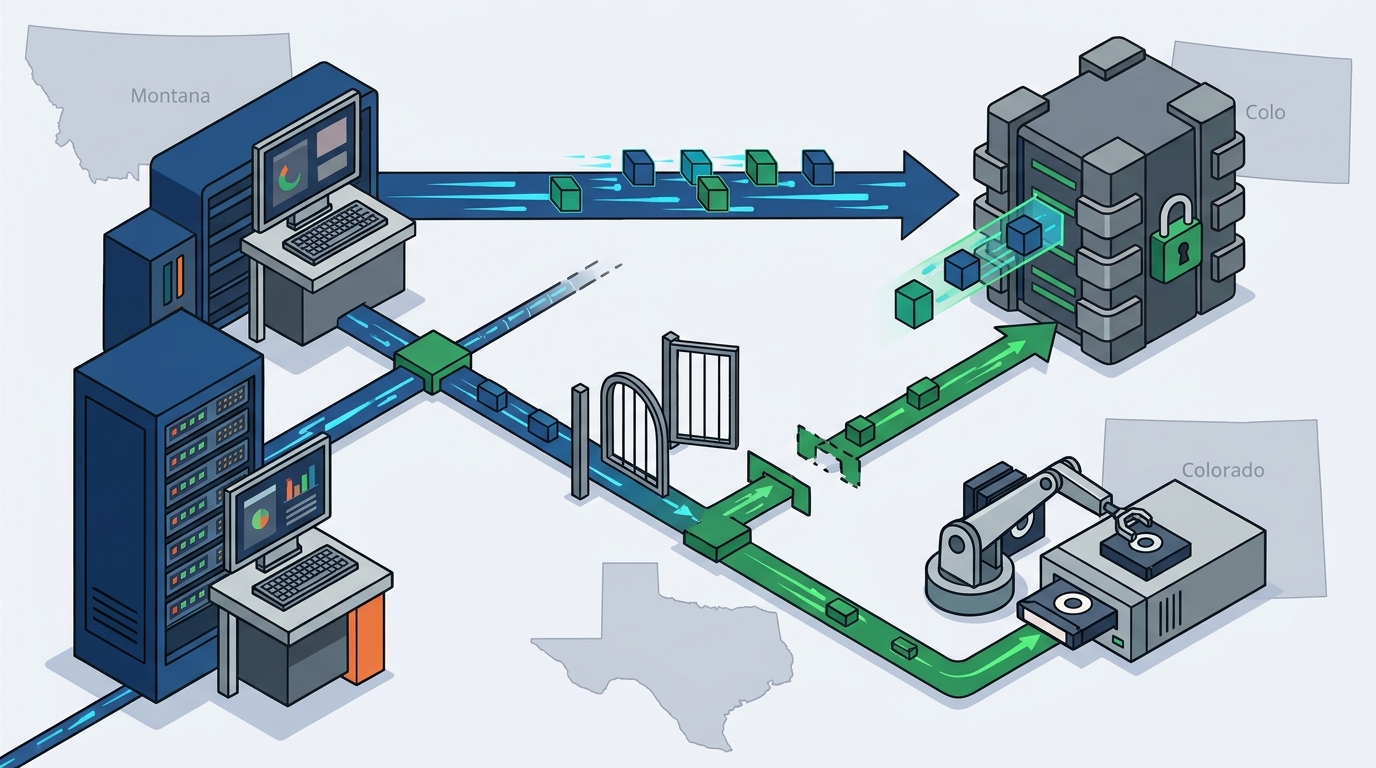
One of the most effective ways to improve your backup strategy is to isolate backup data from the primary network. Ransomware often spreads laterally across a network, encrypting files on connected servers and workstations. If your backups are stored on the same network segment as your production data, they are vulnerable to the same attack.
Network segmentation is the practice of dividing a computer network into smaller subnetworks, or segments, to control the flow of traffic and limit the spread of threats. By placing backup servers on a separate, restricted network segment, you create a barrier that ransomware must cross to reach your data. Moore Technology and Security designs network architectures that enforce strict access controls between production and backup environments, reducing the attack surface for malicious actors.
Implementing Air-Gapped Storage
Air-gapped storage is a backup method where the storage media is physically disconnected from the network, making it inaccessible to network-based attacks. While not always practical for continuous backups, maintaining an offline copy of critical data provides a last line of defense. If an attacker gains access to your network, they cannot reach data stored on an air-gapped device. This approach ensures that at least one copy of your data remains clean and restorable.
Using Immutable Backups to Prevent Deletion
Regular Testing and Recovery Drills
A backup strategy is only as good as its ability to restore data when needed. Regular testing and recovery drills are essential to verify that your backups are functional and that your team can execute a recovery plan efficiently. Without testing, you may discover that your backups are corrupted, incomplete, or incompatible with your current systems only when you need them most.
Conducting recovery drills involves simulating a ransomware attack and practicing the steps required to restore systems from backup. This process helps identify gaps in your recovery plan, such as missing documentation or unclear roles and responsibilities. Moore Technology and Security works with clients to develop and test recovery procedures, ensuring that they are prepared to respond to a cyber incident with confidence and speed.
Measuring Recovery Time Objectives
Recovery Time Objective (RTO) is the maximum acceptable amount of time it takes to restore a system or process after a disruption. Defining your RTO helps you determine the frequency and type of backups required to meet your business needs. For example, if your RTO is four hours, you need a backup solution that can restore data within that timeframe. Aligning your backup strategy with your RTO ensures that you can minimize downtime and maintain business continuity.
Integrating Cybersecurity with Backup Management
Ransomware protection and data backup are not separate functions; they are interconnected components of a comprehensive cybersecurity strategy. Integrating these functions allows you to monitor for threats, detect anomalies, and respond to incidents more effectively. For instance, if your backup system detects unusual activity, such as a sudden increase in data deletion, it can trigger an alert and initiate a response protocol.
Key Takeaways
- Ransomware protection enhances backup strategy by isolating and securing backup data from network threats.
- Network segmentation and air-gapped storage are critical for preventing ransomware from reaching backups.
- Immutable backups ensure that data cannot be deleted or modified by attackers during an incident.
- Regular testing and recovery drills verify the integrity and usability of your backup systems.
- Defining Recovery Time Objectives helps align backup frequency with business continuity needs.
- Integrating cybersecurity monitoring with backup management creates a layered defense against ransomware.
Frequently Asked Questions
What is among the most effective way to protect backups from ransomware?
The most effective way is to combine network segmentation, immutable backups, and offline storage. This multi-layered approach ensures that even if one defense fails, others remain intact.
How often should I test my backup recovery process?
You should test your backup recovery process at least quarterly, or more frequently if you make significant changes to your IT infrastructure. Regular testing ensures that your backups are reliable and that your team is prepared to respond to an incident.
Can ransomware delete my backups?
Yes, ransomware can delete backups if they are stored on the same network as your primary data. Using immutable backups and air-gapped storage helps prevent this by making backups inaccessible or unalterable to attackers.
What is an air-gapped backup?
An air-gapped backup is a copy of data stored on a device that is physically disconnected from the network. This makes it inaccessible to network-based attacks, providing a secure last line of defense.
How does Moore Technology and Security help with ransomware protection?
Do I need a dedicated security team to manage ransomware protection?
Not necessarily. Managed IT services, such as those offered by Moore Technology and Security, provide expert monitoring and response capabilities without the need for a dedicated in-house team. This allows small and mid-sized businesses to access enterprise-level security expertise.
Conclusion
Improving your data backup strategy with ransomware protection is essential for safeguarding your business against cyber threats. By isolating backups, using immutable storage, and regularly testing recovery processes, you can reduce the risk of data loss and ensure business continuity. Moore Technology and Security is committed to helping businesses in Montana, Texas, and Colorado build resilient IT infrastructures that protect their most valuable assets. To discuss your specific needs, contact Moore Technology and Security today. Learn more: mooretech biz.